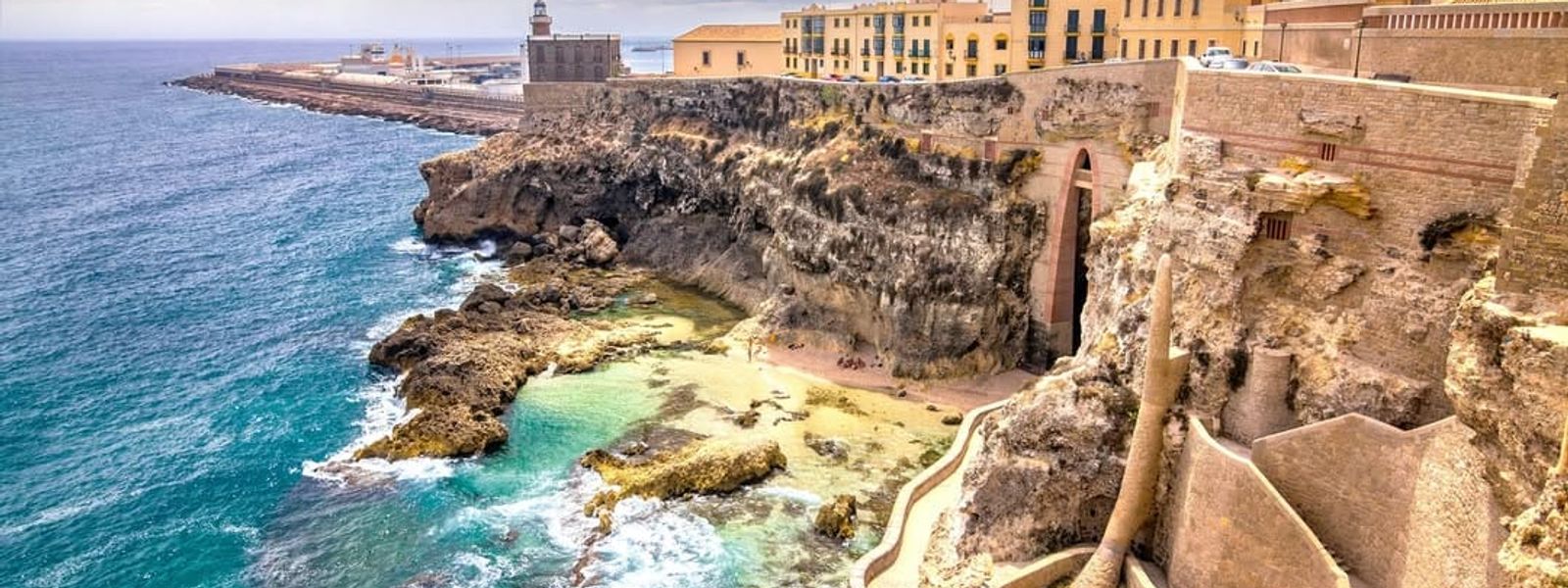
Melilla is Spain's autonomous city on the North African coast, covering just 12 square kilometres with a population of around 87,000. Founded by Phoenicians in the 8th century BC, it passed through Carthaginian, Roman and Visigothic hands before Spain secured it in 1497. Today it is a distinctive cultural crossroads: roughly two-thirds of residents are of European descent, a third of Berber origin, with Christian, Muslim, Jewish and Hindu communities coexisting peacefully. Modernist Spanish architecture stands alongside mosques, synagogues and churches. Approximately 30,000 Moroccan workers cross the border daily for employment and trade. The compact size makes it fully explorable on foot in two to three days.
Melilla
- Currency
- Euro (EUR, €). Credit and debit cards are widely accepted in cities and tourist areas. ATMs are abundant; most charge €2–7 per foreign card withdrawal. Some shops request ID before accepting a credit card. €500 banknotes are not accepted in most shops.
- Language
- Spanish (Castilian) is official and universal. Tarifit (Spanish: rifeño), a Berber dialect, is widely spoken. Arabic is common among the Moroccan population. English is understood in tourist areas and the city centre.
- Power plug
- Europlug (Type C) and Schuko (Type F) sockets; 230 V, 50 Hz
- Visa
- Schengen area: EU, EEA and Swiss nationals enter on national ID card or passport. Many non-EU nationalities have 90-day visa-free access. Non-EEA citizens staying longer than 90 days require an advance visa.
- Time zone
- Europe/Madrid (UTC+01:00 winter, UTC+02:00 summer from last Sunday in March to last Sunday in October). Spain observes daylight saving time; Morocco does not, so the one-hour difference with Morocco shifts twice yearly.
- Tap water
- Safe to drink throughout Spain. In some southern regions it has high mineral content and may taste unfamiliar; locals often drink bottled water instead. Bottled water is inexpensive and widely available.
- Tipping
- Not mandatory or customary. In restaurants: not expected for simple meals or basic establishments; 5–10% in mid-range or upscale venues if service was exceptional. Always pay cash to the server, not on card. Taxi drivers and hotel staff may appreciate small tips in upscale settings but it is not expected.
- Emergency
- 112
When to go
High season
Jun – Aug
Hot and humid, daytime temperatures 29–30°C. August is quieter as residents take holiday. Beaches are busy.
High season
Sep – Oct
Pleasant weather, cultural events active. September warm enough for beach days. October comfortable and less crowded than summer.
Shoulder
Mar – May
Mild spring weather, fewer crowds. Good for walking and exploring markets and neighbourhoods.
Low season
Nov – Feb
Cool and damp, temperatures around 17–18°C. November has less daylight. Mild by northern European standards but often overcast.
How long to stay
Two to three days are sufficient for a complete exploration. The city centre is compact and walkable; one day covers the main attractions. Add a second day for beaches and neighbourhoods, a third for museums, markets, and unhurried wandering.
Getting around
Flights: Air Nostrum operates eight daily flights from Málaga, three from Madrid, and once-daily or less frequent services from Almería, Granada, Seville and Barcelona. No international routes. Ferry: Trasmediterránea and Baleária run services from Málaga, Almería and Motril. Within Melilla: The centre is walkable. Taxis are white, metered, €4 minimum daytime and €6 at night; cash only, drivers give change only up to €20. Buses cost €0.90 per trip or €8.50 for a rechargeable Bonobús card (ten trips). Uber and Cabify operate. Car rental is available; city-centre parking is difficult, traffic light except near the Moroccan border crossings.
Local rules
Border crossing: If crossing into or from Morocco, use official checkpoints and carry valid documents. Do not transport counterfeit goods or hashish. Pickpocketing: Common in crowded markets and public toilets; a typical tactic is a group surrounding a lone victim. Keep valuables secure or leave them elsewhere. Nighttime safety: Avoid walking alone after dark, even in the city centre; street robberies occur. Taxi fares: Most taxis accept cash only. Drivers rarely give change for notes over €20; carry smaller denominations.
Destinations in Melilla
Nearby regions (2)
Frequently asked questions
What languages are spoken in Melilla?
Spanish is official and universal. Tarifit (a Berber dialect, locally called rifeño) is widely spoken. Arabic is also common, especially among Moroccan residents and workers. English is understood in tourist areas.Is Melilla safe?
Crime rates are low compared to similar-sized mainland Spanish cities. Violent crime is rare. Petty theft and street robbery happen, especially alone at night or in crowded markets. Pickpocketing is common in public toilets. Use standard city caution.Can I cross into Morocco?
Yes, at official checkpoints with valid travel documents. The border is heavily controlled. Both foot and vehicle crossings are possible. Moroccan officials check travellers carefully. Do not attempt to transport counterfeit goods or hashish.What makes Melilla culturally different from mainland Spain?
Melilla sits between Spain and Morocco. Christians, Muslims, Jews and Hindus coexist. You will see synagogues, mosques and churches alongside modernist Spanish architecture. About 30,000 Moroccans cross the border daily for work and trade, making Melilla a constant cultural crossroads.What should I carry for taxi rides?
Cash only; taxis rarely accept cards. Drivers are only required to give change for amounts up to €20. Carry €5, €10 and €20 notes. Fares are metered: €4 minimum daytime, €6 at night.