Menorca's coves: white sand in the south, red sand in the north
5 min read7 destinations
Balearic Islands · Spain
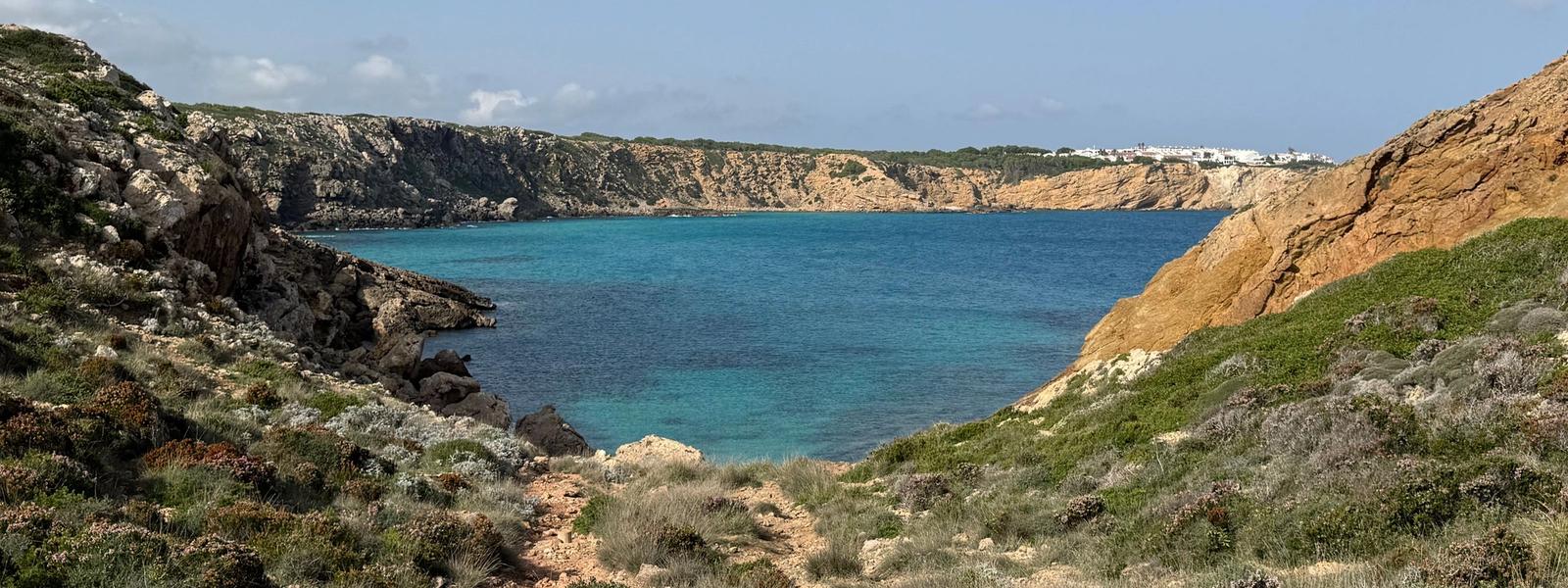
Menorca has as many beaches as Mallorca and Ibiza combined, and its north and south coasts look nothing alike. In the south, small coves of white sand sit between rock walls and pine woods. The north is rougher: orange and red-gold sand, red clay and rock, and the north wind that can whip up big waves. Many of the best coves are reached on foot, often along the Camí de Cavalls, the signposted path that runs round the whole island.
The south: white sand and pines

Cala Macarella
Most people who come on foot walk in from Cala Galdana: 30–40 minutes through the woods, until the trees open and the cove lies below you. White sand sits between two rock walls, and the water is so clear you can see the bottom well out from the shore. There's just one place to eat, a restaurant and snack bar on the sand, plus kayaks for hire and free toilets. The coast path carries on to Cala Macarelleta, the smaller cove next door. In summer the road down to the cove is closed to cars and a bus runs instead. For the return, a boat shuttle to Cala Galdana saves you the walk. Arrive early, as it gets crowded in high season.
Cala en Turqueta
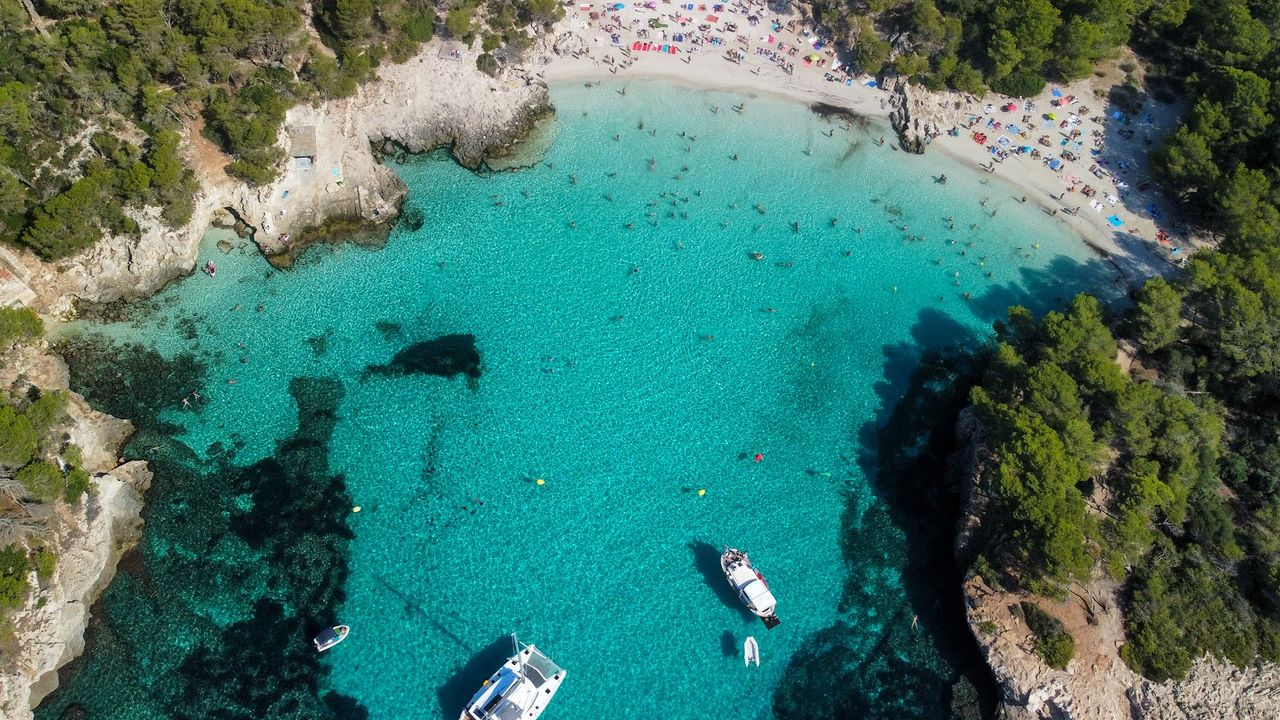
The water is warm, clear and calm enough for small children to spend the whole day in it, and at the edge of the cove there's a rock where people jump into deep water. There's no restaurant or bar on the beach; around midday and again in the afternoon a vendor walks the sand with fruit and cold beer, cash only. The catch is parking. In August the car park is full by about 7.30am, at the end of May by 10am, and a sign on the main road tells you when it's full. From the car park it's a 5–20 minute walk, so carry everything in with you, water included.
Cala Mitjana
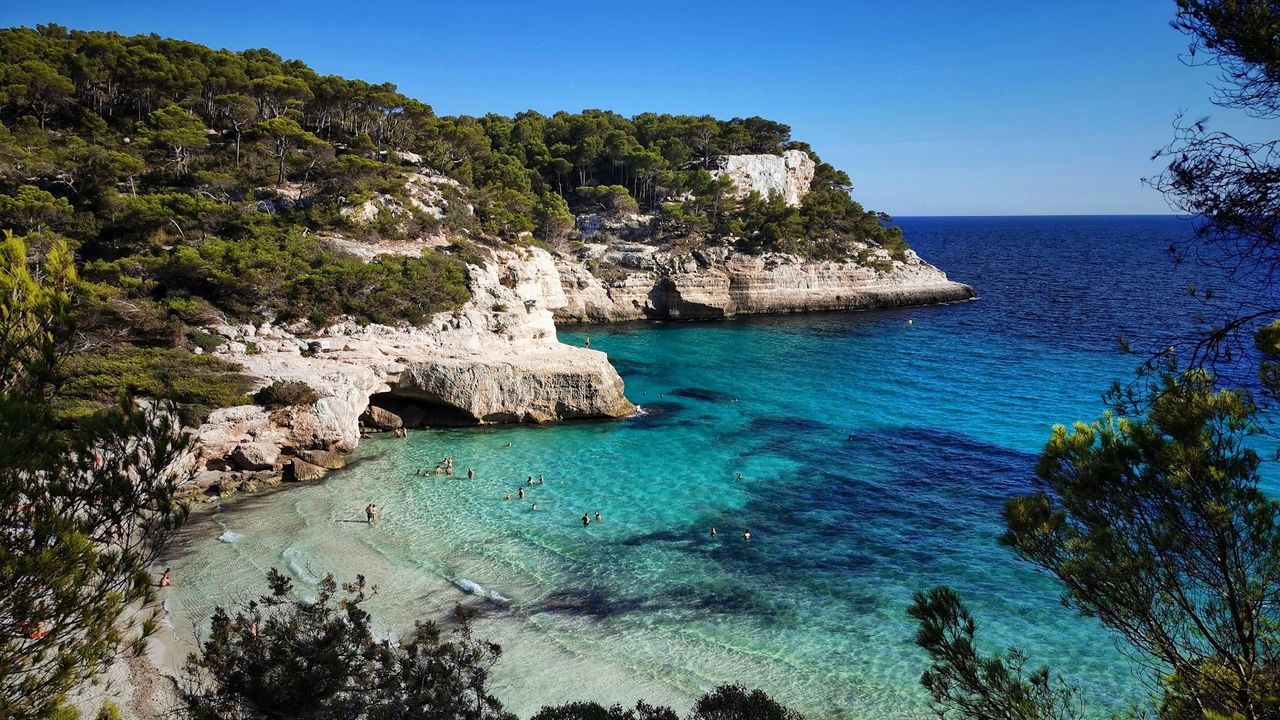
Low rock walls close in turquoise water over white sand. It's clear enough for snorkelling straight off the beach, and there are caves in the rock to explore. Nothing is sold here, and only the back of the beach has shade, so bring food, water and an umbrella. From the car park it's 15–20 minutes on foot, either down a concrete road that will take a pushchair or along a gentler gravel path. Paths lead on to Cala Mitjaneta next door and along the coast to Cala Galdana. In high season the beach is still fairly quiet at ten and crowded by eleven.
Cala Galdana Beach
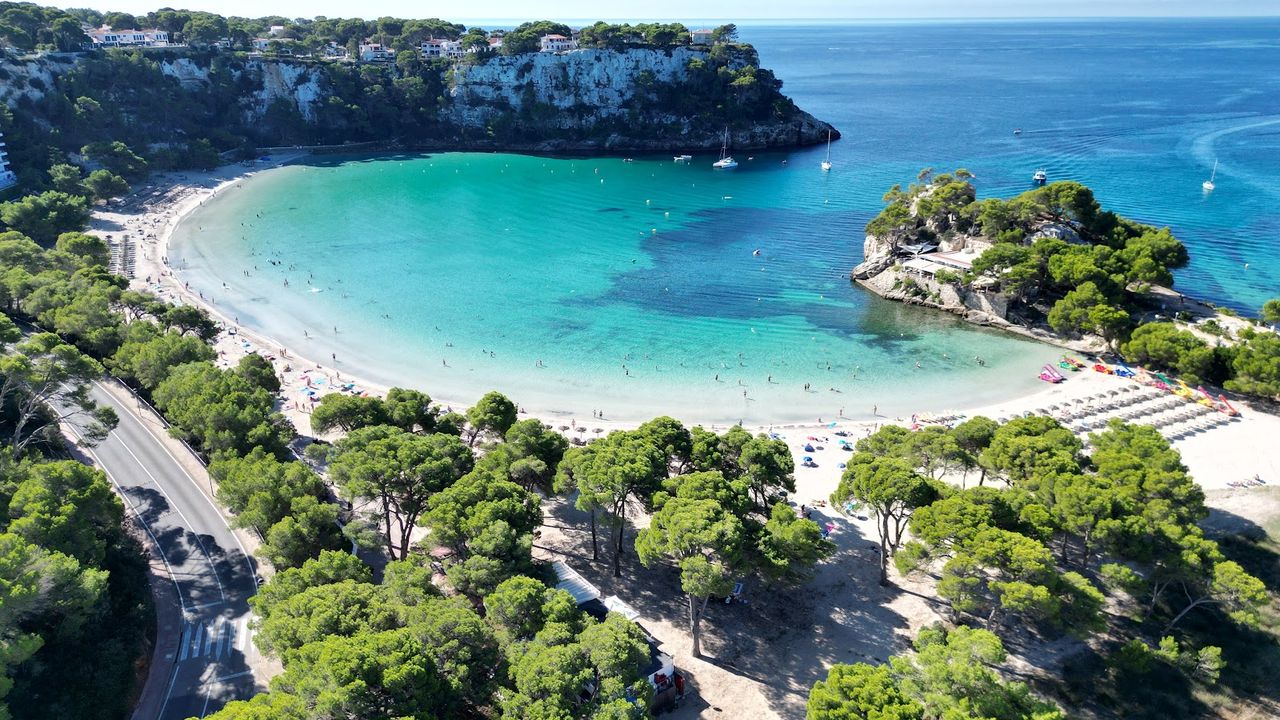
The easiest of the southern beaches to get to: a large stretch of sand in a sheltered horseshoe bay, with restaurants, cafés and shops behind it, sunbeds on the sand and buses stopping right by the beach. It's busy after 10am even in May and packed in high season. The real draw is the walking. Coast paths climb into the pines from each end of the bay, to Cala Mitjana in one direction and Cala Macarelleta in the other, each about an hour's walk away.
Things to do in Menorca
Paid links: booking through them supports YowJourney.
The north: red sand and open sea
Cala Pregonda
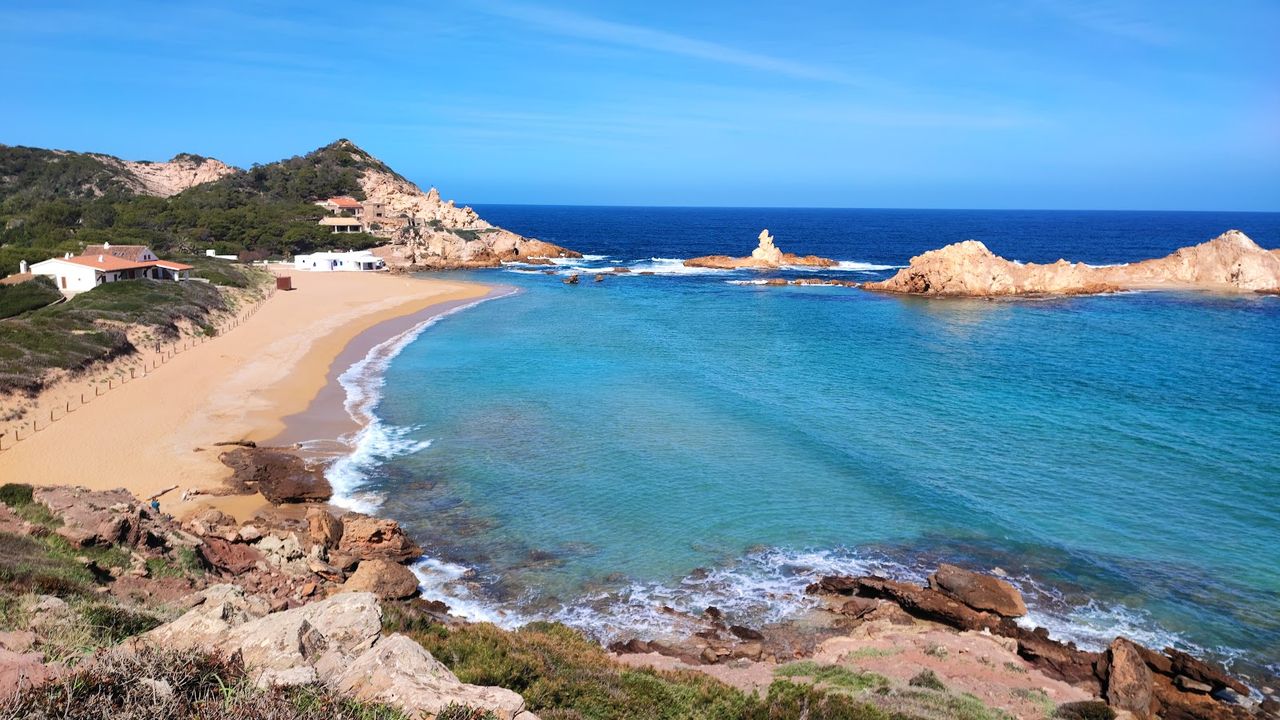
Orange sand, coloured by the red rock around the inlet, and turquoise water. Just offshore, sharp white islets shelter the beach from the wind and the heavier swell, and the nearest is close enough to swim out to. Cars stop at Binimel·la, and from there it's 20–30 minutes along the Camí de Cavalls, with a few ups and downs along the way. The cove has no toilets and no water, so bring what you need. Come earlier in the day: later on, the sun swings round behind the beach.
Cavalleria Beaches
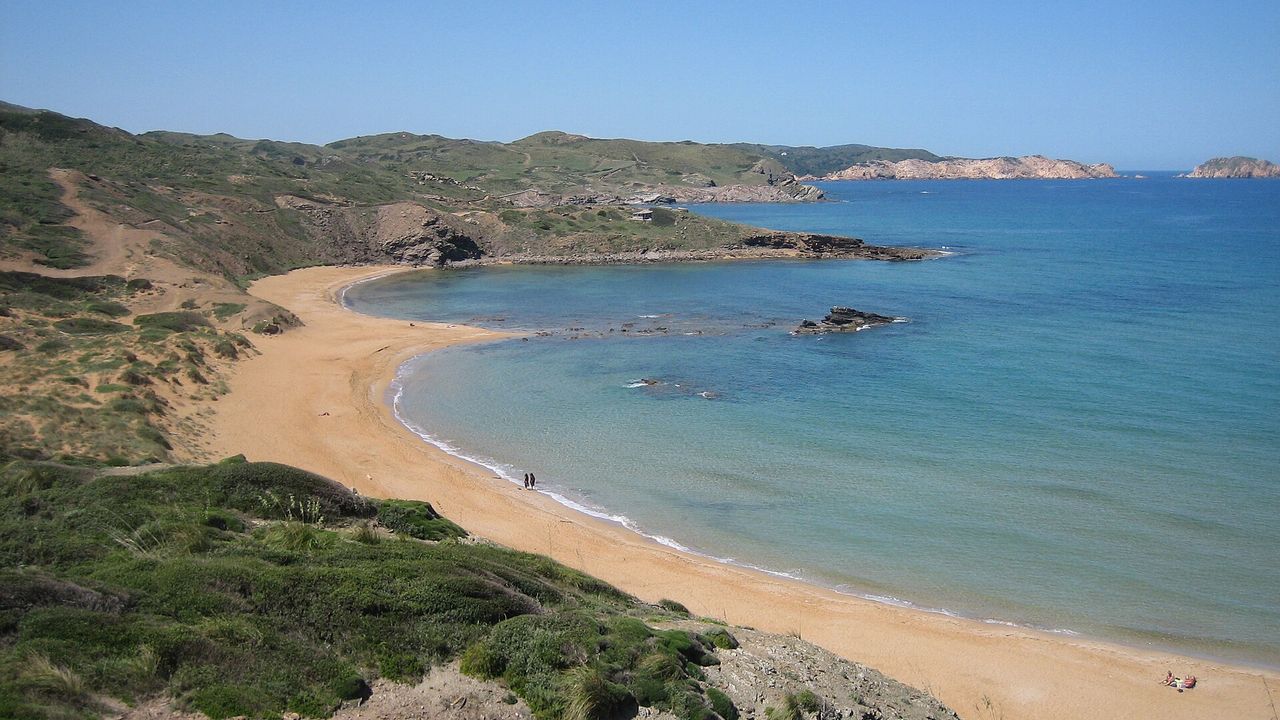
Two linked crescents of coarse red-gold sand under dark clay cliffs. After the white coves of the south, you could be on another island. At the foot of the cliffs, people mix the red clay with seawater for a mud mask and rinse it off in the sea. On calm days the water is clear and shallow, with good snorkelling around the reef islet in the middle; when the north wind rises, the bay fills with waves and windsurfers. It's a 5–10 minute walk down from the car park, along a wooden walkway and then down a flight of stairs. There's no shade and no bar, but a kiosk at the car park sells cold drinks.
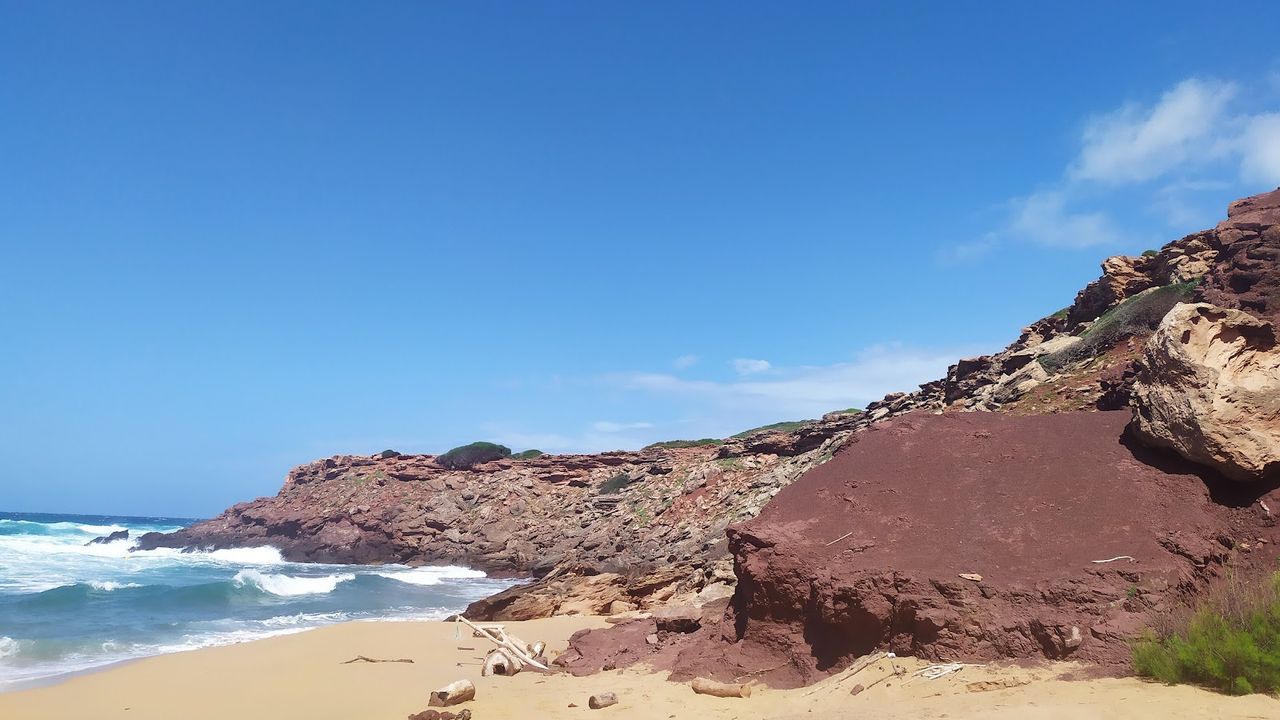
Cala del Pilar
Hills of red clay drop to golden sand and turquoise water, with goats grazing on the slope above. Getting here takes 30–45 minutes on foot, through pine woods, over red dunes and down a wooden staircase. That keeps the beach quiet, and in March you may have it to yourself. There's nothing here at all: no toilets, no bar and no lifeguard, so carry water and food in and your rubbish out. You'll need a car to reach the start of the path. The walk back is uphill, so don't set out late, or you'll face the climb when you're already tired. And if the swell is up on the north coast, pick another day.
Before you go
In summer, start early: the car parks at the popular southern coves fill up fast, and at Macarella cars aren't allowed at all in the summer months. None of these coves has drinking water, and at Mitjana, Pregonda and Pilar nothing is sold at all, so pack water and food. Many of the paths are rocky, so walking shoes beat flip-flops. Crowds peak in July and August, and from November to April the coves are far quieter.