Best time to visit the Canary Islands: season by season
6 min read2 destinations
Canary Islands · Spain
Go from November to March for winter sun on the southern beaches, from late winter into spring for flowers and walks, in summer for the trade winds on Fuerteventura and calmer water off Tenerife's north coast, and in September or October for the warmest sea, about 24 °C off Tenerife. At the airports of Tenerife South, Gran Canaria, Lanzarote and Fuerteventura, January afternoons average 21–22 °C and August afternoons 28–29 °C, and from May to September it hardly rains at all.
In short
- Beach and winter sun: November to March in the south, 21–25 °C by day.
- Flowers: February and March on Lanzarote, May and June in the Teide caldera.
- Calmer sea in the north: Tenerife's north coast from late spring to early autumn.
- Kitesurfing and windsurfing: July and August on Fuerteventura.
- Warmest sea: September and October, about 24 °C off Tenerife.
- Quieter resorts: April to June on Lanzarote; on Tenerife, spring is quieter than summer.
November to March: winter sun in the south
Weather: 21–25 °C by day at the island airports, sea 19–23 °C off Tenerife.
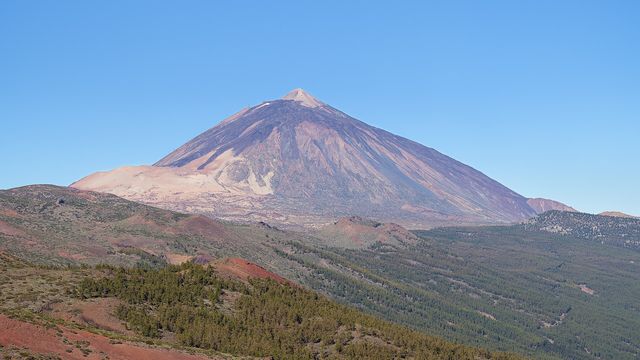
This is the season for winter sun on the southern beaches, though December has more rainy days than any other month at all four airports. Tenerife's south coast stays warmer and drier than the north, and snow falls on Teide (more in Tenerife in winter). Gran Canaria gets most of its annual rainfall in these months, with the odd cloudy, windy spell, and the summits can see frost or snow. What little rain Lanzarote gets falls mostly from December to February. On Fuerteventura, big Atlantic swells roll in on the north and west coasts. Our guides to Gran Canaria in winter and the best time to visit Lanzarote go into detail, and The Canary Islands in winter helps you choose an island for the season.
Spring: flowers and walks
Weather: 22–25 °C by day, sea 19–21 °C off Tenerife.
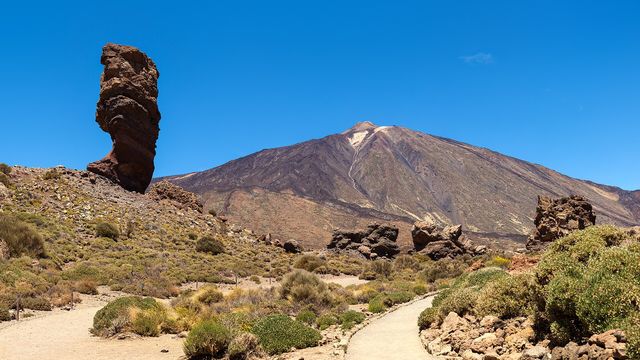
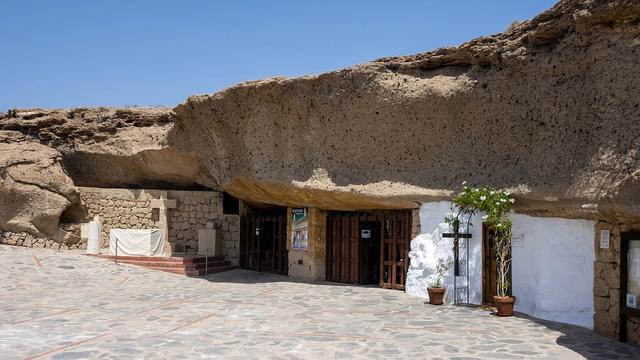
The flowers come before spring does. On Lanzarote, the winter rain brings the dry land into flower in February and March. On Gran Canaria the almond trees of the Tejeda basin, in Nublo Rural Park, blossom around the same time; for walks there, see Gran Canaria's mountains and ravines. In April, hundreds of pilgrims walk Hermano Pedro's Way from Vilaflor to his cave; Hermano Pedro was a local shepherd who became a missionary in Guatemala. In May and June, the Teide bugloss puts up red flower spikes up to 3 m tall in the caldera.
Things to do in Canary Islands
Paid links: booking through them supports YowJourney.
June to August: heat, trade winds and a calmer north
Weather: 25–29 °C by day, sea 22–23 °C off Tenerife.
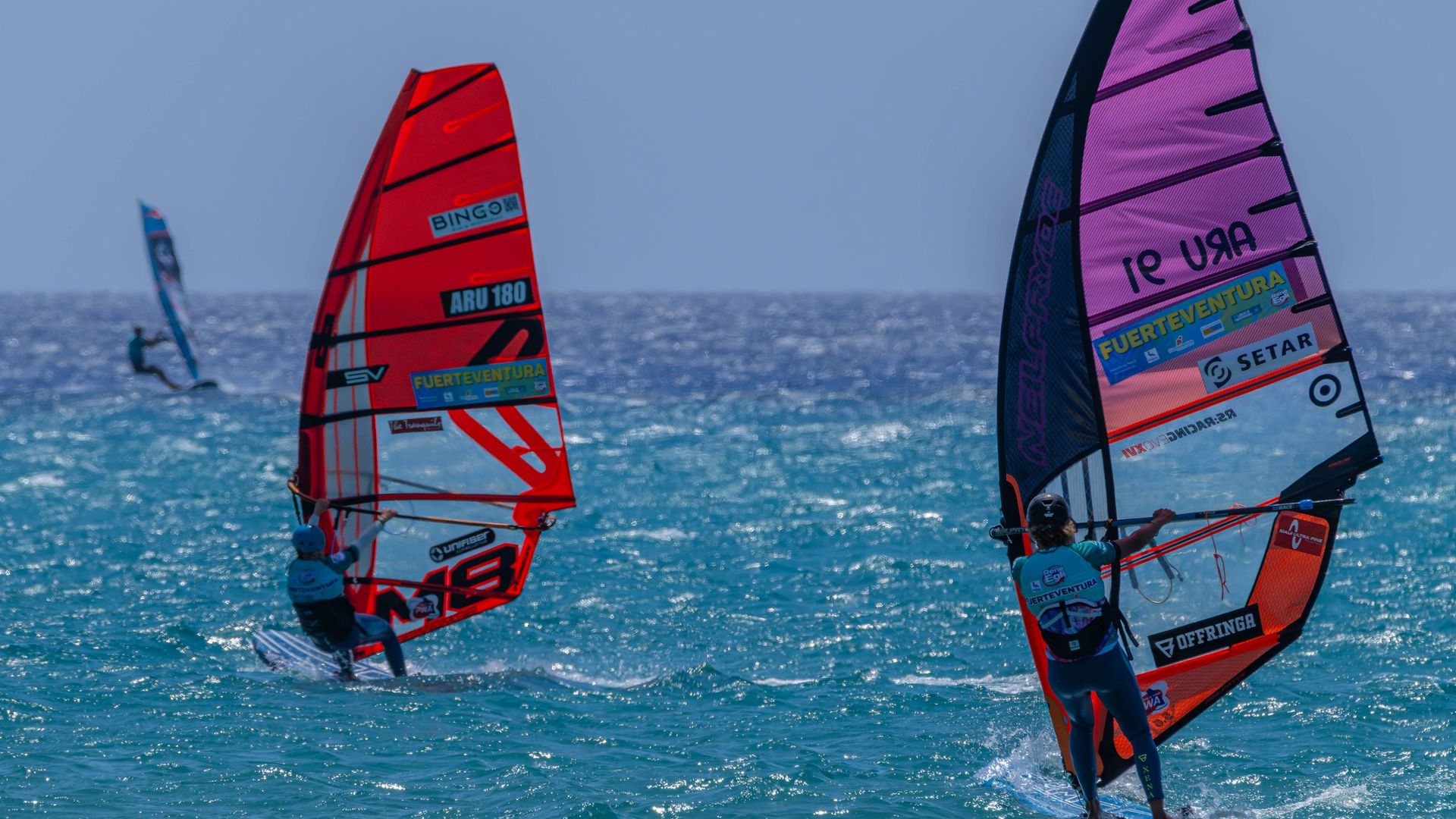
July and August are peak season: accommodation and car-hire prices rise sharply, so book well ahead. In July and August, Fuerteventura has steady trade winds for kitesurfing and windsurfing, and its beaches offer no shade from the midday sun. Maspalomas, on Gran Canaria, reaches 28–33 °C by day, and a wind off the Sahara can push it past 40 °C. Lanzarote is at its hottest in August, with highs of 29 °C at the airport, and the lava fields offer no shelter from the sun. Tenerife's north coast is calmer from late spring to early autumn, the season for its natural pools (see Tenerife's natural pools).
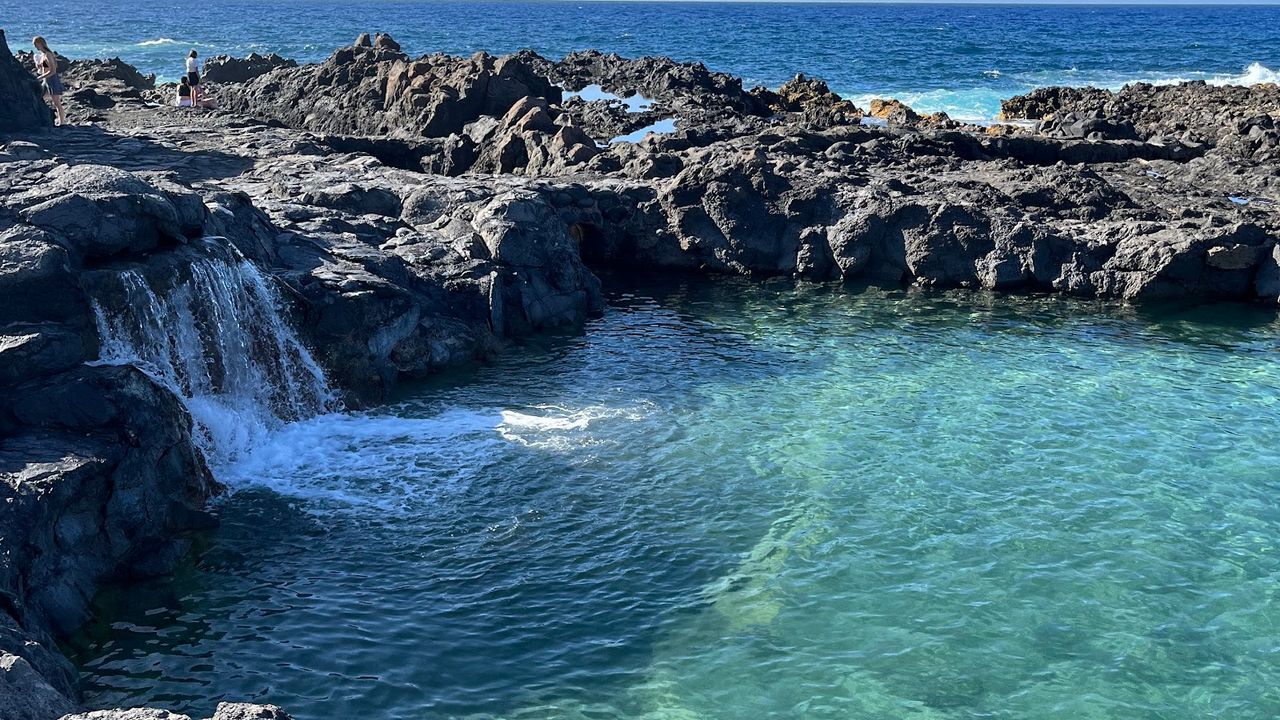
Jóver Natural Pool
A pool of natural seawater among the rocks of Tenerife's north coast, near Tejina. It is at its best on calm days from late spring to autumn, when the swell drops, and in winter storms it closes to bathers. Lifeguards are on duty only on some days, and the rock around the pool gives no shade.
September and October: the warmest sea
Weather: 26–29 °C by day, and the sea at its warmest, about 24 °C off Tenerife.
The summer crowds thin out on Lanzarote and Fuerteventura. Mid-September brings Lanzarote's biggest pilgrimage, to Mancha Blanca. Fuerteventura's big fiestas fall now: the Virgen de la Peña fiesta in Betancuria in September, then the fiestas of Puerto del Rosario and Tuineje in early October. On Gran Canaria, the first rain and wind can arrive from mid-October.
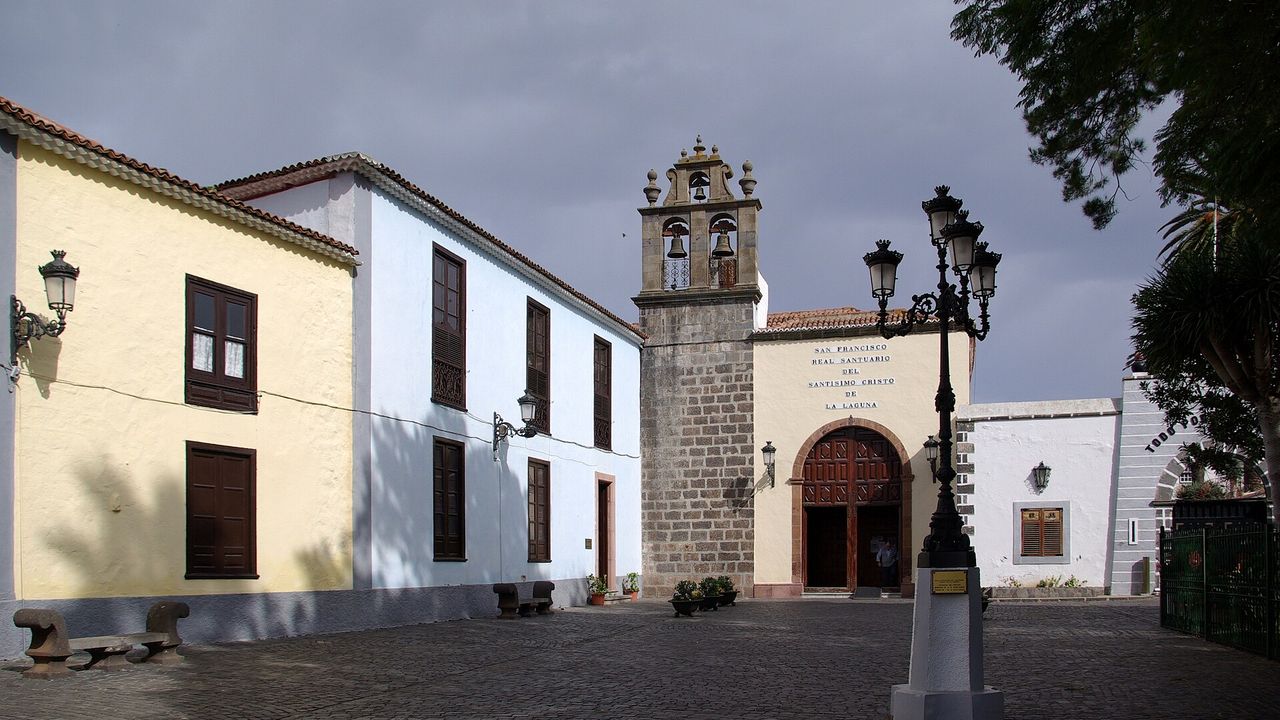
Royal Sanctuary of the Christ of La Laguna
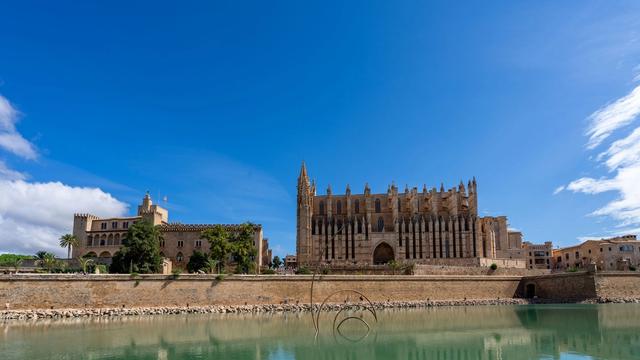
La Laguna, on Tenerife, spends the whole of September celebrating its fiesta of the Cristo de La Laguna, with concerts and fireworks around the Plaza del Cristo, and this church is at the centre of it. It is a working church, so during mass the nave belongs to the congregation.
Calima, wind and storms
From December to February the wind can bring calima, dust from the Sahara that cuts visibility and leaves a fine film on everything. From September to November, tropical storms occasionally bring heavy rain and coastal flooding. AEMET, the Spanish weather service, posts warnings for each island on its website.
If you can go only once and want warm air and warm sea together, aim for September or October; if escaping winter matters more than the water temperature, go between November and March and stay in the south. Air temperatures and rainfall are 1981–2010 AEMET averages for the four island airports, and the Maspalomas range comes from our Gran Canaria page. Sea temperatures are seasonal norms for Santa Cruz de Tenerife (temperaturadomar.pt), so treat them as a guide.
FAQ
When is the sea warmest?
In September and October, at about 24 °C off Tenerife. It is coolest in February and March, at about 19 °C.When is it least crowded?
It depends on the island. On Lanzarote the resorts are quieter from April to June, between the winter season and the summer holidays, and on Tenerife spring is quieter than summer. In September and October the summer crowds thin out on Lanzarote and Fuerteventura.Which island is the driest?
Going by the airport averages, Fuerteventura gets the least rain, about 98 mm a year, and the south of Tenerife the fewest rainy days, about 15 a year. Gran Canaria's airport is the wettest of the four, with about 151 mm a year spread over some 22 rainy days. All four weather stations are by the sea, so they say nothing about the mountains or the wetter north of Tenerife.Is the road up to Teide ever closed?
Yes, when snow or ice lies on the road. The island government, the Cabildo, closed the access roads in December 2024 and again in February 2026, and on another occasion closed them in high winds. In winter, check road conditions with the Cabildo before you drive up.