Gran Canaria in winter: where it's warm and what to do
7 min read6 destinations
Canary Islands · Spain
Gran Canaria is warm enough for the beach in winter: on the coast, daytime temperatures are around 20–23 °C, and nights by the sea stay above 10 °C. The weather varies across the island, though. The south is warmer and sunnier than Las Palmas in the north, and the summits, nearly 2,000 m up, get frost and sometimes snow.
In short
- Air: January is the coolest month: at Gran Canaria Airport, on the east coast, it averages 21 °C in the afternoon and 15 °C at night; November is warmer, at 24 °C and 18 °C.
- Sea: around 20 °C off Las Palmas in January, and about 19 °C in March, when the sea is at its coolest.
- Rain: two to five rainy days a month at the airport, most in November and December; the south, in the lee of the island, gets little rain.
- Sun: about six hours a day in December and January, seven by March.
- Summits: cold and windy, with frost and occasional snow.
- Crowds: winter is the main season in the southern resorts.
- What to do: beaches in the south, mountain walks on clear days, almond blossom in late winter.
Where it's warm and where it isn't: the south, Las Palmas and the summits
The big resorts are in the south: Maspalomas, Playa del Inglés, Meloneras, Puerto Rico and Puerto de Mogán. This side lies in the lee of the island, sheltered from the humid north-east winds, and what little rain it gets falls in winter. Las Palmas, in the north-east, is windier: January days reach 19–23 °C, and the city beaches feel cooler than the southern resorts.
Up in the mountains it's a different season. Pico de las Nieves rises to 1,949 m, and up there it can be cold and windy even on a warm day at the coast.
Las Canteras Beach
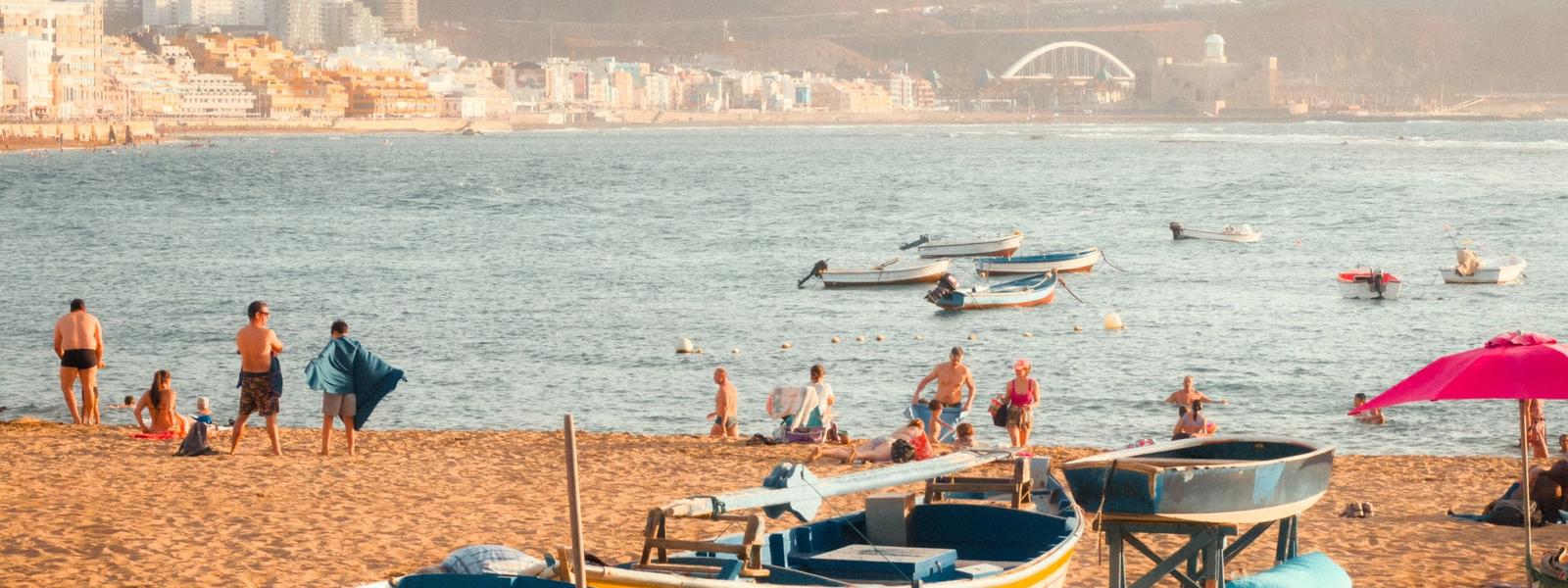
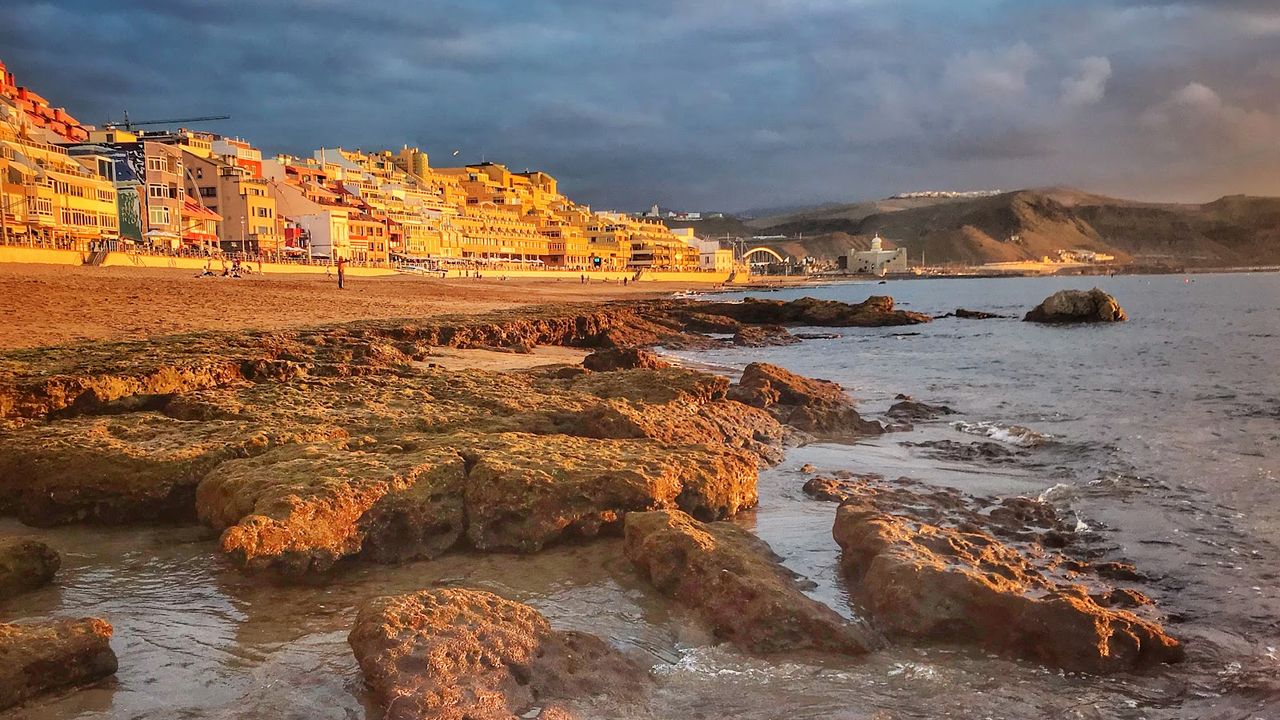
Las Palmas's own beach, just over 3 km of golden sand, and the reason a winter in the city can still mean swimming. La Barra, a sandstone reef about 200 m offshore, breaks the Atlantic swell, and the bay inside it stays calm. Playa Grande at the northern end is the most sheltered; La Cícer at the southern end has no reef in front and belongs to the surfers. Bring a mask to see the parrotfish and wrasse inside the reef, and come midweek: the beach fills up from Friday to Sunday.
Beaches in the south
In the south the beach season carries on through winter, on long resort beaches and in small sheltered coves.
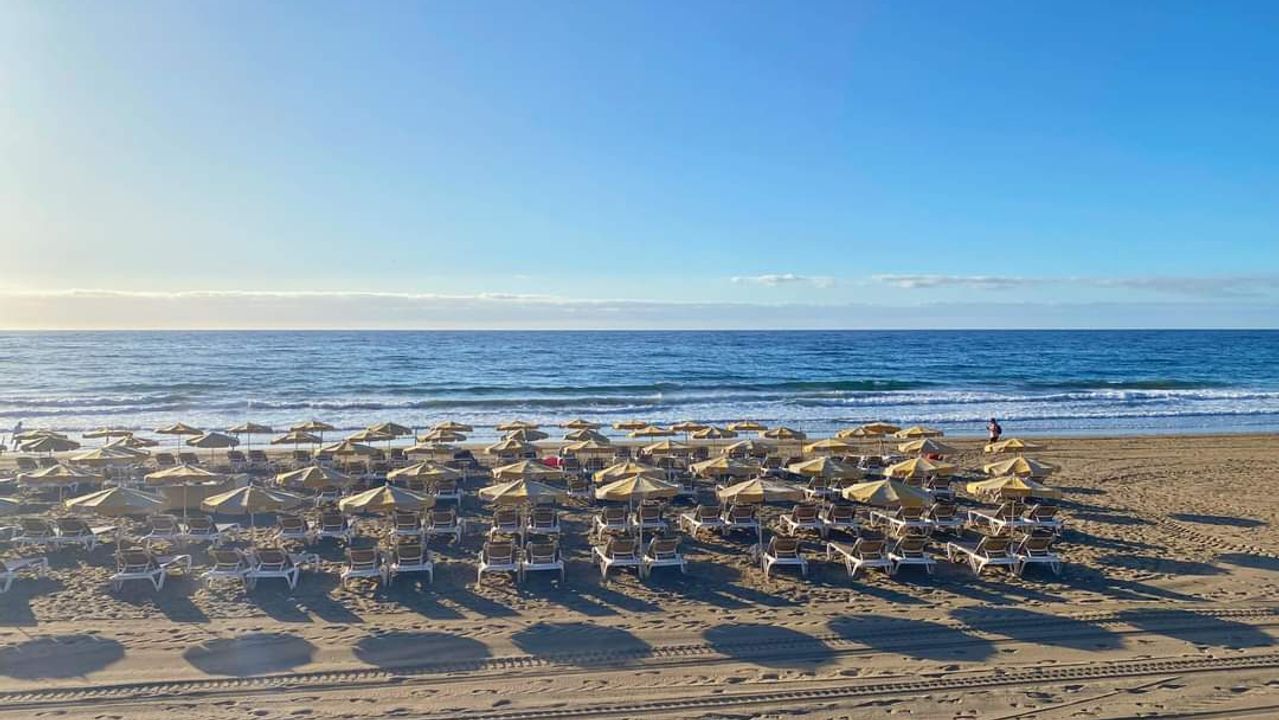
Playa del Ingles Beach
A long sandy beach in front of the resort of the same name, running south to Maspalomas Beach and the dunes; the whole walk to Maspalomas comes to around 10,000 steps. Winter, when northern Europe is cold, is peak season here. Come early, when the beach is quiet and the sunbeds are being washed down. There is no natural shade, and on windy days the waves and currents get stronger, so swim only when the sea is calm. In 2026 the resort hosts Winter Pride, centred on the Yumbo Centrum, from 2 to 8 November.
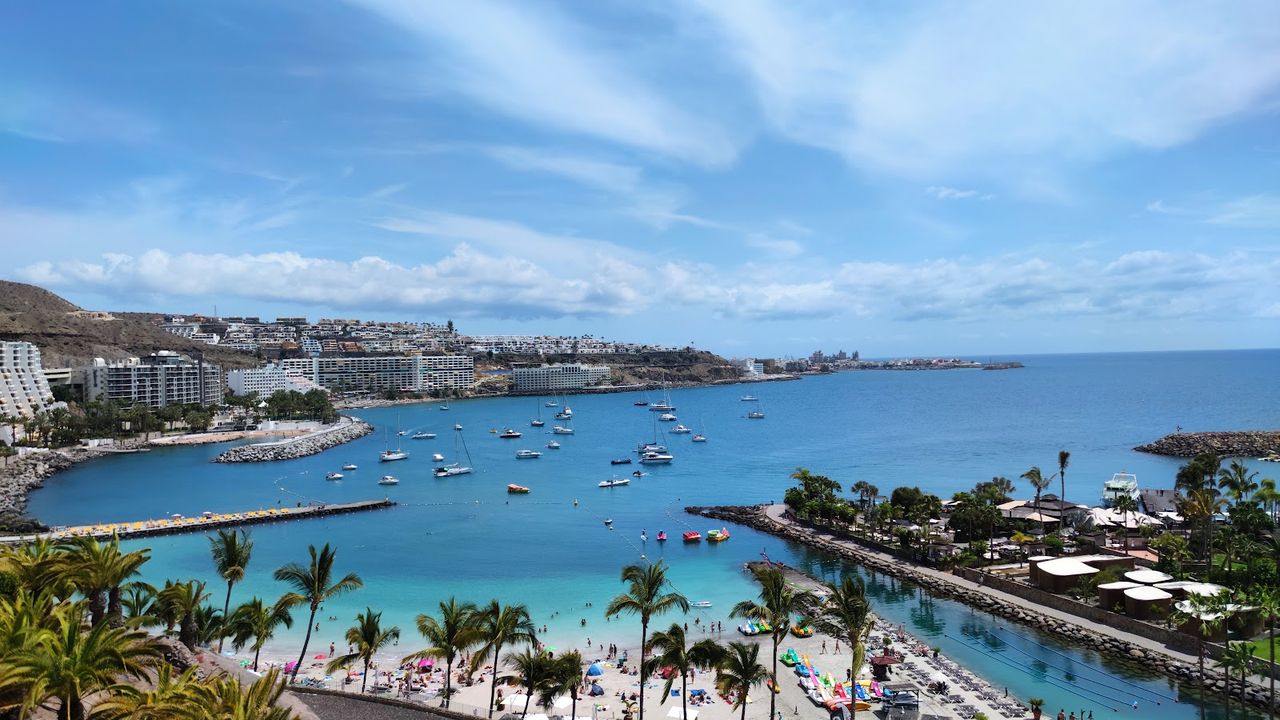
Anfi del Mar Beach
A small, sheltered beach of fine white sand near Patalavaca, in Mogán. The water is clear, calm and turquoise, and the beach shelves so gently that even people who can't swim can wade in. Palms line the promenade behind, but on the sand the only shade is a rented umbrella. Come in the morning, before the sand heats up.
Things to do in Gran Canaria
Paid links: booking through them supports YowJourney.
The mountains in winter: almond blossom and water after rain
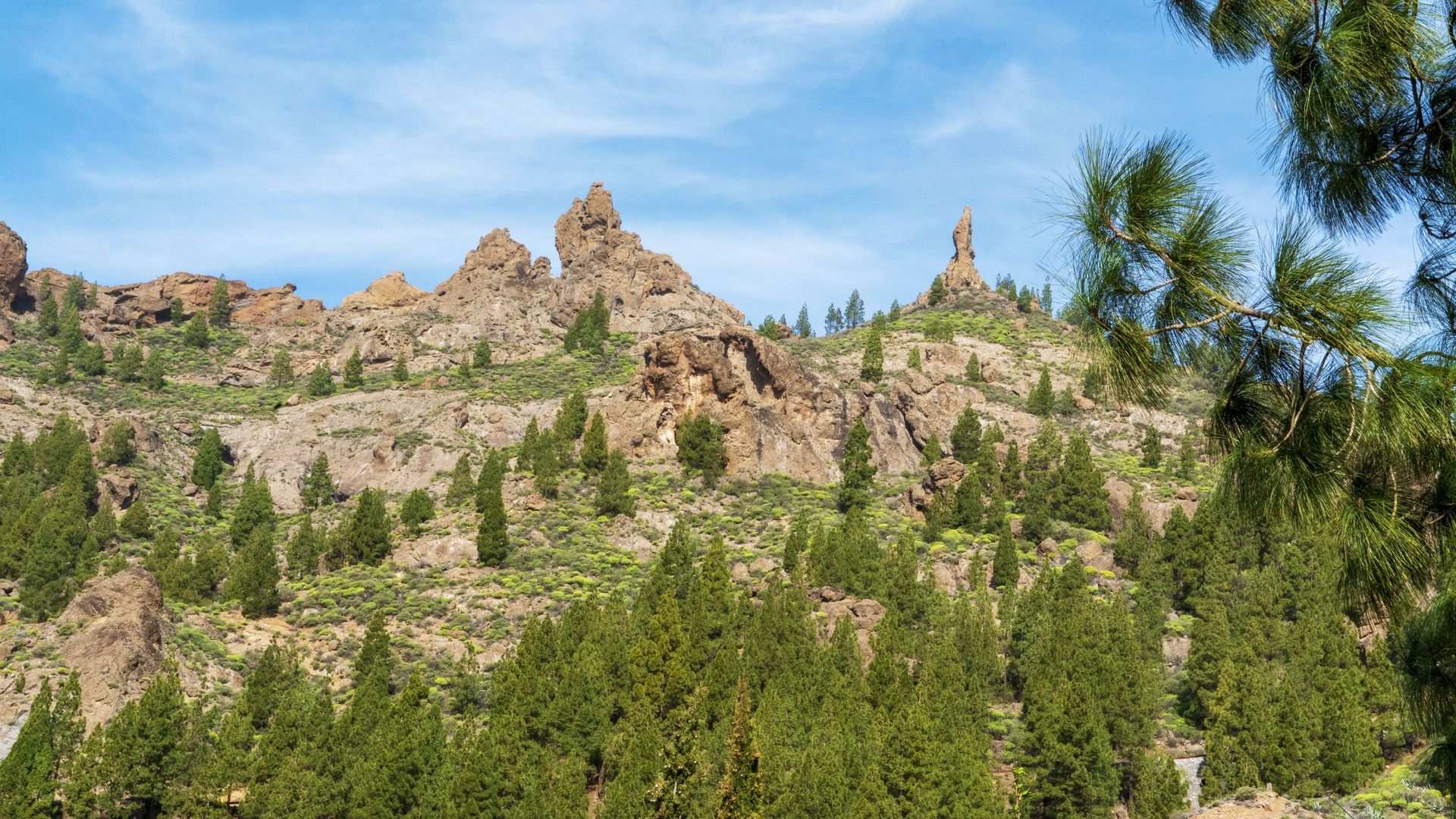
Late winter is when the almond trees flower, on the terraces of Barranco de Guayadeque and across the Tejeda basin in Nublo Rural Park. It is also when the water runs: Chira Reservoir fills after the winter rains, and streams flow in the laurel forest of the north. Up high the air is cold and windy, so take a warm layer on any drive inland. More places in the interior are in our guide to Gran Canaria's mountains and ravines.
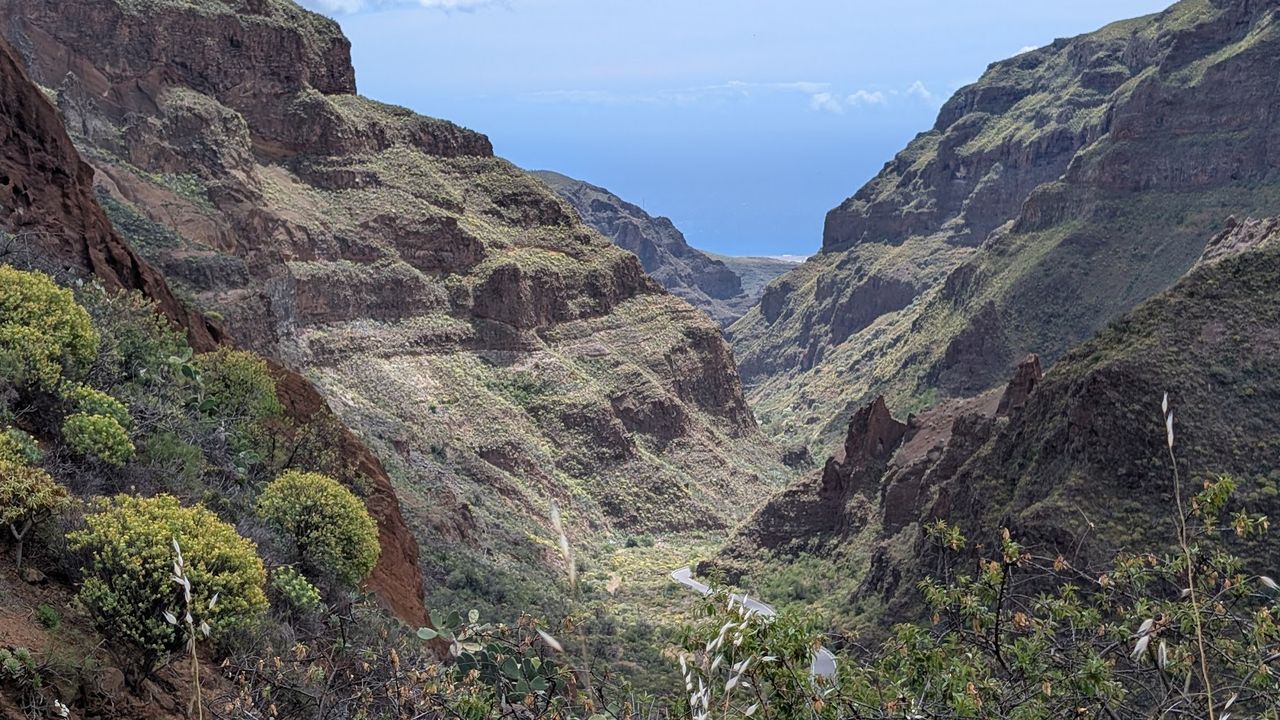
Barranco de Guayadeque
A ravine between Agüimes and Ingenio with walls 300–400 m high, full of caves. The island's pre-Hispanic inhabitants lived and buried their dead in them, and people still live in the rock: in the hamlets of Cueva Bermeja and Montaña de las Tierras there are cave houses, cave restaurants and even a cave hermitage. Almond and fig trees grow on the old terraces. Come early in the day, because the paths have no shade. Phones lose signal in the valley, and at the cave restaurants a table can be hard to come by.
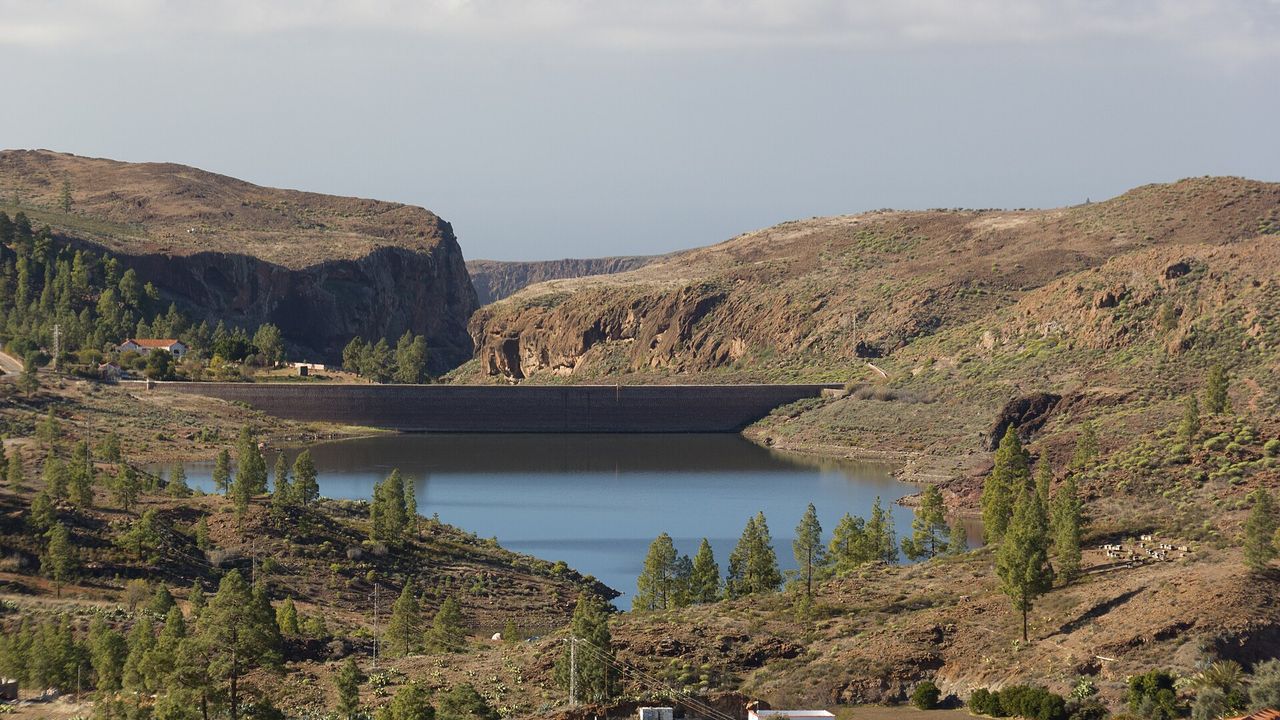
Chira Reservoir
A lake at the bottom of a bowl of high volcanic mountains in the interior of San Bartolomé de Tirajana. It is fed by rain, so it is fullest after the winter rains and can sit low between bare banks after dry months. Few tourists come. A signpost by the reservoir points to trails S-60 and SL-2. The last stretch of road is narrow and runs along steep slopes, so drive it slowly. Bring drinking water, as there is nowhere nearby to get it.
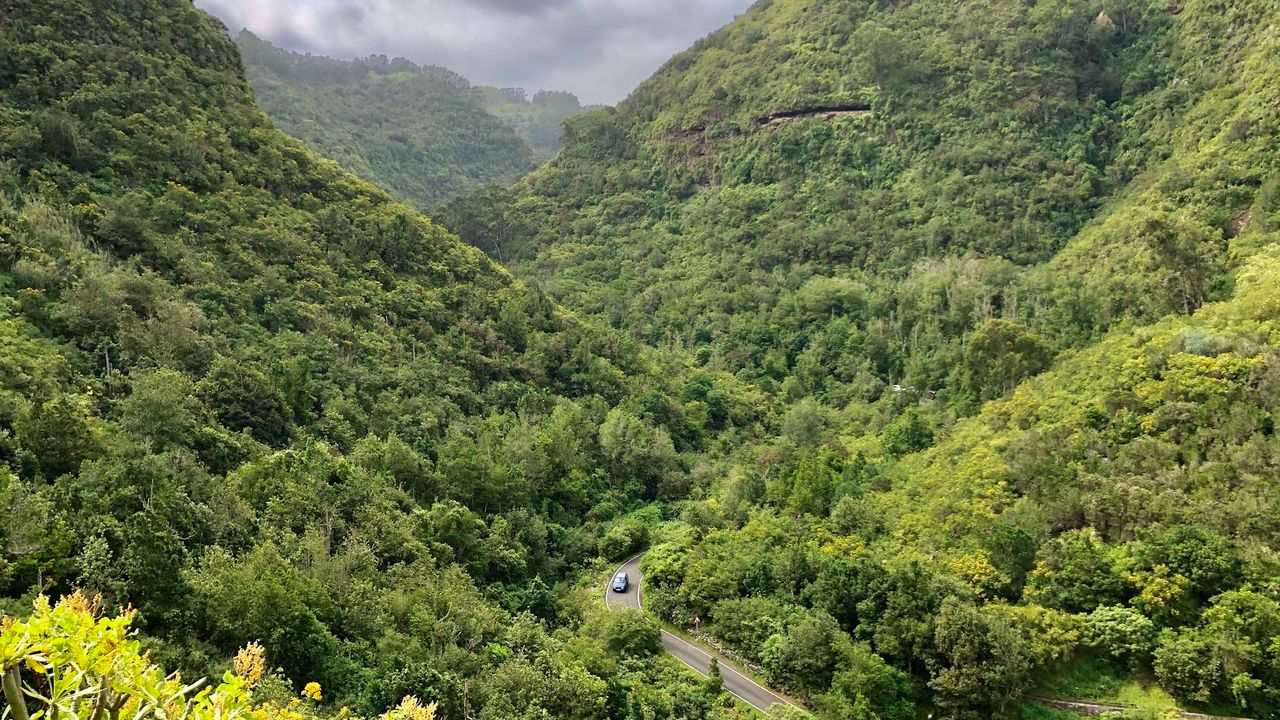
Los Tilos de Moya Nature Reserve
In the hills of Moya, one of the last patches of the laurel forest that once covered northern Gran Canaria. After rain the reserve's ravine runs with small waterfalls and streams under the dark, glossy leaves. Go on a dry day soon after a wet spell: a downpour loosens the slopes, and trails close after rockfalls. The forest often sits in cloud, so bring a layer.
What's harder in winter
In winter the north and west coasts get the biggest Atlantic swell of the year. At the Roque Prieto natural pools waves break over the walls into the water, and big waves break a little way off Sardina Beach. On the rocks at El Confital and on the west-facing shore of Agaete, it pays to keep well back from the water's edge.
Cloud is the other catch. When it sits on the summits, the view from Cruz de Tejeda and Pico de las Nieves disappears, so look at the sky before you drive up; the high road to Pico de las Nieves can also be icy. The rocky paths at Bandama Caldera are slippery even when dry and worse after rain, and those in Azuaje Ravine turn to mud.
Winter festivals
Carnival is one of the biggest events of the year in Las Palmas. As of October 2026, the 2027 carnival is set to run from 22 January to 28 February with music as its theme, and Santa Catalina Park will be its main stage.
What to pack
- A jacket, scarf and gloves for the summits.
- Shoes with grip for rocky paths, which turn slippery after rain.
- A mask for snorkelling at Las Canteras.
- A hat and sun cream: the southern beaches and the paths in Barranco de Guayadeque have no natural shade.
For warmth, stay in the south, which is sunnier and drier. Choose Las Palmas if you want a city with a calm beach and a big carnival. Save a clear day for the mountains, start early and take a warm layer. The airport figures here are averages from AEMET, the Spanish weather service, for 1981–2010; the coastal temperature ranges and the sea temperature come from our pages on the island and on Las Palmas.
FAQ
Can you swim on Gran Canaria in winter?
Yes. The sea off Las Palmas is around 20 °C in January and at its coolest, about 19 °C, in March. Sheltered beaches are the easy choice: Anfi del Mar in the south, and Las Canteras in Las Palmas, where the reef keeps the water inside calm. On the north and west coasts, wait for a calm day.Which is warmer in winter, Gran Canaria or Tenerife?
On the coast there is little in it: on January afternoons Gran Canaria Airport averages 21 °C and Tenerife South Airport 22 °C, and on both islands the south is warmer and drier than the north. Our guide to [the Canary Islands in winter](/articles/canary-islands-in-winter) compares the islands, and [Tenerife in winter](/articles/tenerife-in-winter) covers Tenerife in detail.Do you need a car on Gran Canaria in winter?
Not for the coast: buses run all over the island and link the resorts, the airport and Las Palmas. For the mountains, the ravines and the remote west, a hire car is the practical option, though in winter the road up to Pico de las Nieves can be icy.