Chira Reservoir was built in the Arguineguín ravine (Barranco de Arguineguín), in the municipality of San Bartolomé de Tirajana on Gran Canaria. Until the 2020s its water went mainly to irrigation. In 2021 the island's Cabildo approved the Chira-Soria pumped-storage scheme: a 200 MW hydroelectric plant below the dam that releases water down to Soria Reservoir (Embalse de Soria), while surplus power on the grid pumps desalinated seawater up to refill both reservoirs.
Chira Reservoir
Local name: Presa de Chira
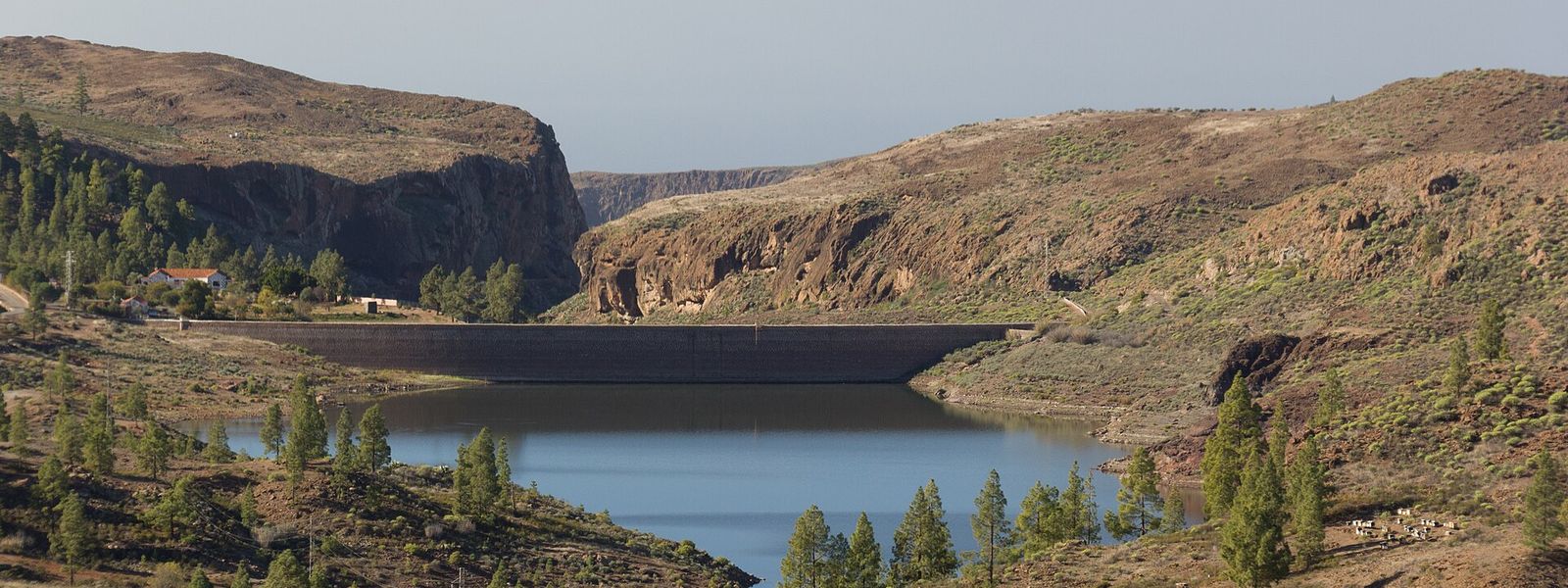
Mountain reservoir under high volcanic slopes in the Arguineguín ravine, tied into the Chira-Soria pumped-storage scheme.
- Entrance
- Free; there is no ticket.
- Accessibility
- No wheelchair-accessible parking or entrance, and no toilets.
- Parking
- A parking area about 230 m away in a straight line; a second about 2.7 km away.
- Transport
- Nearest bus stop: La Plata, about 4.8 km away in a straight line.
- Advance booking
- Not needed.
- Hours
- Open at any time.
- Address
- 35299 San Bartolomé de Tirajana, Las Palmas, Spain
What makes it special
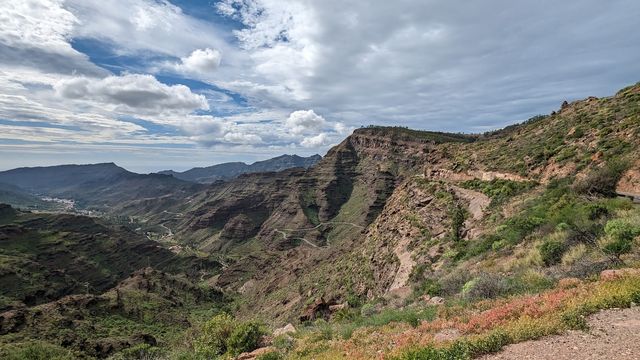
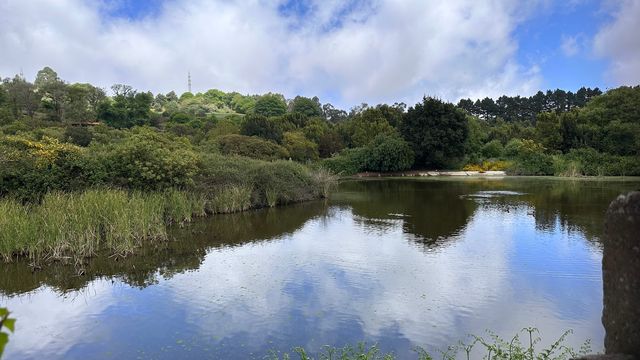
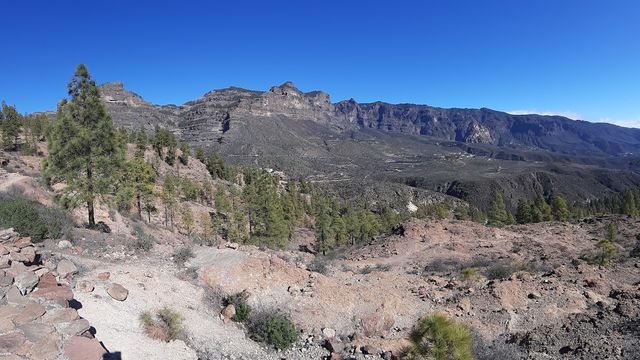
The water lies at the bottom of a bowl of high volcanic mountains. From the dam the reservoir runs back into the valley behind it, and that is the view to photograph; the outlook down the other side of the wall is plainer.
Few tourists come this way, so the shore and the paths around it stay quiet. A guidepost marked Presa de Chira, with an information board beside it, carries the waymarked trails S-60 and SL-2, which makes the reservoir a starting point for walks into the surrounding hills.
The second draw is the engineering. Chira sits at the head of the Chira-Soria scheme, a 200 MW plant built below the dam to move water between Chira and Soria and store renewable power for the island, since water held behind a dam can be released when demand rises.
Good to know
- The water level falls in dry spells, and after a run of dry months the reservoir can sit low between bare banks.
- There has been construction work at the dam, and it can be noisy.
- There are no toilets and no drinking water at the reservoir or nearby — bring water with you.
- Neither the parking nor the access is wheelchair-accessible.
Getting there
You arrive by car on mountain roads, and the final descent towards the reservoir narrows in sections — allow time and drive it slowly. A parking area lies about 230 m away in a straight line, with a second about 2.7 km away.
On foot, look for the guidepost marked Presa de Chira with its information board; the waymarked trails S-60 and SL-2 are signed from there. The nearest bus stop, La Plata, is about 4.8 km away in a straight line, so coming by bus means a long walk in.
Best time to visit
Best: after the winter rains, in the morning or late afternoon.
Avoid: the middle of a summer day.
A reservoir fed by rain fills after the wet months and drains through the dry ones, while the bare volcanic slopes around it give no shade at midday, and there is no water to be had nearby.
Sun & daylight
Nearby Places
Similar Places

Featured in our guides
Chira Reservoir on the map
The road down to the reservoir narrows in sections on steep mountain slopes. Drive slowly and keep to a speed at which you can stop for oncoming traffic.
Get directions

Your whole travel map in one place
Get inspired by new places around the world and find the ones worth the journey
Frequently asked questions
Do you have to pay to visit Chira Reservoir?
No. There is no ticket, and the reservoir is open at any time.Are there toilets or drinking water at Chira Reservoir?
No. There are no toilets and no drinking water at the reservoir or nearby, so bring what you need.Can you reach Chira Reservoir by bus?
The nearest bus stop, La Plata, is about 4.8 km away in a straight line. A car is the practical way in.Are there hiking trails from Chira Reservoir?
Yes. A guidepost marked Presa de Chira carries the waymarked trails S-60 and SL-2, with an information board beside it.What is the Chira-Soria project?
A 200 MW pumped-storage hydroelectric plant approved by the Cabildo of Gran Canaria in 2021. Water from Chira runs through the plant down to Soria Reservoir to generate power when demand rises, and surplus power pumps desalinated seawater up to refill both reservoirs.