Costa Blanca in winter: weather, sea and what to do
6 min read2 destinations
Valencia · Spain
Winter on the Costa Blanca is mild rather than warm: in Alicante, afternoons from December to February average 17–18 °C, nights 6–7 °C, and it rains on three or four days a month. By January the sea has cooled to about 15 °C, so this is a season for mountain walks, villages and the city, not the beach. On the plus side, the crowds thin out, and in late December you can watch the sun shine through the Santa Llúcia Arch above Penàguila.
In short
- Air: 17–21 °C by day and 6–10 °C at night from November to March.
- Sea: about 19 °C in November, 14–15 °C from January to March.
- Sunshine: five to seven hours a day, compared with eleven in July.
- Rain: three or four rainy days a month.
- Crowds: visitor numbers drop sharply.
- Best for: walks inland, such as the Route of the 6000 Steps on a clear day; in late December, watching the sun shine through the Santa Llúcia Arch at Penàguila.
- Pack: a warm layer for the evenings.
Weather from November to March
- November: 21 °C by day, 10 °C at night, about four rainy days, sea 19 °C.
- December: 18 °C by day, 7 °C at night, about four rainy days, sea 17 °C.
- January: 17 °C by day, 6 °C at night, about four rainy days, sea 15 °C.
- February: 18 °C by day, 7 °C at night, about three rainy days, sea 14 °C.
- March: 20 °C by day, 9 °C at night, about three rainy days, sea 15 °C.
The figures are for Alicante; Spain's weather service, AEMET, publishes no comparable averages for the resorts in the north of the Costa Blanca. November is still fine for a swim if you don't mind 19 °C water. From December the sea is too cold for most swimmers. According to Benidorm town council (May 2025), the town is one of the few places on the Spanish coast that keep beach services, including lifeguards, running all year. If warm water matters to you, see Winter sun: the Canary Islands, Madeira and southern Spain.
Walk the trails while it's cool
The mountains behind the coast are where winter pays off. Long climbs that are hard going in summer heat are easier in the cool months. The catch is rain: our pages on the two walks below advise against setting out in it, and the gorge on the 6000 Steps route can flood after a downpour. Save both for a dry, clear day.
Route of the 6000 Steps
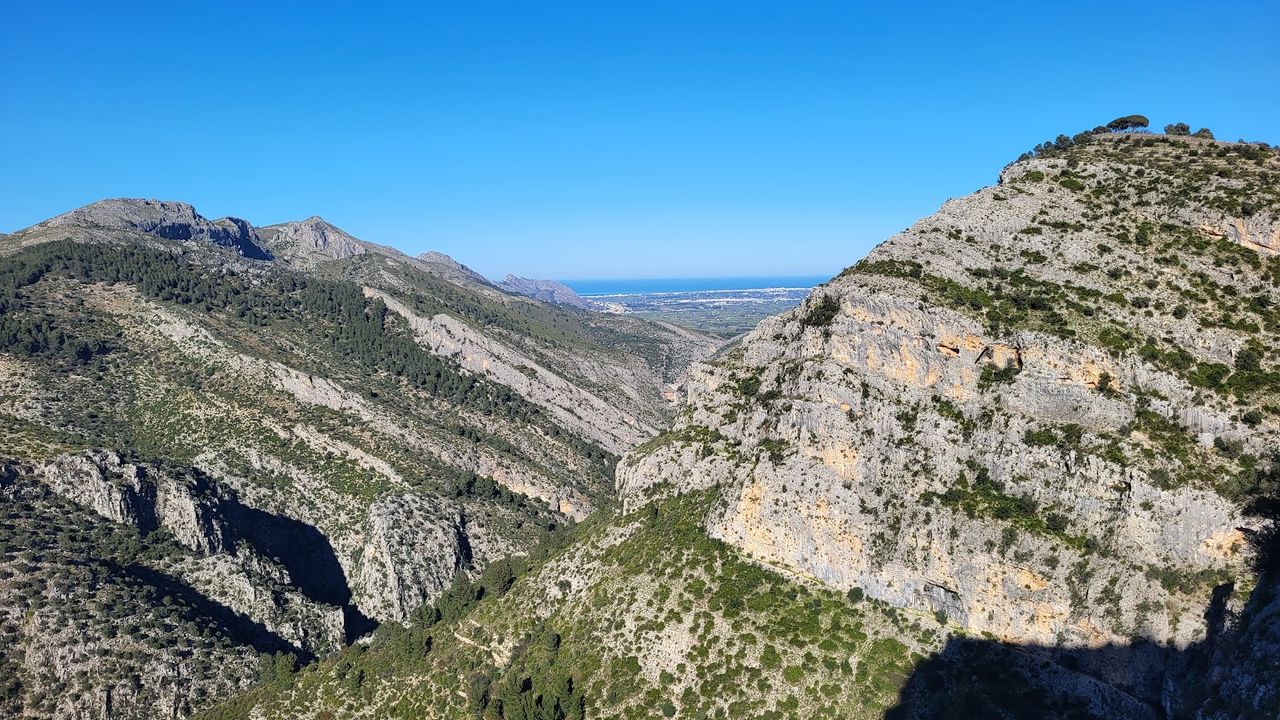
A 13 km loop in the Vall de Laguar that drops down stone steps into a gorge, follows the dry riverbed and climbs out again up more steps. It takes anywhere from just under four hours to over five, with very few flat stretches. Spring and autumn are best, but it is fine to walk on a clear winter day too. Start early, carry water and food for the whole loop, and wear boots with ankle support.
Santa Llúcia Arch
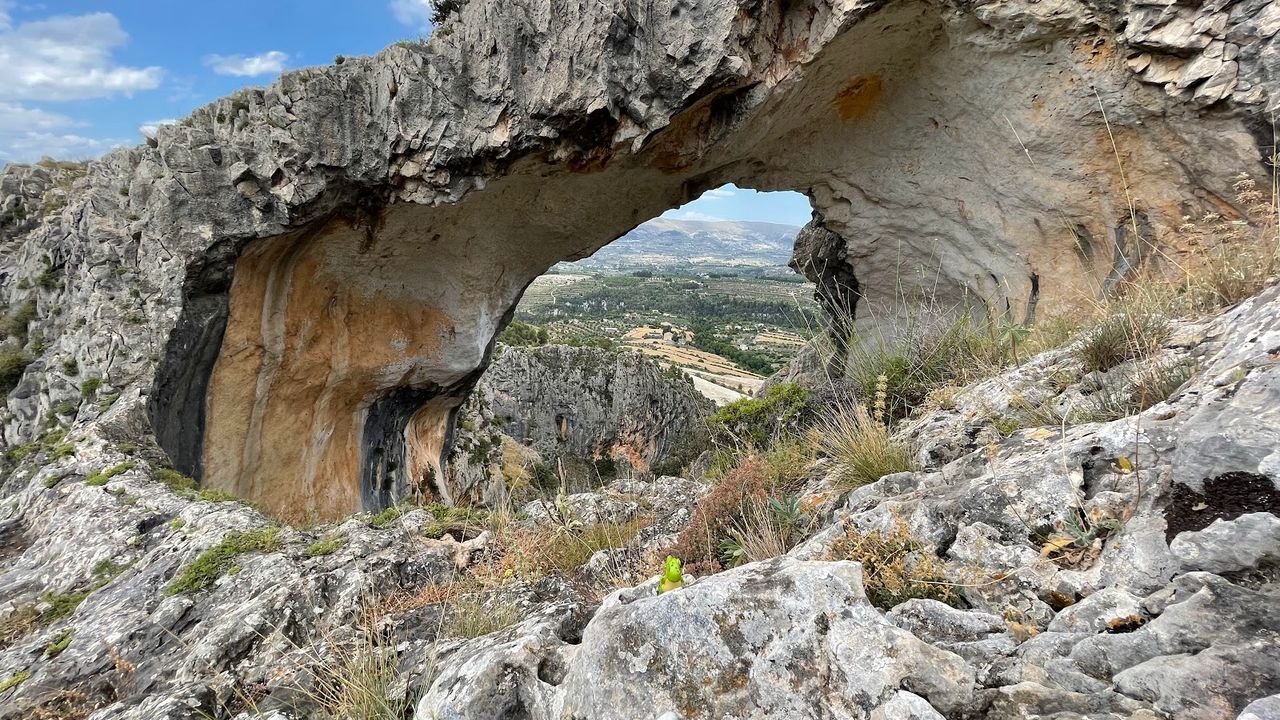
A natural stone arch on a ridge above Penàguila. On clear afternoons from 13 to 29 December, at about 3:50 pm, the sun shines through it onto part of the town; tradition links the moment to Saint Lucy's Day, 13 December. The best place to watch is Avenida País Valencià, in Penàguila itself. On an overcast day there is nothing to see. The walk up to the arch ends on an exposed ridge, so it is no place to be in rain or strong wind.
Things to do in Valencia
Paid links: booking through them supports YowJourney.
Instead of the sea
On a grey or wet day, go underground, but check opening times first. The Canelobre Caves, on the slopes of Cabezón de Oro, have one of the highest underground vaults in Spain, and the Cave of the Skulls runs for more than 400 m through a series of lofty chambers. Guadalest is split between a medieval upper quarter and a newer lower town above its reservoir; it is on our list of the 5 most beautiful historic towns on the Costa Blanca. In Elche, the Palm Grove is the largest historic palm grove in Europe and a UNESCO World Heritage Site.

Winter events
- Christmas in Alicante: at Christmas 2025 a giant nativity scene, with monumental figures of the Holy Family and the Three Kings, stood in the town hall square. It has held a Guinness World Record since 2020.
- 5 January: the Three Kings ride through the centre of Alicante in a parade. In 2026 they arrived at the port at about 5 pm, and the parade set off at about 7 pm from Avenida de la Estación and ended in the town hall square.
- February: Alcalalí, in the Jalón valley, holds Feslalí, which began as an almond-blossom festival. The 2026 edition ran from 1 to 22 February; the 2027 dates have not been announced as of October 2026. The valley's almond trees have been badly hit by Xylella, a bacterial plant disease, so the festival now centres on the carob tree.
Winter on the Costa Blanca suits walkers, anyone touring inland villages and anyone who wants Alicante without the summer crowds; for a beach holiday, it is the wrong season. The air temperatures, rainy days and sunshine hours in this article are 1981–2010 averages from AEMET for Alicante; sea temperatures are seasonal norms from one source (temperaturadomar.pt), so treat them as estimates.
FAQ
Can you swim on the Costa Blanca in December?
Few people do. The sea off Alicante is about 17 °C in December and 15 °C by January. In November it is still around 19 °C.Do you need a car in winter?
Not for Alicante itself: the C6 bus runs from the airport to the centre every 20 minutes, and trams and buses cover the city. For the walks it depends. The nearest bus stop to the Route of the 6000 Steps is about 1 km away, but for the Santa Llúcia Arch the nearest public transport stop is about 2.8 km away as the crow flies, so a car is the practical choice.How many days do you need?
Two to three days are enough for Alicante's old town. A week gives a better sense of the wider Costa Blanca and leaves time for day trips; in winter, that means the mountain trails above all.Is November warmer than December, January and February?
Yes. In Alicante, November afternoons average 21 °C and nights 10 °C, and the sea is about 19 °C. From December to February, afternoons are about three degrees cooler.