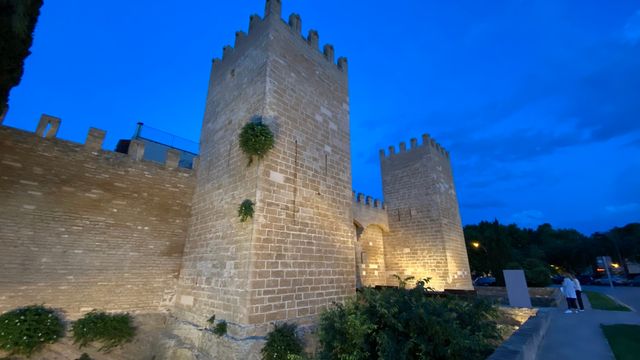
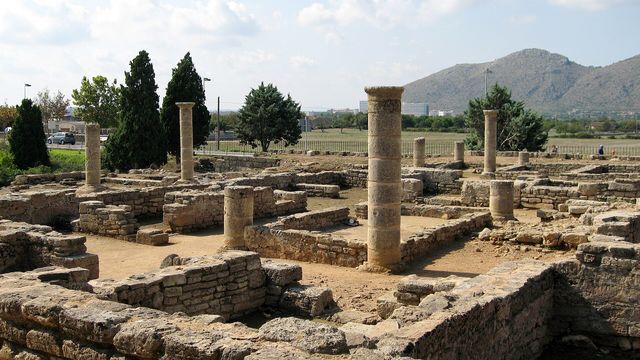
The old town sits inside a 14th-century wall you can climb and follow almost all the way round, and the ruins of Roman Pollentia lie just outside it, in front of the Church of Sant Jaume. Down on the bay, Port d'Alcúdia and Platja d'Alcúdia hold most of the hotels, a marina ringed with restaurants and a sandy beach that runs 14 km to Can Picafort. The resort is a relaxed one, popular with young families and pensioners, and the old town holds a market on Sundays and Tuesdays all year.
Alcúdia

- Currency
- Euro (EUR)
- Language
- Catalan, Spanish
- Power plug
- Type C/F, 230 V
- Visa
- Schengen
- Time zone
- UTC+1 / UTC+2 (CET/CEST)
- Tap water
- Safe; mineral taste in the south
- Tipping
- Not expected; 5–10% for great service
- Emergency
- 112
Things to do
All tours in Alcúdia on GetYourGuide
Paid links: booking through them supports YowJourney.
When to go
Shoulder
Apr – May
April brings the nautical fair, built around cuttlefish, and the beach is quieter than in summer while the sea is still cool.
High season
Jun – Sep
The beach strip and marina are at their busiest, the Sant Jaume festival fills the old town for nine days at the start of July, and the jazz festival opens at the end of August.
Shoulder
Oct – Oct
The agricultural fair comes at the beginning of the month, and the sea holds some of its summer warmth as the crowds thin.
Low season
Nov – Mar
Many restaurants at the port and along the beach close for the winter, while the walls and the twice-weekly market in the old town carry on.
How long to stay
Two days cover the old town: a walk along the walls and through the Pollentia ruins, a Sunday or Tuesday market morning, and an afternoon on the beach. A week suits a beach stay, with time for the birders' wetland of S'Albufera next door in Playa de Muro and a day trip to Ciutadella on Menorca, since the morning ferry from Alcúdia comes back in the evening.
Getting around
Local buses tie the old town to the port and the beach strip. The 323 shuttles between Alcúdia, the port and Alcanada out on the headland; the 322 comes in from Pollença and Port de Pollença, the 324 from Can Picafort and the 325 from Cala Rajada. Over a dozen places hire out cars and bicycles. Taxi firms here are mostly in the airport-transfer business, so do not count on one for a short ride.
Local rules
- Bus 302 is not for local hops. It runs on from Palma to the port, the beach strip and Can Picafort, but you may not ride it just for that section. Use the local lines instead.
- The old town is pedestrianised. The narrow streets inside the walls are for walking, so do not plan to drive in.
What to see

Destinations in Alcúdia
Frequently asked questions
Is Alcúdia a party resort?
No. There are plenty of bars at the port and along the beach strip, but Alcúdia never took on a clubbing scene, and the old town has no free-standing pubs. The resort draws young families and pensioners.How do I get to Alcúdia from Palma?
Alcúdia is 55 km north-east of Palma on the Ma-13 highway. TIB bus 302 runs from Palma via Inca and Sa Pobla and takes about an hour.Can I visit Menorca on a day trip from Alcúdia?
Yes. Menorca Lines sail from Alcúdia to Ciutadella in the morning, a 75-minute crossing, and return in the evening.When is the Alcúdia market?
On Sunday and Tuesday mornings, all year round, next to the Porta del Moll gate of the old town.What is there to see in the old town?
You can walk the 14th-century wall almost all the way round the town. Just outside it are the remains of Roman Pollentia and a small Roman theatre, and north of the town stands a 19th-century bullring.