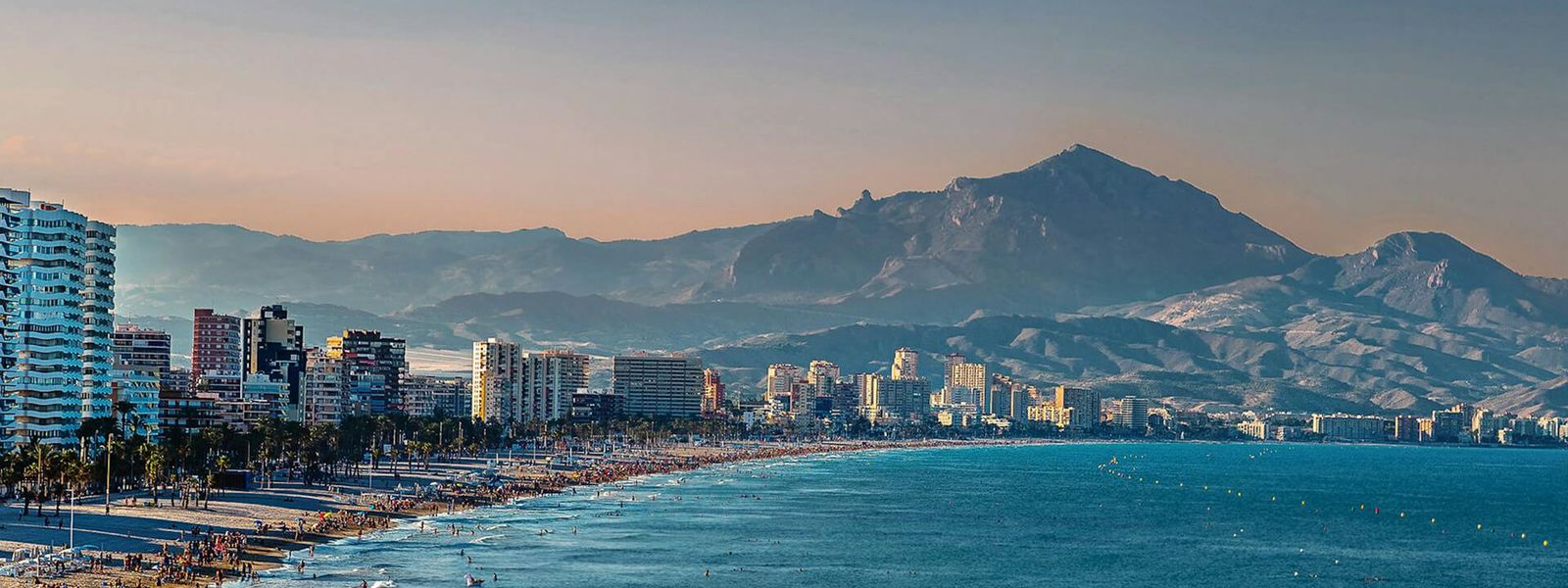
The city stands on Spain's southeastern coast as capital of Alicante province and a historic Mediterranean port. Founded by Carthaginian general Hamilcar Barca as Akra Leuka ('White Mountain'), it was later renamed Lucentum by the Romans and developed into a major medieval trading centre. The old town's historic quarters remain largely walkable, and the city has become a hub of tourism centred on the Costa Blanca's beaches.
Alicante
- Currency
- Euro (EUR)
- Language
- Valencian, Spanish
- Power plug
- Type C/F, 230 V
- Visa
- Schengen
- Time zone
- UTC+1 / UTC+2 (CET/CEST)
- Tap water
- Safe; mineral taste in the south
- Tipping
- Not expected; 5–10% for great service
- Emergency
- 112
Things to do
All tours in Alicante on GetYourGuide
Paid links: booking through them supports YowJourney.
When to go
High season
May – Aug
Summer season brings hot weather and peak tourist crowds seeking relief on the beaches and in the old town.
Shoulder
Sep – Oct
Warm weather continues but temperatures drop slightly; visitor numbers thin out after summer holidays end.
Low season
Nov – Apr
Mild winter temperatures but cloudier skies; visitor numbers drop significantly and the city settles into a quieter rhythm.
How long to stay
Two to three days allows time to explore the old town's history and take advantage of nearby beaches. A week would give a better sense of the wider Costa Blanca region and allow for day trips to surrounding areas.
Getting around
The city is easily reached by plane; bus C6 runs from Alicante-Elche Airport to the city centre every 20 minutes, taking about 20 minutes (€4.50 as of 2025), or a taxi costs €20–25. Once in the city, the old town is largely walkable. Public transport comprises trams and buses operated by Subus Alicante. A single journey costs €1.45 (2025) or you can use a rechargeable Bono Móbilis Multiviaje card (€8.70 for 10 rides plus €2 for the card, 2025); routes run from 06:30–22:30 on weekdays, with extended hours at weekends and night services available. Taxis are regulated and reasonably priced; stands are at the main bus and train stations and along the Explanada de España.
Local rules
Avoid the port area and districts to the west at night, which have a poor reputation and are best not explored after dark. Watch your belongings on the beaches, particularly at busy times, as petty theft is common. Northern neighbourhoods such as Campoamor and Virgen del Remedio are best avoided, though they hold little appeal to visitors.
What to see
Destinations in Alicante
Frequently asked questions
How do I get from the airport to the city centre?
Bus C6 departs every 20 minutes from the departure level of the new terminal, taking about 20 minutes to reach the city centre (€4.50 as of 2025). A taxi will cost €20–25.What public transport options are available?
Trams and buses are operated by Subus Alicante. A single journey costs €1.45 (2025), or purchase a Bono Móbilis Multiviaje rechargeable card for €8.70 per 10 rides plus €2 for the card. Most routes run from 06:30–22:30, with extended hours at weekends and night services available.Are many attractions within walking distance?
Yes; if you stay in the old town, most areas of interest are within a short walk.What time do restaurants typically open for dinner?
Many restaurants close between 16:00 and 21:00 and do not open for dinner before 21:00. This follows the Spanish custom of a long midday meal and siesta. Some establishments in tourist areas serve food at earlier times.