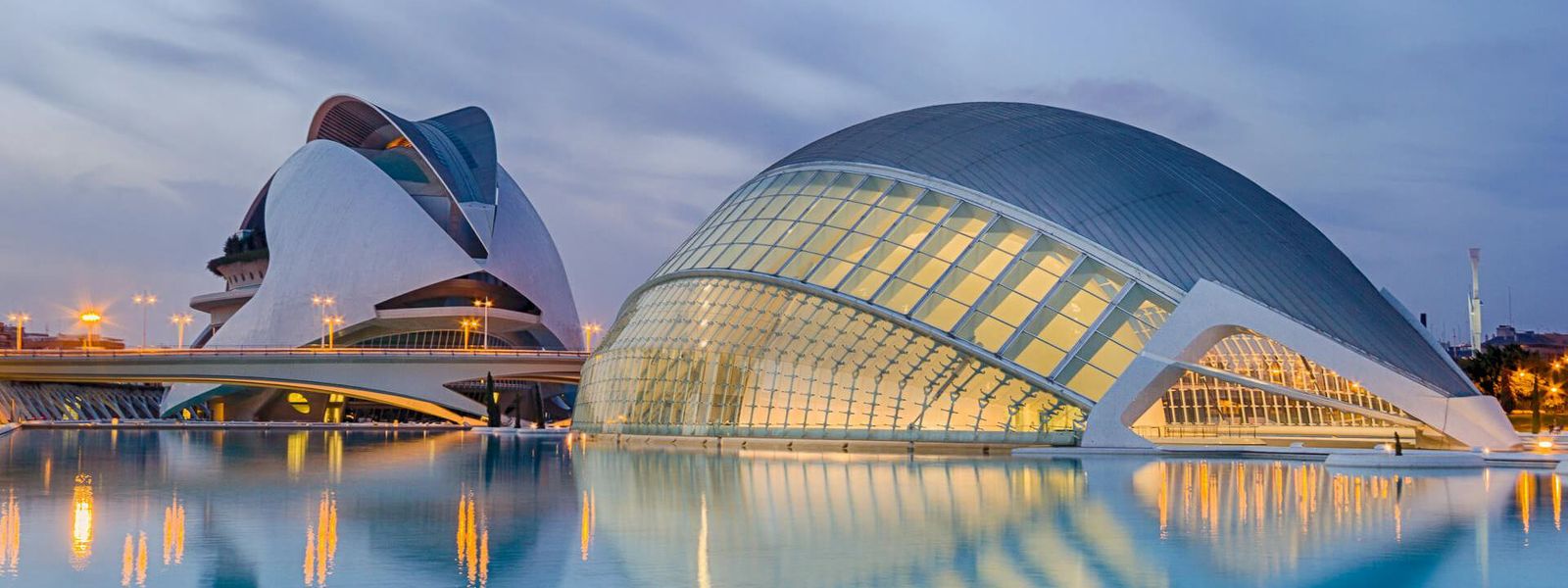
The capital of the Valencian Community, Valencia sits on Spain's Mediterranean coast. Transformed from a third-century Roman settlement, it grew into a medieval trading powerhouse and now balances historic monuments—the cathedral, the 15th-century silk exchange (Llotja de la Seda)—with bold contemporary architecture. The futuristic City of Arts and Sciences dominates the converted riverbed of the Turia. Paella originated here; the city's beaches, markets and spring Falles festival (with its giant wooden figures burned in the streets) draw visitors year-round.
Valencia
- Currency
- Euro (EUR)
- Language
- Valencian, Spanish
- Power plug
- Type C/F, 230 V
- Visa
- Schengen
- Time zone
- UTC+1 / UTC+2 (CET/CEST)
- Tap water
- Safe; mineral taste in the south
- Tipping
- Not expected; 5–10% for great service
- Emergency
- 112
Things to do
All tours in Valencia on GetYourGuide
Paid links: booking through them supports YowJourney.
When to go
High season
Mar – May
The Falles festival in March unofficially marks spring. Outdoor terraces open; life returns to the streets.
High season
Jun – Sep
Hot and humid; many locals leave in August. Beach season extends into September; water is warm.
Shoulder
Oct – Nov
October remains mild. November turns gloomy with less sunshine; fewer events.
Low season
Dec – Feb
Cool and damp, around 10°C. Few tourists. Some outdoor cafés remain open.
How long to stay
Valencia deserves at least 3–4 days. The City of Arts and Sciences and the medieval old town each justify a full day; add another for beaches and the Turia riverbed park (Jardí del Túria), the city's transformed former river course. A week allows exploration of nearby coastal towns and Valencian countryside without rushing the city itself.
Getting around
Within Valencia, metro and buses reach all neighbourhoods. The tourist card (€15–25 depending on length) includes unlimited transport to and from the airport, plus free museum entry. The rechargeable SUMA 10 card (€8) grants ten journeys with transfers included on metro, tram and bus. Taxis are metered; fares are displayed in the vehicle. Much of the old city can be explored on foot. Bicycle lanes are marked throughout; pedestrians should not walk in them. The airport lies 21 minutes by metro from the city centre; buses take 30–40 minutes.
Local rules
Valencia is among Spain's safest cities, but take standard precautions. Avoid Ciutat Jardí, El Cabanyal, and Aiora (eastern neighbourhoods) after dark; muggings do occur there. Pickpockets work the Falles festival, metro stations, and railway stations. Pedestrians should not walk in the marked bicycle lanes—this is where cyclists expect safe passage. Station areas and late-night metro may attract beggars.
What to see




Eateries of Valencia
See All
Destinations in Valencia
Frequently asked questions
What is the Falles festival?
Held each March, Falles is Valencia's most famous celebration and a UNESCO-listed spectacle. Giant wooden figures are erected throughout the city, then burned in the streets at night, a tradition marking the unofficial start of spring.Where did paella originate?
Paella originated in Valencia. Authentic versions use bomba rice with seafood (commonly rabbit, chicken, or mixed meats). Paellerias inland serve locals; beachfront restaurants cater mainly to tourists.What language is spoken?
Both Valencian and Spanish are official languages. Most city residents speak Spanish; outside the city, Valencian is preferred and widely spoken. English is common among those under 50, but variable elsewhere.How do I reach the city from the airport?
Metro takes 21 minutes to the city centre (€3.90 plus €1 for a rechargeable card). Buses take 30–40 minutes (€1.50). Taxis are metered: expect €20–23 plus a €5 airport supplement.What local food should I try?
Beyond paella, try arròs negre (black rice with seafood), tapas, and horchata with fartons (a sweet pastry). The Mercat Central (central market) sells fresh produce and local specialities.