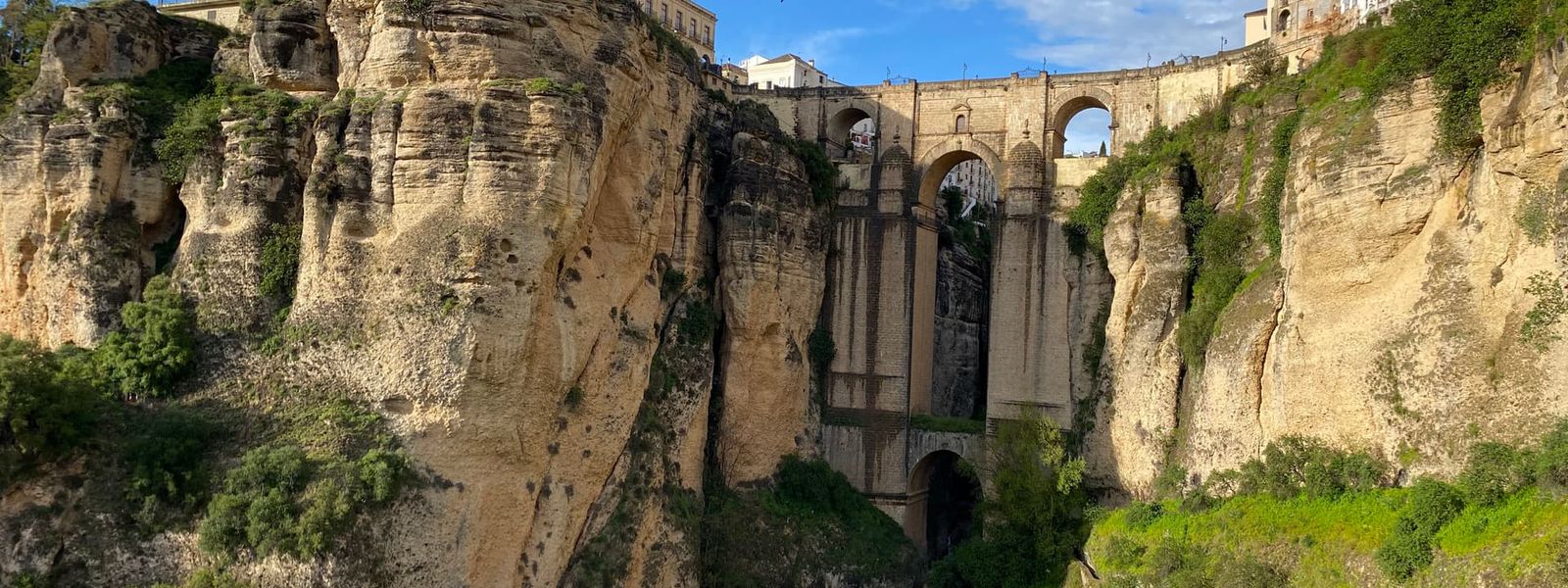
Ronda sits atop a dramatic gorge spanned by an impressive bridge in Málaga province, Andalusia. The town is divided into three neighbourhoods: the modern Mercadillo with transport links, the preserved Moorish quarter of La Ciudad, and Barrio de San Francisco. Originally settled by Celts and later inhabited by Phoenicians, Greeks and Romans, Ronda was conquered by Christians in 1485 after Moorish rule. The town hosted writers including Ernest Hemingway, Orson Welles and Rainer Maria Rilke. Its relaxed atmosphere and position make it a base for hiking, canoeing and mountain biking, though it becomes crowded with day-trippers, especially in summer.
Ronda
- Currency
- Euro (EUR, €). Credit and debit cards are widely accepted in cities and tourist areas. ATMs are abundant; most charge €2–7 per foreign card withdrawal. Some shops request ID before accepting a credit card. €500 banknotes are not accepted in most shops.
- Language
- Spanish (Castilian) is official and universally spoken. Catalan, Basque and Galician are co-official in their regions. English is common in cities and tourist areas but not reliable outside them.
- Power plug
- Europlug (Type C) and Schuko (Type F) sockets; 230 V, 50 Hz
- Visa
- Schengen area: EU, EEA and Swiss nationals enter on national ID card or passport. Many non-EU nationalities have 90-day visa-free access. Non-EEA citizens staying longer than 90 days require an advance visa.
- Time zone
- Europe/Madrid (UTC+01:00 winter time, UTC+02:00 summer time from last Sunday in March to last Sunday in October). Canary Islands are one hour behind mainland Spain.
- Tap water
- Safe to drink throughout Spain. In some southern regions it has high mineral content and may taste unfamiliar; locals often drink bottled water instead. Bottled water is inexpensive and widely available.
- Tipping
- Not mandatory or customary. In restaurants: not expected for simple meals or basic establishments; 5–10% in mid-range or upscale venues if service was exceptional. Always pay cash to the server, not on card. Taxi drivers and hotel staff may appreciate small tips in upscale settings but it is not expected.
- Emergency
- 112
When to go
High season
May – Sep
Peak summer brings warm weather and crowds of day-trippers from the nearby Costa del Sol.
Low season
Oct – Apr
Autumn through spring are quieter, with fewer day-trippers and milder conditions.
Getting around
Ronda is best explored on foot; streets in the old quarters are narrow and non-residents cannot drive in some areas. Two public car parks serve the Mercadillo district—an underground garage and another on Avenida Poeta Rilke north of the bullring. From outside: train from Málaga (€7 by taxi or 20 minutes' walk to the old quarter); bus from regional cities; or scenic car routes from the coast (1–1.5 hours from Marbella via mountain passes reaching 1,125 m) or from Seville and other inland towns.
Local rules
In some neighbourhoods, non-resident vehicles are prohibited on certain streets. Park in the Mercadillo public car parks. Restaurants in the tourist area are overpriced, particularly at midday. Day-trippers arrive in summer months, so expect crowds in peak season and long queues at popular spots.
Destinations in Ronda
Frequently asked questions
How do I get to Ronda?
Train from Málaga (€7 by taxi or 20 minutes' walk from station to old town), bus from regional cities, or scenic car routes from the coast (1–1.5 hours from Marbella) or inland from Seville.What's the best way to get around town?
Walk—Ronda is small and best explored on foot. Non-resident cars are prohibited in parts of the old quarter. Two public car parks serve the Mercadillo.Where can I eat well without tourist markup?
Avoid tourist-area restaurants at midday; look for smaller cafes and bakeries for better value and authentic Spanish pastries and local dishes.What local products should I buy?
Ronda is known for distinctive white enamelled ceramic dishware used for everyday domestic purposes, available in local shops throughout the town.What wines are local to the area?
High-quality wines are produced in small wineries near Ronda. Anis del Tajo, a local spirit, is also widely available.