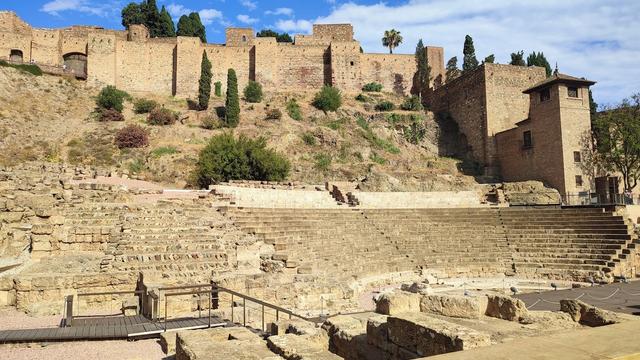
Málaga is the capital of its province and the second-largest city in Andalusia, built along the Mediterranean between the Gibralfaro hill and the Guadalmedina river. Founded by Phoenicians around 770 BC, it keeps a Roman theatre, the Moorish Alcazaba and Gibralfaro Castle above the old town. Picasso was born here, and the city counts 28 museums, among them the Museo Picasso Málaga and the Centre Pompidou Málaga. Travellers come for the old centre, the city beaches and sardines grilled on skewers at the chiringuitos.
Málaga

- Currency
- Euro (EUR)
- Language
- Spanish; English in tourist areas
- Power plug
- Type C/F, 230 V
- Visa
- Schengen
- Time zone
- UTC+1 / UTC+2 (CET/CEST)
- Tap water
- Safe; mineral taste in the south
- Tipping
- Not expected; 5–10% for great service
- Emergency
- 112
Things to do
All tours in Málaga on GetYourGuide
Paid links: booking through them supports YowJourney.
When to go
Shoulder
Mar – Jun
Holy Week processions carry floats weighing more than five tonnes through the centre, the Málaga Film Festival takes a week in March or April, and June is less crowded than high summer.
High season
Jul – Aug
August days run 26–34 °C with sticky sea humidity, the Costa del Sol is at its fullest, and the Feria de Agosto fills the streets with flamenco and sweet wine.
Shoulder
Sep – Oct
The city is less crowded than in midsummer and daytime temperatures rarely climb past 25 °C, which makes the walk up to Gibralfaro easier going.
Low season
Nov – Feb
Málaga has the warmest winters of any European city its size, with December–February highs of 17–18 °C, though this is when most of the year's rain falls and the wind can make it feel colder.
How long to stay
Two to three days cover the old town, the Alcazaba and the walk up to Gibralfaro, a couple of the big museums and an evening by the sea at Pedregalejo. Stay longer if you use Málaga as a base: it is the transport hub of the Costa del Sol, with commuter trains and metropolitan buses to the surrounding towns and AVE high-speed trains from María Zambrano station.
Getting around
The historic centre is free of motor traffic and runs south to the harbour, so most sightseeing is done on foot; the harbour boulevard is open only to pedestrians and cyclists. For longer hops, EMT city buses carry most of the load, backed by a two-line metro with 19 stations over 13.6 km and two Cercanías commuter lines from Centro-Alameda. Metropolitan buses link the city with the surrounding towns.
From the airport, 8 km from the centre, the Line A express bus stops at Alameda Principal and Paseo del Parque, and the C-1 train runs to Centro-Alameda via María Zambrano, the high-speed station. Taxi queues at Terminal 2 can be very long in summer.
On a bike, the coastal route east through Pedregalejo and El Palo reaches Rincón de la Victoria without touching the main road. Heading west towards Torremolinos, the busy highways are hard to avoid.
Local rules
- Taxis take four passengers at most, whatever their ages, so a family of five needs two cabs or a pre-booked minibus.
- Minibus transfers are booked in advance. Licensed minibuses meet passengers in the Terminal 2 arrivals hall; flagging one down outside the airport is forbidden.
- Say the tip before the card goes in. Card machines have no tip option, so tell the staff before they key in the amount, or leave cash.
What to see
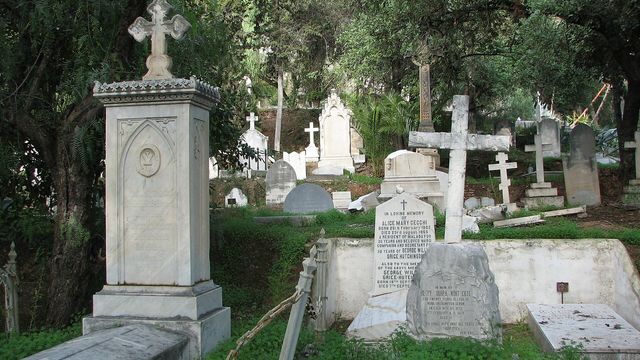

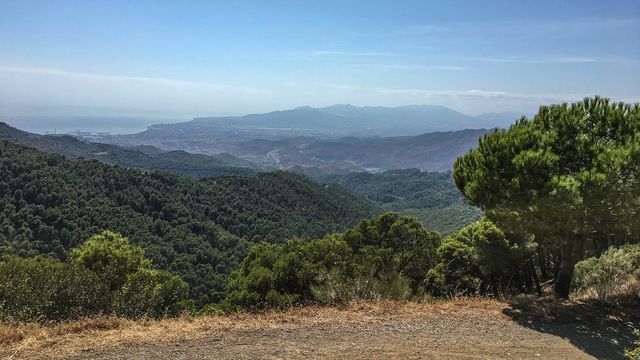


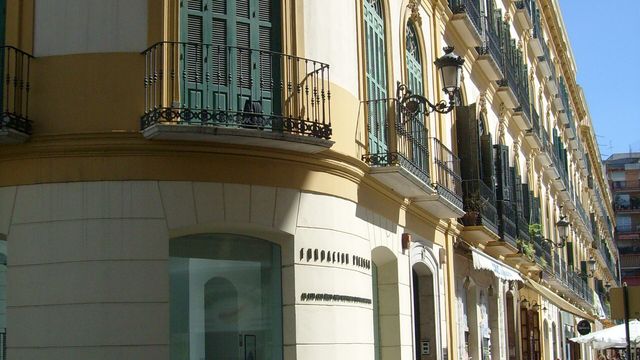
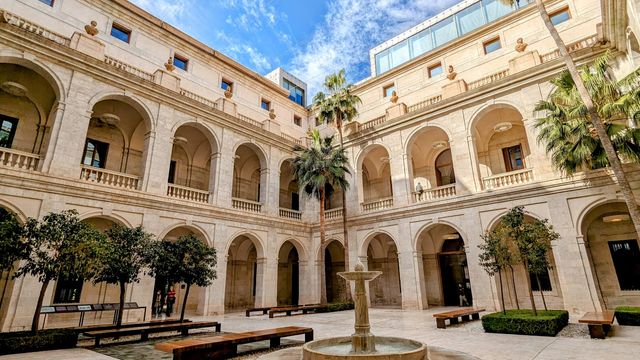


Destinations in Málaga
Frequently asked questions
How do I get from Málaga airport to the city centre?
The airport lies 8 km from the centre. The Line A express bus stops at Alameda Principal and Paseo del Parque, and the C-1 train reaches María Zambrano in 8 minutes before running on to Centro-Alameda. Taxis wait outside the Terminal 2 arrivals hall, with long queues in summer.Is the climb to Gibralfaro Castle worth it?
Yes. Gibralfaro is a 130 m hill above the old town, and the castle on top gives panoramic views over the city. It connects to the Alcazaba below, the 11th-century fortress and palace with courtyards, gardens and a belvedere over the sea. In July and August, climb in the morning or evening.Where can I see Picasso in Málaga?
Picasso was born in Málaga, and his birthplace is a museum. The Museo Picasso Málaga, near the cathedral in the Palacio de los Condes de Buenavista, holds the collection; walls of the Phoenician city are visible in its cellar.What should I eat and drink in Málaga?
Espetos: sardines threaded on a bamboo stick and grilled over an open fire at the chiringuitos along the beaches. Also pescaíto frito, mixed deep-fried fish, and cazón en adobo, dogfish marinated in garlic and vinegar. The local sweet wine is Moscatel, poured in the old bars of the centre. Leave the oranges on the street trees alone: they are a bitter variety.Does Málaga have beaches in the city?
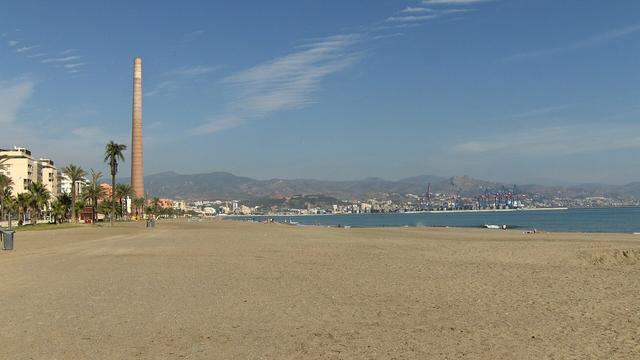
Yes. La Malagueta is the city beach where Carnival ends each February, and to the east lie Pedregalejo and El Palo, old fishing districts lined with chiringuitos.