Calheta Beach lies in the village of Calheta on the south-west coast of Madeira, tucked against the marina. It was created in 2004 and is one of the island's few beaches of golden sand, all of it shipped in from North Africa rather than left there by the sea. Sunbathing, swimming and water sports are what people come for, with cafés, restaurants and hired loungers along the front.
Calheta Beach
Local name: Praia da Calheta
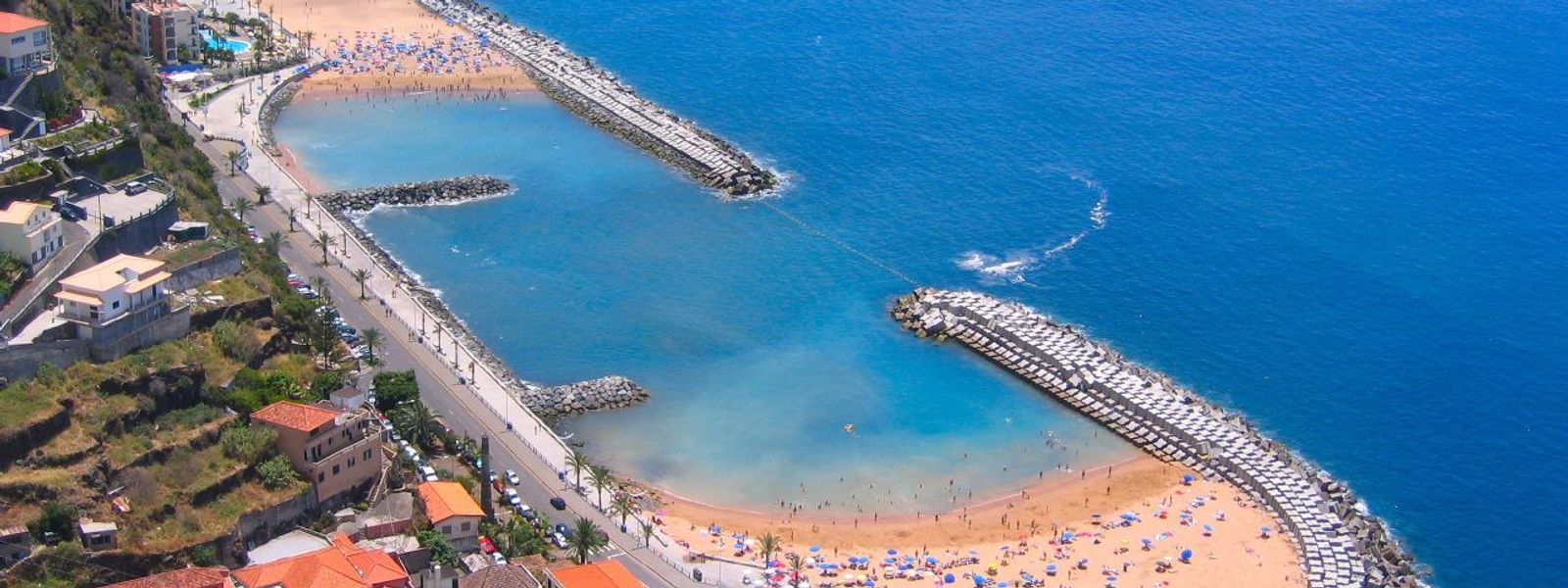
Every grain of sand on this beach arrived by ship from North Africa.
- Entrance
- No ticket — the sand is open to anyone.
- Accessibility
- Wheelchair-accessible entrance and wheelchair-accessible parking.
- Parking
- Paid only. Estacionamento Praceta 24 de Junho, 70 m from the sand, is for customers; a second paid car park sits 95 m away. Street parking runs about €0.80 an hour, and the machine has refused foreign cards — bring coins.
- Difficulty
- Nothing to climb: the beach is in the village centre, level with the promenade.
- Transport
- Bus stops Vila de Calheta (about 420 m) and Calheta Escola (about 455 m), both in the village.
- Advance booking
- Not needed.
- Hours
- Open 24 hours, every day.
What makes it special
The sand is not Madeira's own, and where it came from turned into a political question. It was taken from Western Sahara, a territory occupied by Morocco since 1975, and because its people were never consulted about their own resources, the imports are treated as a breach of international law. The last confirmed shipment reached Calheta in 2010.
What is left on the ground is a crescent of golden sand with the village at its back and boats moored a stone's throw away. The water is calm and easy to walk into. The hill above the village is a 20-minute walk and climb, and from up there the sand, the breakwater and the marina sit in one frame — the shot everyone takes from the promenade instead.
Good to know
- Loungers: sun loungers and umbrellas are hired on the sand and cost little; swimming and water sports are run from the beach.
- Toilets and water: free public toilets stand about 100 m from the sand, and the Fonte Largo da Vila drinking fountain is roughly 200 m away.
- Food: cafés and restaurants line the front, and the café at the west end is cheap and good.
- No information office: there is no tourist information point anywhere near the beach.
Getting there
The beach sits in the middle of Calheta, hard against the marina, so there is no approach to speak of: you leave the car in the village and walk through to the promenade, and the sand starts there.
Parking is the awkward part. Both car parks near the sand charge, the street bays charge too, and finding a space can be difficult — allow time for circling before you give up on the closest options. Arriving by bus leaves you in the village centre, a few hundred metres back from the water.
Best time to visit
Best: the end of summer, around August, when the ocean has warmed enough for a long swim.
Avoid: April, when air temperatures sit around 20°C and the water is more endurance than pleasure.
Late afternoon is the quieter part of the day, at least in May. In July the beach was busy — it is small, and it fills.
Sun & daylight
Nearby Places



Similar Places
Calheta Beach on the map
There are rocks on the beach and in the water. Look at what you are treading on before you swim, never dive in blind, and keep children within reach in the shallows.
Get directions

Your whole travel map in one place
Get inspired by new places around the world and find the ones worth the journey
Frequently asked questions
Where does the sand on Calheta Beach come from?
It was brought from North Africa — specifically from Western Sahara, occupied by Morocco since 1975. Because the people of the territory were not consulted about the sale of their resources, the imports are considered a violation of international law. The last confirmed shipment arrived in 2010.Is the water good for swimming?
Yes. It is calm and easy to walk into, which makes this a place for a proper swim rather than a paddle, and water sports are offered on the beach.Does the beach get crowded?
It is a small beach and a popular one, so summer days fill it. The late afternoon thins out.Is it a good beach with children?
Yes — calm water, loungers and umbrellas to hire, toilets and cafés close by, and the marina alongside for a wander afterwards.Is there anything to do apart from lying on the sand?
Water sports run from the beach, the marina is next door with restaurants around it, and the hill above the village repays the climb with a view over the whole bay.