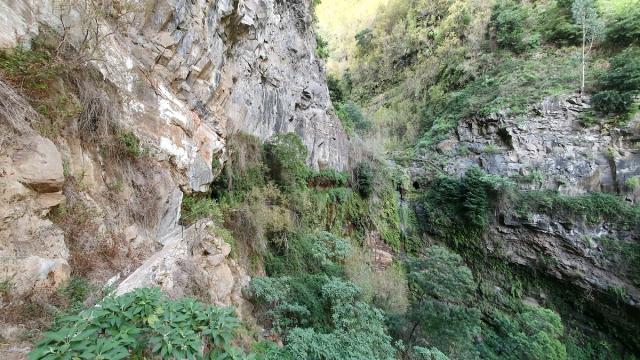
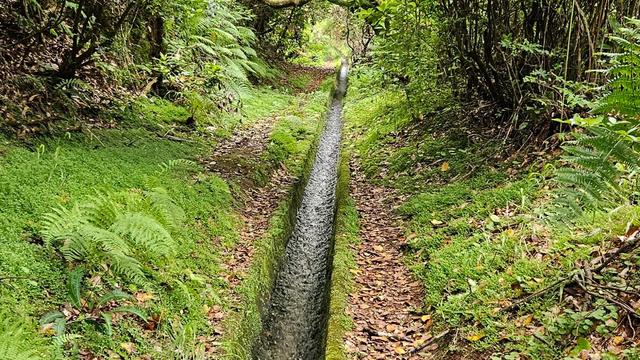
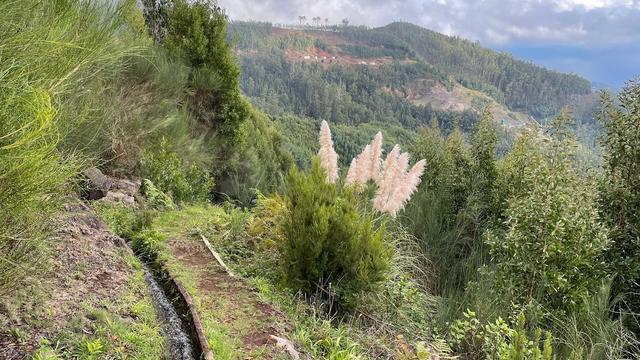
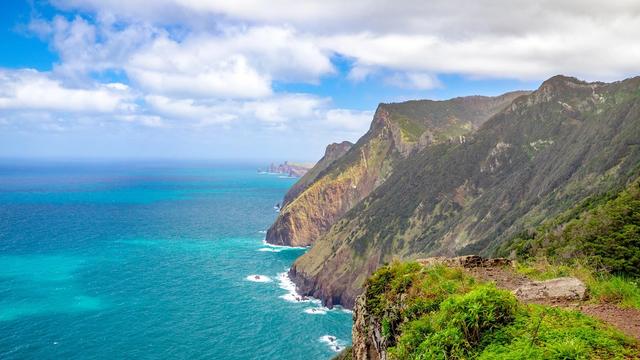
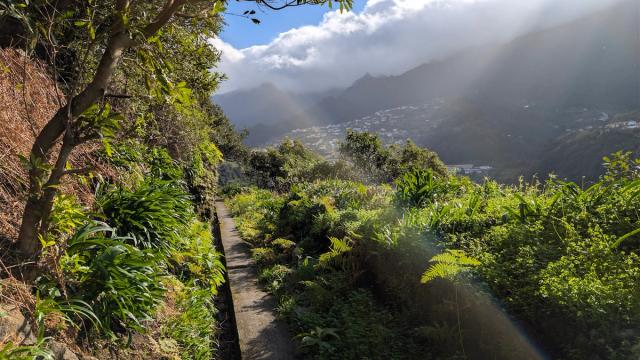
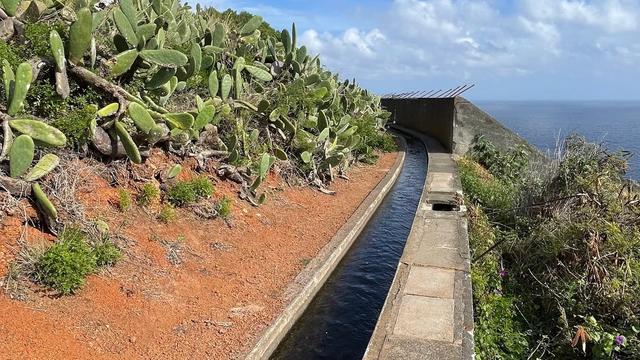
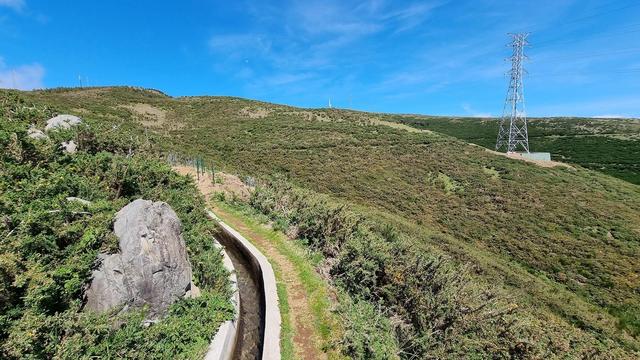
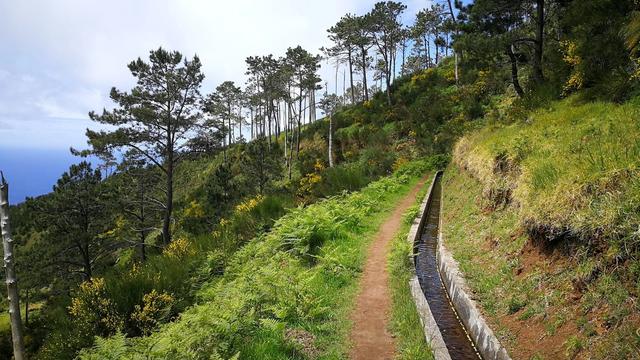
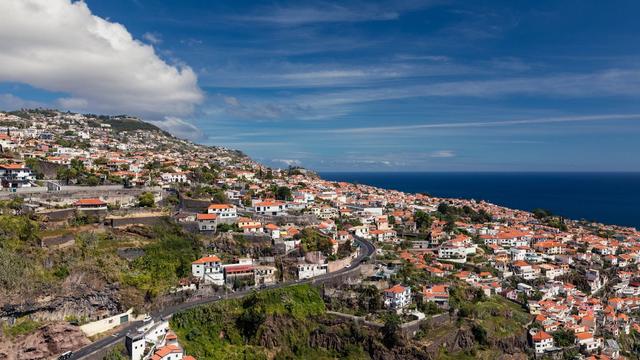
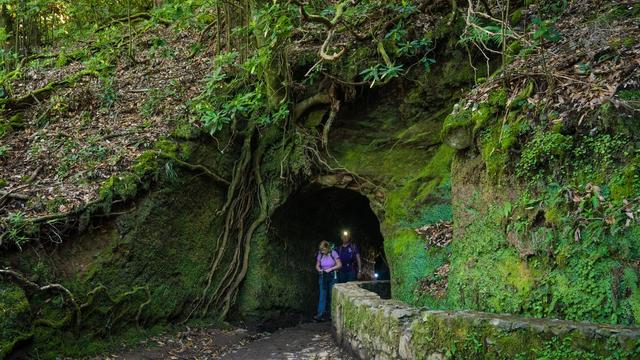
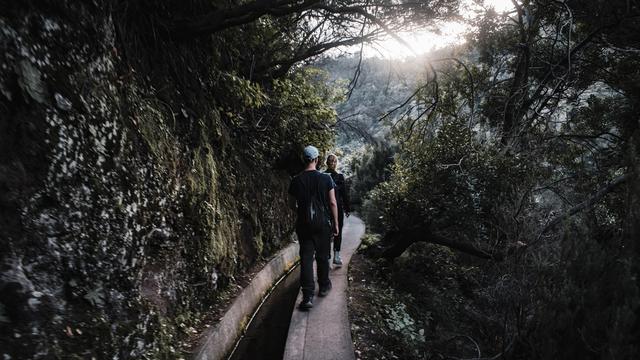
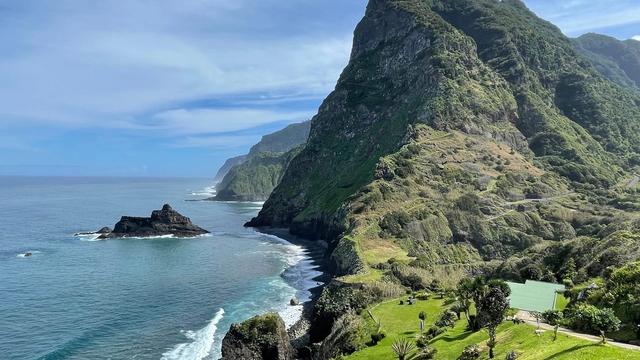
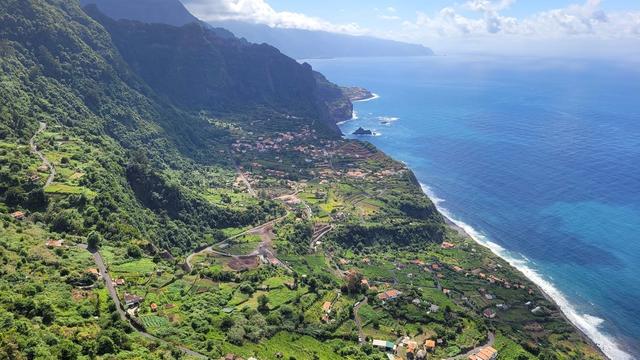
Funchal sits on the south coast and holds roughly half the region's population. Behind it the island climbs to a mountain spine topped by Pico Ruivo at 1,862 m, and the interior stays largely inaccessible — daily life gathers in the villages at the mouths of the ravines. People come for the levadas, irrigation channels whose maintenance paths double as level walking trails, for the laurisilva forest on the northern slopes, a UNESCO World Heritage Site, and for Madeira wine. Whales and dolphins are watched from boats off the coast.
Madeira

- Currency
- Euro (EUR)
- Language
- Portuguese; English widely spoken
- Power plug
- Type C / F, 230 V, 50 Hz
- Visa
- Schengen
- Time zone
- UTC+0 (UTC+1 in summer)
- Tap water
- Safe to drink
- Tipping
- Not expected; 8–10% for great service
- Emergency
- 112
Things to do
All tours in Madeira on GetYourGuide
Paid links: booking through them supports YowJourney.
When to go
High season
Mar – Apr
Hotel occupancy peaks in March and April, above 70% — the fullest stretch of the Madeiran year.
Shoulder
May – Sep
The dry half of the year: Madeira's Mediterranean-type summer brings drought to the south, and the levadas carry down what the north still catches.
Shoulder
Oct – Nov
The heavy autumn rains arrive and run down the ravines to the sea; the north slopes take the worst of the cloud.
Low season
Dec – Feb
The island's wet season, mild at sea level, and in most winters snow falls on the high peaks.
How long to stay
A week works for the main island. It measures 57 km end to end and 22 km across, but the roads bend round every ridge and ravine, so map distances understate the driving. Five or six days take in Funchal, a few levada walks, the high ridge and the north coast without rushing — and leave slack for cloud to clear off the peaks. Porto Santo deserves a couple of days of its own; getting there means a flight or the ferry. On a stay shorter than four days, the weather decides what you see rather than you.
Getting around
Most visitors hire a car; the Vias Rápidas cross the island and move you between coasts, while the old mountain roads are a challenge and take full concentration.
Three bus operators cover the rest: Horários do Funchal (yellow) around the capital, Rodoeste (grey and white with a red stripe) on the west, S.A.M. (green or white) on the east, with the Rodoeste and S.A.M. routes all converging in central Funchal. They reach the points of interest. The catch is the timetables — route detail is thin, and footnotes decide whether a service runs on a holiday or a school day, so read them before you rely on a bus. Tickets come from the driver, who has change; on extra-urban routes the fare depends on how far you go, so say where you are heading and ask for a transfer. Multi-day passes are sold by most operators but valid on one only, so they pay off if you stay in one part of the island.
Taxis offer fixed prices for round trips of the sights, and Bolt works here.
What to see




Destinations in Madeira
Frequently asked questions
How do you get to Porto Santo?
By air or by sea. The flight from Madeira takes 15 minutes; the car ferry runs about two hours one way, costs around €25 per adult per journey and carries vehicles. No ferries come from any mainland — cargo travels in booked containers, and people arrive by plane or on a cruise ship.What should you know about the airport?
Cristiano Ronaldo International Airport lies in Santa Cruz municipality, about 30 minutes from Funchal. The most frequent flights are to Lisbon, roughly an hour and a half away, with direct services to more than 30 other airports in Europe and nearby islands; the UK is a little over four hours out. If you drive there, ask for directions to the parking area you actually need — there are seven and they are badly signposted. Some smaller car hire firms sit near the airport rather than at it and run transport between terminal and depot.Is the north of the island really wetter than the south?
Yes, and the levadas exist because of it: the water falls in the north and the crops grow in the south. Parts of the Madeira Natural Park take as much as 2,800 mm of rain a year, while the Funchal weather station averages 19.6 °C over the year. Porto Santo, much flatter, is semi-arid.What do people drink here?
Madeira wine, a fortified wine in four main types — Malvasia (also called Malmsey), Bual, Verdelho and Sercial, the last two drier. Poncha is the most traditional drink of the island. Coral is the local beer, from a brewery dating to 1872, and Laranjada, an orange soft drink launched the same year, was the first soft drink produced in Portugal.Is Madeira safe for visitors?
Crime figures for the region are very low. In Funchal, a police officer wearing a red armband speaks a language besides Portuguese, usually English or German — worth looking for if you need help.