Best time to visit Madeira
6 min read6 questions
Madeira Islands · Portugal
A season-by-season guide to when to visit Madeira: mild subtropical weather year-round, the drier sunny south versus the wetter green north, levada-walking and mountain conditions, sea temperature and swimming, whale and dolphin season, and the peak dates — summer, the famous New Year fireworks, Easter and the spring Flower Festival — worth booking early.
There is no wrong month — only trade-offs
Madeira sits far enough south, and is warmed by ocean currents, that it never really gets cold or scorching. Funchal averages about 20–21°C on winter days and around 24°C in summer, with occasional 30°C-plus spells when hot air drifts up from North Africa. That mildness is the whole point: this is a place you can hike, swim and sightsee in any month. The choice is not "good weather or bad," it is what you trade — the warmest sea, the driest trails, the lowest prices or the biggest events rarely all fall in the same week.
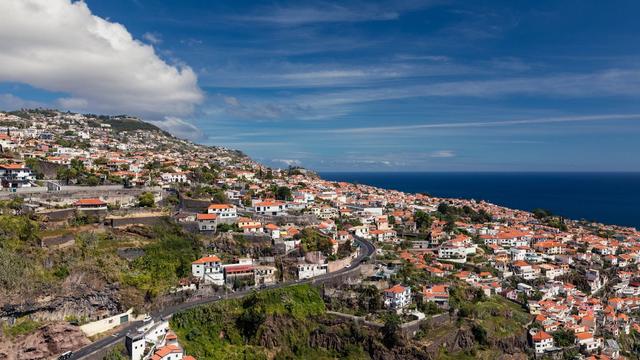
One thing to grasp before anything else: Madeira has two climates on one island. The south coast — Funchal, Câmara de Lobos, Cabo Girão — is drier and sunnier, sheltered by the central mountain wall. The north and the peaks are wetter and greener, because the prevailing winds push damp ocean air up the slopes, where it cools and rains out. So a grey, drizzly morning in the Fanal Forest can coincide with a sunny lunch on a Funchal terrace half an hour away. When the coast disappoints, drive to the other side.
Season by season
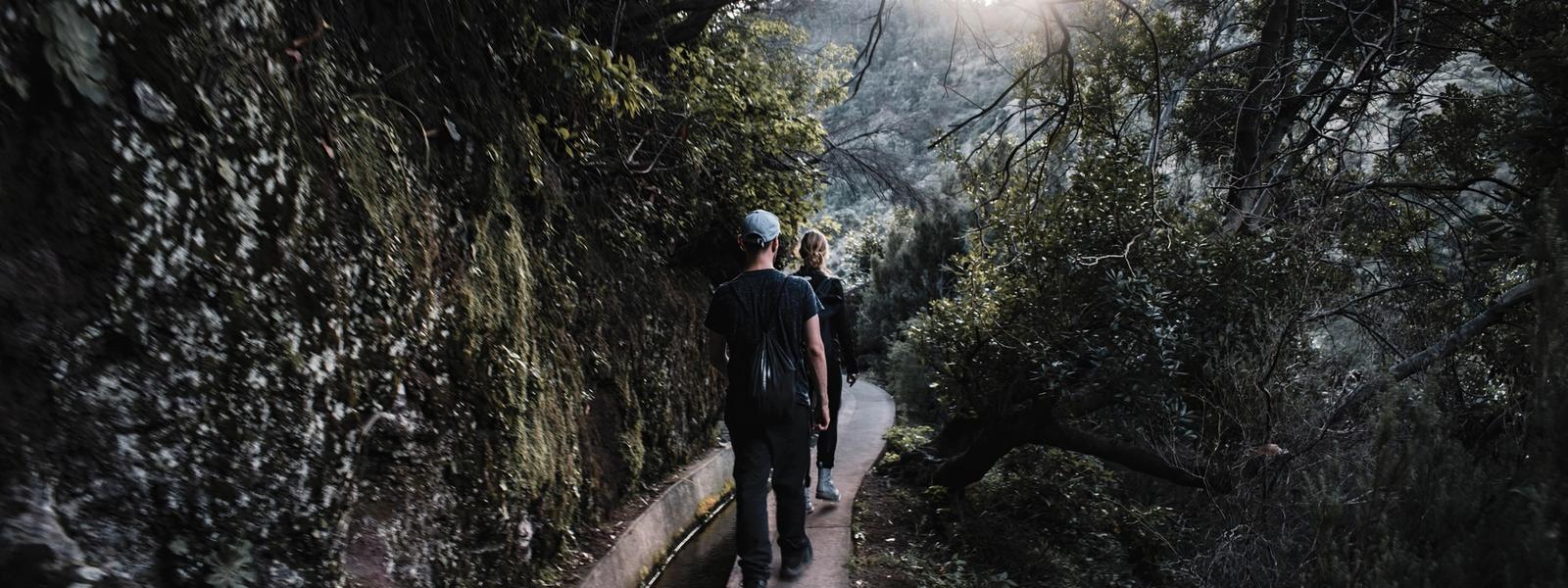
Spring (March–May) is arguably the best all-round window. Days warm up, rain eases off, the island is at its greenest and the levadas — 25 Fontes, Caldeirão Verde, the easy Levada dos Balcões — walk beautifully in comfortable temperatures. Spring is also when the Flower Festival takes over Funchal: in 2026 it runs 30 April to 31 May, with the big flower-float parades on Sundays 3 and 17 May. Book accommodation early for those dates.
Summer (June–September) brings the warmest sea and the liveliest coast, but it is also the busiest and priciest stretch, with August the peak. The upside: the ocean is at its swimmable best. September is a local favourite — the sea hits about 24°C, its warmest all year, while the August crowds thin out and rates start to fall. Autumn (October–November) keeps the warm water into October, then turns wet: December is the wettest month and November the second-wettest, so late autumn is more for green scenery, waterfalls and quiet than for guaranteed sun.
Winter (December–February) is Madeira's classic mild-sun escape: Funchal stays around 20°C, terraces and gardens work, and the south often stays dry while the north catches the rain. Trails are lush and waterfalls run full, though slippery — bring boots with grip and a rain jacket. Winter also has the island's headline moment: the New Year fireworks over Funchal harbour, once certified by Guinness as the world's largest, drawing 100,000-plus spectators. Rooms for Christmas and New Year sell out months ahead and cost a premium, so decide early.
Things to do in Madeira
Paid links: booking through them supports YowJourney.
Sea, mountains and wildlife: match the month to the activity
For swimming, the sea sits between about 19°C in winter and 24°C in late summer. It is comfortable roughly August through October, coolest but still doable in winter. If you want warm water without August crowds, aim for September — think the Lido and Doca do Cavacas pools in Funchal, the black sand of Praia Formosa, or the volcanic pools at Porto Moniz on the north coast.
The mountains play by their own rules. Pico do Arieiro (1,818 m) and Pico Ruivo, the highest peak, can be 8–12°C colder than the coast — a warm April day in Funchal can mean around 5°C at the summit — and the peaks are often buried in cloud or, spectacularly, sitting above it. For the famous sunrise or the Arieiro-to-Ruivo ridge walk, go early, check a mountain-specific forecast, and pack a warm layer even in high summer. April–June and September–October give the best mix of mild air, clearer skies and fewer people up top.
Whale and dolphin watching runs strongest roughly April to October, with morning trips giving the calmest seas. The mix shifts through the year: sperm whales are most likely April–June, migrating blue whales pass July–September, and even in the colder January–March window boats often find orcas and resident dolphins. So the ocean gives you something worth booking in almost any season.
If you want one safe answer: go in May or September–early October. You get warm, mostly dry days, a swimmable sea, good hiking light and thinner crowds than August. Pick summer for the warmest sea and beach energy, winter for cheap mild sun and green trails, and book New Year or the Flower Festival months ahead. Whatever you choose, layer for the mountains — the summit can be 10°C colder than your hotel.
FAQ
What is the overall best time to visit Madeira?
May and September–early October are the sweet spot: warm, mostly dry, good for hiking, with a swimmable sea and fewer people than in August. Spring is greenest and quieter; September has the year's warmest sea as summer crowds fade.When is the cheapest and quietest time to go?
Late autumn and winter (roughly November to February, excluding the Christmas–New Year peak) are the cheapest and quietest, with the trade-off of more rain — especially on the north coast. The weather stays mild, around 20°C in Funchal, so it is still fine for gardens, terraces and lush trails.When can you swim in the sea in Madeira?
The sea ranges from about 19°C in winter to 24°C in late summer. It is most comfortable roughly August to October, peaking around 24°C in September. Hardier swimmers use the pools and beaches year-round; the north-coast volcanic pools at Porto Moniz are best in calm summer weather.When is the best time for levada walks and hiking?
Late spring and early autumn — May–June and September–October — give the warmest, driest, most comfortable days for levadas like 25 Fontes and Caldeirão Verde. Winter hiking is very much possible and rewarding for waterfalls and greenery, but trails get muddy and slippery, so pack boots with grip and a rain jacket.Do I need to book far ahead for New Year or the Flower Festival?
Yes. Funchal's New Year fireworks — once a Guinness world record and drawing over 100,000 people — sell out Christmas and New Year rooms months ahead at premium rates. The Flower Festival (30 April–31 May in 2026, main parades on Sundays 3 and 17 May) is also busy, so book those dates early too.How cold does it get in the mountains?
Much colder than the coast. Pico do Arieiro (1,818 m) and Pico Ruivo can run 8–12°C below Funchal — a mild spring day at sea level can mean about 5°C at the summit — and the peaks are often in cloud or above it. Pack a warm layer and a windproof even in summer, and check a mountain-specific forecast before the sunrise hike.