Best time to visit Iceland
9 min read8 questions
Iceland
There is no single best time to visit Iceland — the northern lights, the midnight sun, ice caves, puffins and the Highland F-roads all run on their own separate calendars, and some of them cancel each other out. This guide breaks Iceland down season by season, with the real daylight hours, road-opening dates and wildlife windows, so you can match your trip to what you actually came for.
Contents
- The short answer — and why it depends on what you're chasing
- Winter (December–February): the dark season — auroras, ice caves, short pale days
- Spring (March–May): equinox auroras, daylight doubling, the last ice caves
- Summer (June–August): the midnight sun, the Highlands open, and peak everything else
- Autumn (September–November): the aurora comes back, the Highlands shut down, and the crowds thin out
- FAQ
The short answer — and why it depends on what you're chasing
Iceland has no single best time — its biggest draws are scheduled against each other, so the answer depends on what you're chasing. If you want one all-round recommendation: late May/early June or September get you the first (or last) open F-roads, active wildlife and — in September only — a real shot at the aurora, without July–August's peak crowds and prices.
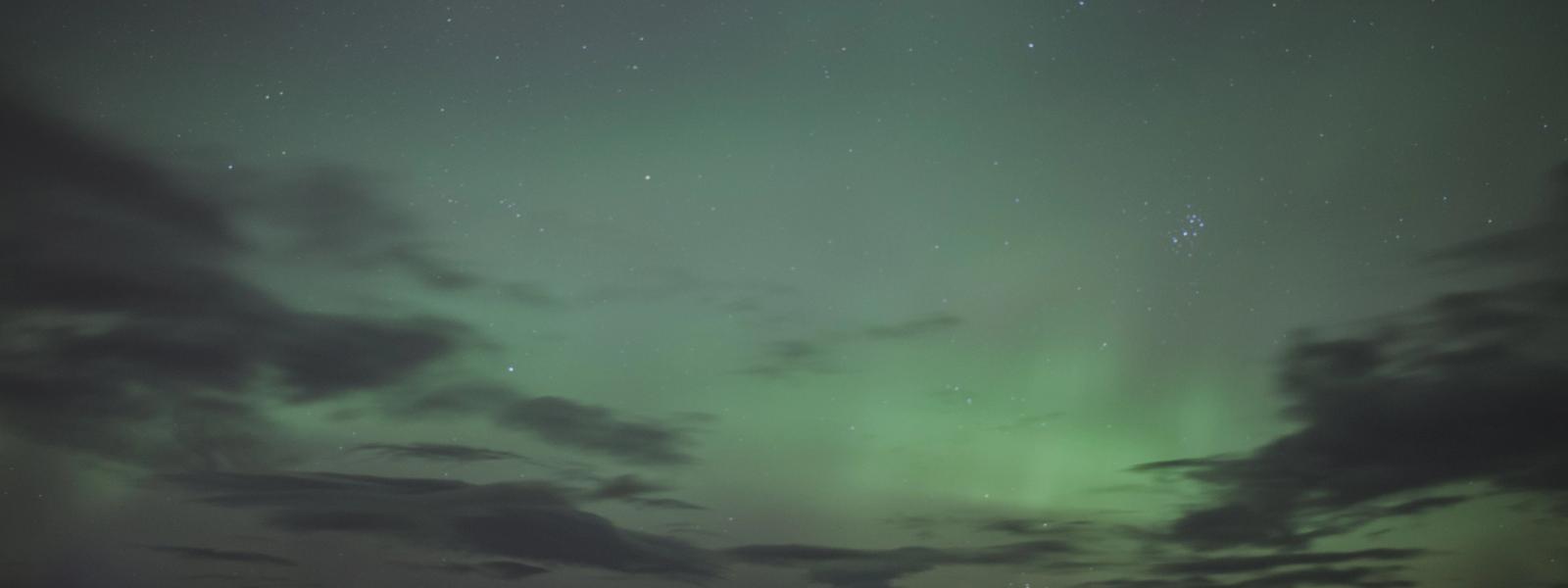
The calendars barely overlap. Northern lights need dark skies, so they only show from roughly late August through mid-April, with the equinox months of September and March rated the best odds. The midnight sun is the opposite extreme — around the June solstice, Reykjavík gets close to 21 hours of daylight and no full sunset for about two weeks, but that same brightness rules out the aurora from May through most of August. Ice caves inside Vatnajökull and Iceland's other glaciers only open from November to March, when the ice is cold and stable enough to be safe. Puffins arrive on the cliffs in late April or May, peak in June and July, and are mostly gone by mid-August. And the Highlands, Iceland's interior F-road network, are only reachable by car from late June to September, with remote routes like Askja and Sprengisandur sometimes not opening until early July. Whichever window you pick, our 7-day Ring Road itinerary flexes around any of these seasons.
Winter (December–February): the dark season — auroras, ice caves, short pale days
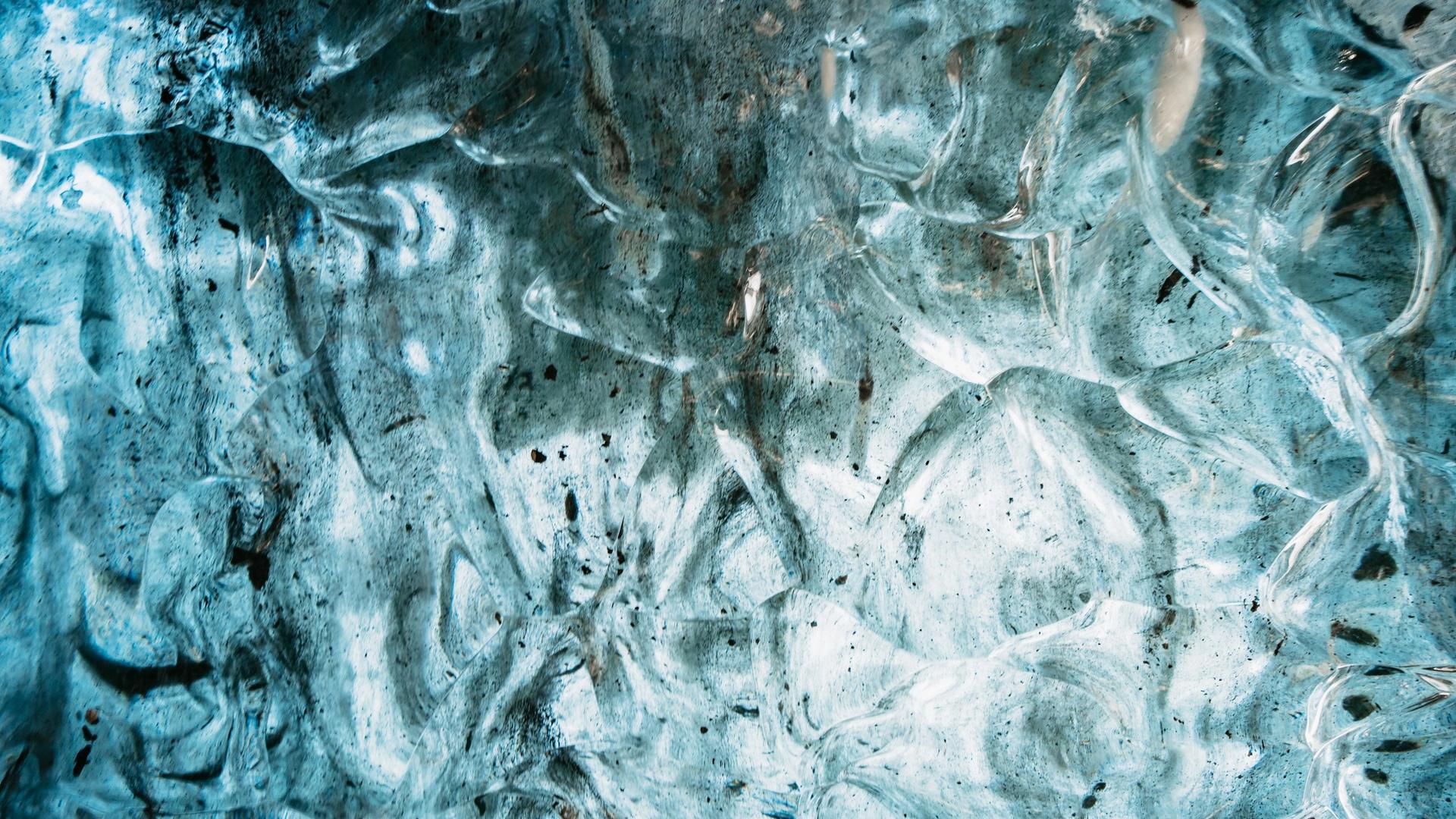
This is Iceland's most extreme season for light. Around the December solstice, Reykjavík gets only about 4 to 5 hours of daylight — sunrise around 11:20am, sunset around 3:30pm — and even at midday the sun barely clears the horizon. That darkness makes winter prime aurora season: November through January hold the year's longest, darkest nights, so on a clear night with any solar activity there's a real chance. It's also the one window for ice caves — natural blue-ice caves inside Vatnajökull and other glaciers only form and stay stable enough to enter from roughly November to March. On the road, expect snow and ice on the Ring Road itself, and the interior Highlands are completely closed — no F-roads are open in winter. On price, this is one of Iceland's cheapest, quietest stretches, with two exceptions: hotel rates spike hard over Christmas and New Year, and the Þorrablót midwinter feasts running through January and February can fill up beds in Reykjavík too.
Things to do in Iceland
Paid links: booking through them supports YowJourney.
Spring (March–May): equinox auroras, daylight doubling, the last ice caves
Spring is when Iceland's light changes fastest. Daylight roughly doubles over the season — about 10 hours in March, climbing past 13 hours by April and around 17 hours by May — and March itself, alongside September, is rated one of the two best months for the northern lights: the equinox brings a seasonal uptick in geomagnetic activity, and evenings are still dark enough for a show. That combination doesn't last, though — by May there isn't enough darkness left to see anything. Ice caves are on their way out too: natural glacier caves stay open into March, sometimes a little longer, before spring melt makes them unsafe. Puffins start returning to Iceland's cliffs in late April, building through May. The Highland F-roads are still shut this whole season — even the earliest route, Kjölur (F35), typically doesn't open until late May or early June. Prices sit in the shoulder range, with one predictable spike around the movable Easter week.
Summer (June–August): the midnight sun, the Highlands open, and peak everything else
Summer flips winter's script entirely. Around the June solstice, Reykjavík gets close to 21 hours of daylight, and technically the sun doesn't fully set at all between roughly June 16 and 29 — the true midnight sun. There's simply too much light for the aurora to show from May through most of August. This is also when the Highland F-roads open, but in stages, not all at once: Kjölur (F35) is usually first, late May to early June; Landmannalaugar (F208) and Þórsmörk (F249) typically follow mid-to-late June; the remote interior routes to Askja, Kverkfjöll and Sprengisandur are often last, sometimes not opening until early July. Iceland's road authority won't commit to exact dates in advance — each route is inspected and announced once it's actually passable, so it's a same-week call every year.
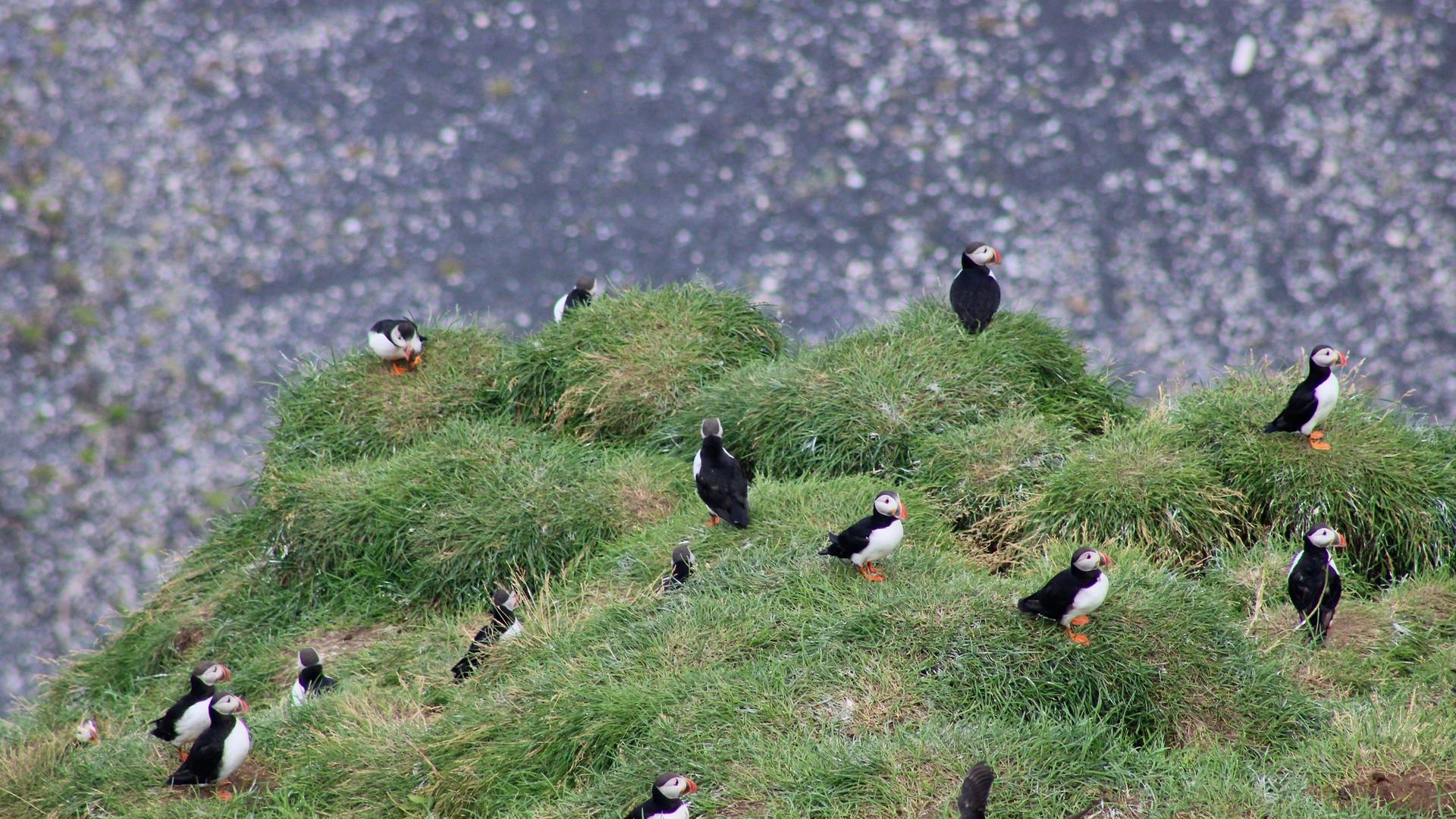
The Laugavegur hut-to-hut trail through the Highlands runs on a similar window, late June to early September, with July the busiest month — hut beds for July are typically gone within weeks of booking opening each January or February, often fully booked by March. Whale watching peaks now too, especially for blue whales off Húsavík in the north, best chanced in June and July, and puffins are at their most visible on the cliffs through July before numbers drop fast in August as adults head back out to sea — nowhere more dramatically than the razorbill and puffin colonies of Látrabjarg, in the Westfjords. All of that popularity comes at a price: July and August are Iceland's two busiest single months at the airport, and flight, hotel and rental prices run highest of the year.
Autumn (September–November): the aurora comes back, the Highlands shut down, and the crowds thin out
September resets the whole board. Nights get dark enough for the aurora again from the last week of August, and September — like March — is rated one of the two best months for it, combining real darkness with still relatively mild weather. It's also usually the last realistic month for the Highland F-roads: the interior routes to Landmannalaugar and Sprengisandur typically close between the last week of September and early October, though an early storm can pull that date forward overnight, so nothing is guaranteed into October. Whale watching tapers off from its summer peak but continues into October and November, particularly out of Húsavík, while puffins are already gone from the cliffs by September. Daylight drops fast — from around 13–14 hours in September to roughly 7–8 hours by November — and prices and crowds ease off noticeably once October arrives, making September–October, alongside May, one of the two shoulder-season sweet spots for access without July–August's peak.
There's no universally right month for Iceland, only a mismatched one for what you actually want. Northern lights? September or March, when equinox darkness pairs with still-workable weather. Midnight sun? Only the weeks around the June solstice. Natural ice caves? November through March — there's no summer option. Puffins? May through mid-August, peaking in June and July. The Highlands and F-roads? Reliably July and August only. And for one trip that touches several of these without July–August's peak prices and crowds, go late May/early June or September — the two windows where open F-roads, active wildlife and, in September only, a real shot at the aurora overlap.
FAQ
What is the best month to visit Iceland overall?
There isn't a single one — it depends on what you're chasing. For a balance of open F-roads, active wildlife and a shot at the aurora without July–August's peak prices, late May/early June and September are the strongest all-round windows.When can you see the northern lights in Iceland?
Roughly late August through mid-April, whenever nights are dark enough. September and March, the equinox months, are rated the best combination of darkness and workable weather; November through January are the darkest nights of all but also the coldest and stormiest. From May through most of August there's no real chance — nights don't get properly dark again until the very last week of August, and even then sightings are faint and infrequent until September.When is the midnight sun in Iceland?
Around the June solstice. Reykjavík gets close to 21 hours of daylight at the peak, and technically the sun doesn't fully set between roughly June 16 and 29 — that's the true midnight sun window.When do Iceland's Highland F-roads open?
In stages, not all at once. Kjölur (F35), the easiest, usually opens late May to early June; Landmannalaugar (F208) and Þórsmörk (F249) typically follow mid-to-late June; the remote interior routes to Askja, Kverkfjöll and Sprengisandur often don't open until early July. Iceland's road authority announces each route only once it's actually inspected and passable — check road.is or umferdin.is on the day.When do the F-roads close again in autumn?
Most close between the last week of September and mid-October, once the first real snow hits the interior — Landmannalaugar and Sprengisandur usually go first among the popular routes. Iceland's road authority can move the date up overnight if an early storm arrives, so nothing after mid-September is guaranteed.When can you visit an ice cave in Iceland?
Roughly November through March, when the ice inside Vatnajökull and Iceland's other glaciers is cold enough to stay stable. Natural blue and crystal ice caves close down for the year as spring melt begins — there's no summer season for them, though a small number of man-made ice tunnels stay open year-round.When can you see puffins in Iceland?
They start arriving on the cliffs in late April or May, and colonies are at their fullest in June and July. Most adults head back out to sea by mid-August, though a few stragglers can linger into early September.When is the cheapest and least crowded time to visit Iceland?
Outside the Christmas–New Year spike, February and March are Iceland's best-value months, and October and November also ease off noticeably from summer prices. July and August are the opposite: Iceland's two busiest single months at the airport, with the year's highest flight, hotel and rental prices.