Black Sand Beaches of Iceland (And How to Visit Them Safely)
8 min read12 destinations
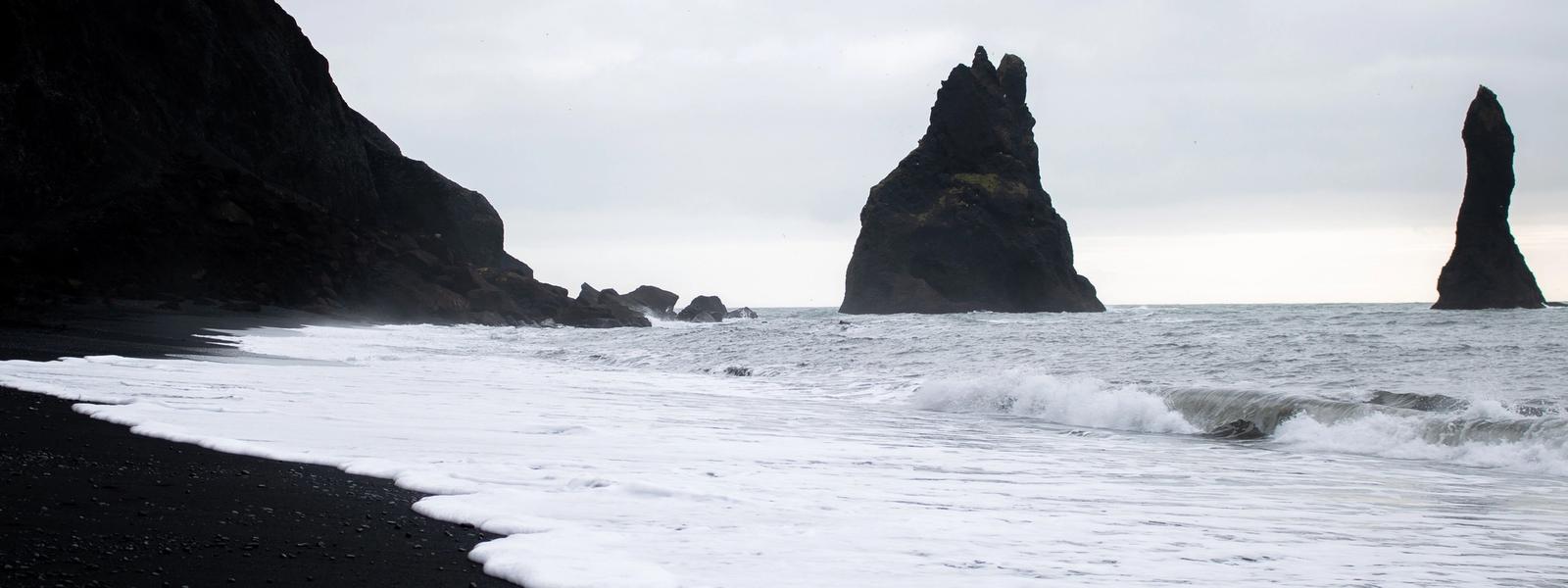
Reynisfjara has killed at least six visitors since 2007, most recently a nine-year-old girl in August 2025, and it is still the beach every Iceland itinerary points you toward. That contradiction is the reason for this list: black sand is genuinely dramatic, but the same waves that carved it can outrun anyone standing where the sand has already turned wet. For each of the twelve beaches we note what's genuinely dangerous and what isn't, so you can tell a photo op from a place that wants real distance kept from the water.
The picks run the range of what volcanic coastline can do: basalt cut into hexagons, a plane wreck rusting on open ground, glacier ice stranded on volcanic grit. Each of the twelve earned its slot by doing something the others don't — a warning-light system worth actually reading, a private beach you pay to enter, a wreck reachable only on foot or by shuttle, a seal colony on the one beach on this list that isn't black at all.
Reynisfjara, the most famous name on this list, is also day one of our 7-day Ring Road itinerary — worth reading before you go, since the wave warnings there aren't decorative.

Reynisfjara Black Sand Beach
Iceland's most photographed beach earns the caution that comes with it. Hexagonal basalt columns frame the Hálsanefshellir cave, and the Reynisdrangar sea stacks rise just offshore — the setting for at least six visitor deaths from sneaker waves since 2007, most recently a nine-year-old girl in August 2025. A three-level warning system now runs at the entrance: yellow means stay alert, orange means stay at least 25 metres back from the water, red closes the shoreline outright, though a viewing platform above stays open. Since the 2025 fatality, the cave and columns also close whenever red is flashing. Read the light before you read the rock formations.

Vikurfjara Black Sand Beach
Ask a local which Vík beach to pick and most say this one. Víkurfjara is a roughly 10-minute drive from Reynisfjara, not a walk — Reynisfjall mountain sits between the two, so there's no footpath over it — and once you're there it shares the same view of the Reynisdrangar stacks. The seabed here is shallower, though, so incoming swells break earlier and lose power before reaching the sand instead of arriving as one unbroken surge. That makes it noticeably calmer — not safe. There's no warning-light system here, so the only rule left is the universal one: keep to sand that's never been wet, and don't stand with your back to the water.

Solheimasandur Plane Wreck
A US Navy Douglas Super DC-3 suffered engine failure when carburetor icing choked both engines in 1973 and put down on this flat black sand plain; everyone aboard survived, and the stripped fuselage has sat here ever since, rusting into the volcanic grit. Cars haven't been allowed near it since 2016 — you either walk roughly 4 km each way from the Route 1 car park (about 45–60 minutes), or pay for the shuttle bus (from around 3,400 ISK per adult) that covers the same stretch in 10–15 minutes. There's no shelter anywhere on the walk, so dress for open, windy sand, not a stroll.

Diamond Beach
Glacier ice that calves off Breiðamerkurjökull drifts through the Jökulsárlón lagoon and washes up here, on a black sand plain officially called Breiðamerkursandur — "Diamond Beach" is the name that stuck for tourists. Don't climb on the ice: it erodes faster below the waterline than it looks from above and can flip without warning, which is why climbing on it now carries a fine. The same currents that move the ice make the water dangerous to wade into, so photograph from dry sand and let the ice come to you.

Stokksnes
The black dune field beneath Vestrahorn's jagged peaks sits on private land, and you pay for it: an entrance fee of roughly 900–1,100 ISK per adult (under-16s free) at the Viking Café buys access to the beach, the shallow tidal flats that mirror the mountain at high tide, and the abandoned Viking-village film set and old NATO radar ruins scattered nearby. It's a rare case in Iceland where the fee, not the waves, is the thing to plan for — bring cash or a card, since a machine outside the café takes payment even when it's shut.

Laekjavik
About 40 km east of Höfn, this stretch of the Ring Road gets skipped by drivers rushing toward Jökulsárlón, which is exactly why the five-minute stop is worth it. A slab-sided sea stack, Lækjavíkstapi, stands alone offshore against black sand and a scattered boulder field, with no crowd, no fence and no signage — which also means no warning if conditions turn. Treat it with more caution than a marked beach, not less.
Things to do in Iceland
Paid links: booking through them supports YowJourney.

Ulfseyjarsandur Black Sand Beach
Near the Djúpivogur airstrip, this beach sits beneath Eystrahorn, a mountain striped with dark gabbro and pale granophyre and often compared to its better-known neighbour Vestrahorn down the coast — same jagged drama, without the entrance fee or the crowd. It takes its name from Úlfsey, the small rocky island just offshore. Wind off the open Atlantic is close to constant here, and there's nothing between you and it, so this is a quick-stop beach, not a lingering one.

Olafsfjordur Beach
This fjord-side black sand beach at the north edge of town is one of Iceland's less expected surf spots: a small community of cold-water surfers rides it through winter, occasionally under the northern lights. If you're not surfing, the appeal is the setting — steep peaks closing in on both sides of a narrow fjord — rather than the sand itself. The water runs the same near-freezing temperatures as everywhere else on this list; watch it from the sand unless you're in a wetsuit.

Dalvik Beach
Dalvík's harbour beach looks out over Eyjafjörður to Hrísey Island and snow-capped peaks, and the town itself is one of Iceland's most reliable whale-watching departure points — local operator Arctic Sea Tours reports sightings on more than 98% of its trips year-round, with humpbacks peaking from May to September. The fjord shelters the water somewhat compared with the open south coast, but it's still the North Atlantic — keep the same distance from the shoreline you would anywhere else.

Borgarsandur Beach
A roughly 2 km dark sand beach east of Sauðárkrókur on Skagafjörður, facing the sheer-sided island of Drangey — a seabird colony reachable only by boat tour from town. It's popular locally for horseback rides along the sand and, thanks to minimal light pollution this far from any city, for aurora viewing on clear winter nights. Fewer tour buses stop here than at the south-coast beaches, which also means no posted warnings — bring your own caution.

Djupalonssandur Beach
The smooth black stones here are nicknamed the "pearls of Djúpalón," reached by a short walk through a lava-rock passage from the car park. Four stone-lifting weights — Fullsterkur (154 kg), Hálfsterkur (100 kg), Hálfdrættingur (54 kg) and Amlóði (23 kg) — once tested fishermen for crew selection; try the smallest before you judge the others. Rusted iron scattered near the shore is what's left of the British trawler Epine, wrecked here in 1948 with 14 lives lost — walk around it, not on it.
Ytri Tunga Beach
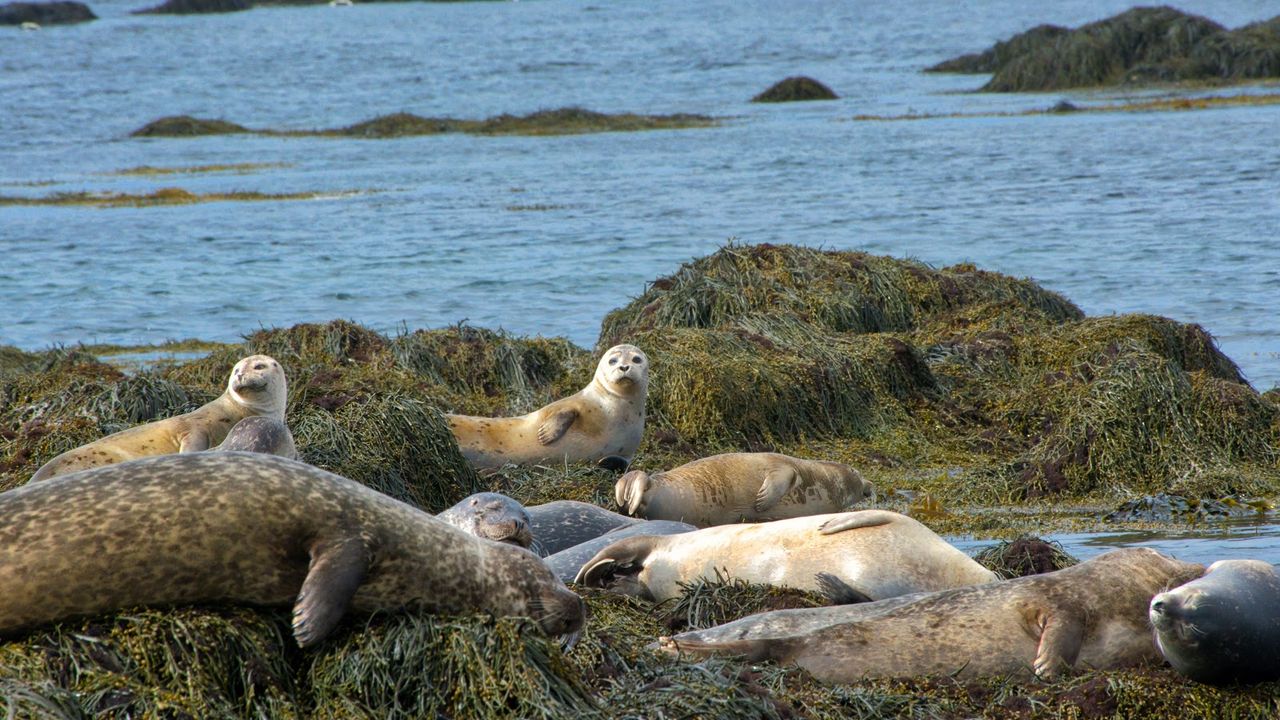
Unlike every other beach on this list, the sand at Ytri Tunga is golden, not black — it's here for what's on it, not the ground itself. Common and grey seals haul out on the rocks at low tide, most reliably from May to August, when pups are around too. Keep at least 50 metres from any seal on the rocks: getting closer can spook the whole haul-out for the rest of the day, and it's the one rule on this list that's about protecting them, not you.
None of these beaches has a lifeguard. The rule Icelandic rescue teams repeat covers all twelve, not just Reynisfjara: stay on dry sand, watch the waterline for a few minutes before trusting it, and never turn your back on the ocean — a sneaker wave reaches further up the beach than the one before it, with no warning of its own. The water sits a few degrees above freezing year-round, so a wave that just wets your boots elsewhere can mean hypothermia here within minutes. Heading to Reynisfjara? Check safetravel.is and respect a red light — the viewing platform above stays open when the sand below is closed. Everywhere else, no sign means more caution, not less.