Waterfalls and mountain lakes of the Catalan Pyrenees and Garrotxa
8 min read11 destinations
Catalonia · Spain
The Catalan Pyrenees split cleanly into two kinds of water stop: glacial tarns and snowmelt falls in the high country around Aigüestortes and the Val d'Aran, and lower, rain-fed falls further east in the Ripollès and the volcanic Garrotxa. This list mixes both — eleven stops with real hike distances, the season each one actually runs full, and a straight answer on whether you're allowed in the water.
The two sides play by different rules. In the high country — Aigüestortes i Estany de Sant Maurici National Park and the Val d'Aran around it — access is seasonal (many trailheads only take a car from mid-June to mid-September) and swimming is banned outright inside the national park boundary. In the Garrotxa and the Ripollès the falls are rain-fed and far easier to reach, and some, like Can Batlle, are genuine swimming spots that need a summer booking to manage crowds.

Gerber Waterfall
At 125 metres, this is the tallest fall inside Aigüestortes, and one of the easiest to reach: a signed staircase path gets you to a viewing platform in about 10 minutes from the roadside parking on the Bonaigua pass road (C-28). Want more of a walk? A separate trailhead further along the old Bonaigua road leads through the Bosc de Gerdar fir forest on a proper 6.4 km loop, about 3–4 hours. Go in late spring to early summer, when snowmelt off the pass is heaviest and the spray reaches the viewpoint — by August the curtain thins out noticeably. It's inside the national park, so admiring it from the platform is as close as you get; swimming at the base isn't allowed.

Gerber Lake
Estany de Gerber sits about 3 km on foot from the Port de la Bonaigua trailhead — a moderate walk of roughly an hour each way through pine forest into the cirque that feeds the waterfall below. Like the rest of the park's lakes, it's easiest to reach from June to October; come in May and you'll likely still be crossing snow patches on the approach. It's protected water inside Aigüestortes, so this is a lake to sit beside with a packed lunch, not one to swim in.

Colomers Plan Lake
The gateway lake of the Colomers cirque — over 40 tarns packed into one basin — reached by a roughly 2-hour walk (or a summer taxi shuttle) from the Banhs de Tredòs parking up to the Refugi de Colomèrs, then a short stretch further on the marked lake trail. Own-car access to the parking only runs mid-June to mid-September; outside that window you're walking further or bringing winter gear. If you don't want the full circuit, this flat, calm lake is a sensible turnaround point. As everywhere in the national park, swimming is off the table.

Gelat Lake
Push on past Plan de Colomèrs and the red-marked trail climbs to Estanh Gelat at 2,589 m, skirting Tuc de Pòdo over loose, occasionally scrambly rock — figure another hour beyond the refuge. The name means "frozen," and it earns it: this lake holds ice and snow on its shores later into the season than its neighbours below, so July through September is the safer window, not June. Same national park, same rule — no swimming, whatever the temperature looks like from the shore.

Joeu Eyes Waterfall
A genuine geological oddity: meltwater off the Aneto glacier vanishes into a sinkhole above the Benasque valley and resurfaces here, on the other side of the massif, after a 4 km underground crossing. The loop out of Artiga de Lin is an easy 5.2 km, about 1h40, past a riverside picnic area where families wade in the shallows — though the water, straight off a glacier, stays icy even in August. Flow peaks in April and May; the paved access road from Es Bordes is shut every winter for avalanche risk and doesn't reopen until the snow clears.
Things to do in Catalonia
Paid links: booking through them supports YowJourney.

Saut deth Pish Waterfall
Unlike most Val d'Aran falls, this one isn't pure snowmelt — its water travels underground from Lac Long de Liat through a karst system, so it keeps a fuller flow later into summer than falls that depend on direct runoff. The short loop from the parking near Bagergue is an easy 3 km, about 1h20; a longer 9 km, 4h30 circuit adds more of the Varradós valley for a fuller day. Spring still brings the biggest curtain of water, but this is the fall to fall back on when everything downstream has thinned out by July.
Lac de Mar
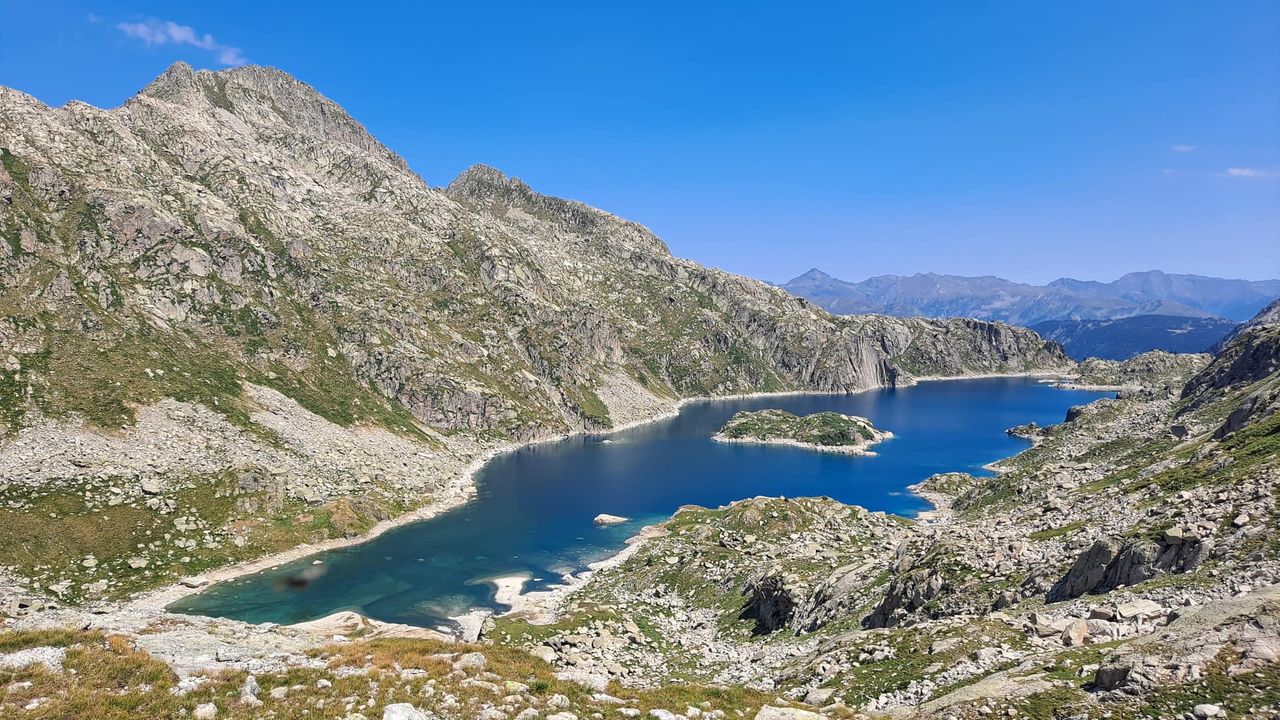
The big reward on a proper mountain day: from the Pont de Ressec trailhead near Arties, the GR11 climbs through the Rius valley past Refugi de la Restanca to this 2,240 m lake with its own small island, Unhòla — figure 5–7 hours and 1,150–1,300 m of climbing for the full loop with neighbouring Lac de Rius. Snow can linger on the approach into June, so July to September is the realistic window. The water here is glacial and near-freezing even in August; if you want to actually swim, most hikers stop at Restanca lower down the trail instead.

Gorges on the Nuria Path
The old pilgrim trail from Queralbs to the Núria sanctuary — walked for centuries before the rack railway opened in 1931 — threads a granite gorge where the Freser river carves pools and rapids right below the path. It's a real hike either way: about 7.5 km one-way with roughly 900 m of elevation gain, close to 4 hours up, rated moderate to hard for the sustained climb rather than technical difficulty. Plenty of people do it one direction and ride the cremallera train back, which halves the effort. Aim for April to October — snow, ice and avalanche risk close the trail's character down for winter.

Brull Waterfall
Salt del Brull is the payoff at the end of the Sant Aniol d'Aguja route out of Sadernes in the Alta Garrotxa — a full day, 6–8 hours over roughly 15 km, past the Sant Aniol hermitage and a string of emerald gorgs you can swim in along the way. On regulated days — weekends and holidays, Easter week, and daily from around 20 June to early September — you must book and pay for a Sadernes parking slot online in advance (a few euros a car; walkers and cyclists don't need one). The fall runs fullest after spring rain; the pool at its base is swimmable in summer, though even in July the water stays cold — the gorge rarely sees direct sun.

Can Batlle Waterfall
The easiest stop on this list: a signed path from the parking outside Santa Pau gets you to the falls and their pool in 5–10 minutes, inside the Garrotxa Volcanic Zone Natural Park. Two short drops split by a natural pool make it a real swimming spot, not just a photo stop, and it's popular enough in July and August that the park now requires booking a slot to manage numbers. It runs off a stream, not a glacier, so it's rain that decides the flow — outside peak summer the water's colder but you'll likely have the pool to yourself.

Sallent Waterfall
Catalonia's tallest waterfall at around 115 metres, falling in a series of stepped drops rather than one sheer plunge off the Collsacabra plateau above Sant Privat d'en Bas. The full loop, up the Camí de les Escales and back down the Camí dels Matxos, runs 8.5 km with about 500 m of climbing, roughly 4 hours; there's also a shorter 5.7 km, 2.5-hour there-and-back to the main viewpoint. This one is rain-fed, not glacial, so autumn and early spring give you the most water — by a dry August it can thin to almost nothing. Rope-assisted swimming holes exist near the base, but check recent rainfall before you plan a swim around it.
If you only have a day, pair one Aigüestortes lake with the Gerber waterfall — both start from the same Bonaigua pass road and you'll be back at the car by early afternoon. If you want a full mountain day, Lac de Mar or the Núria gorges earn the climb. And if it's a hot week in July, skip the glacial water altogether and head for Can Batlle or Salt del Brull in the Garrotxa, where you can actually get in. Whichever side you pick, check road and trail status before you go — Banhs de Tredòs, the Bonaigua pass and the Sadernes access road all close or restrict traffic outside the summer season, and a closed gate can turn a half-day hike into a much longer one.