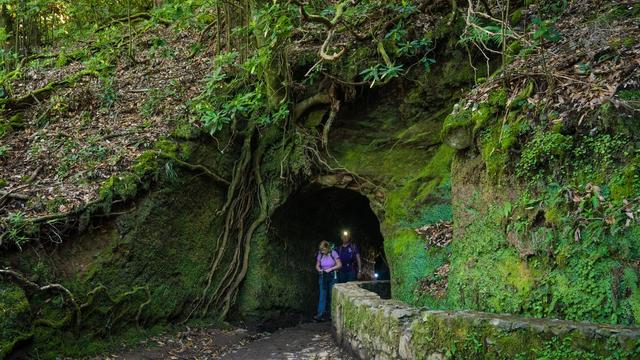
Canyons of Aragon: a weekend in Sierra de Guara (and beyond)
9 min read2 destinations
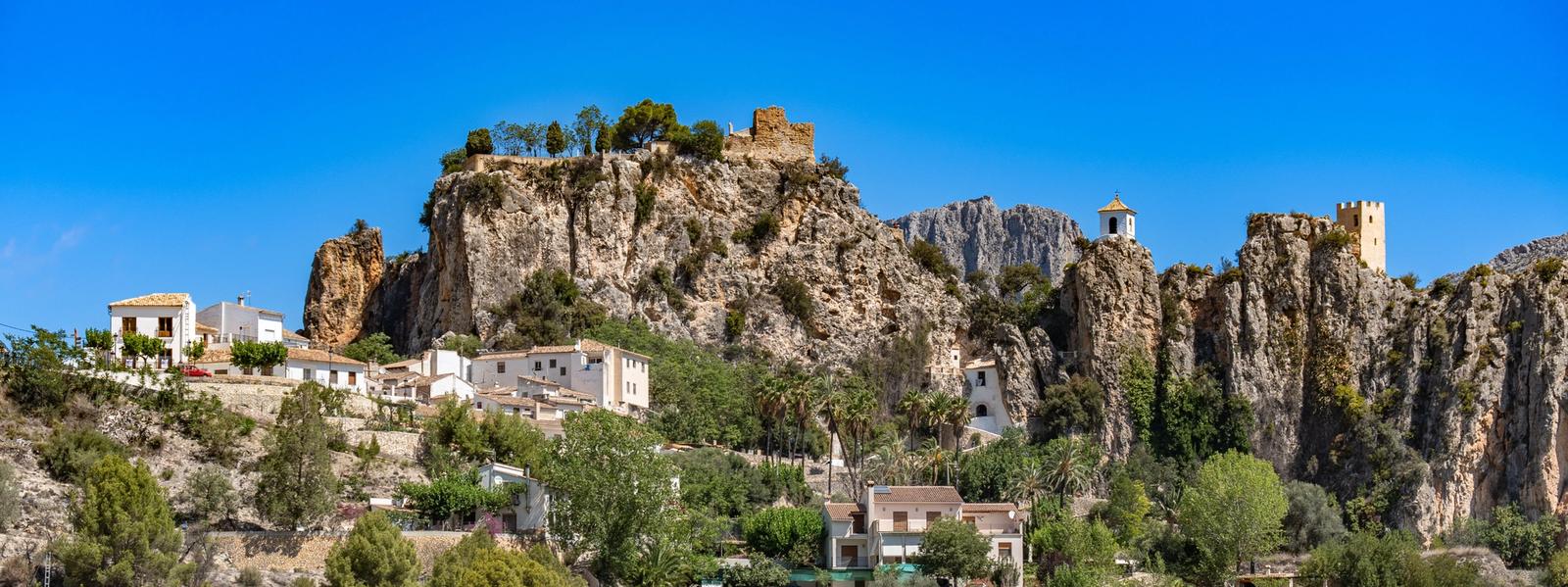
Aragon · Spain
Sierra de Guara, in the hills north of Huesca, is where modern canyoning was born — French pioneers began exploring its limestone slot canyons in the 1950s, and the sport never really left. This route packs the essentials into a weekend: Alquézar as the base and an easy first day on the Vero canyon walkways (no guide needed), Rodellar and a guided descent of the Formiga canyon for the real thing, and — if you can stay a third day — a drive north to Ordesa for a canyon you walk above rather than wade through.
Before you go: base, booking and weather
Base yourself in or near Alquézar — it has the most rooms and restaurants and sits roughly equidistant from the Vero canyon walkways and the Rodellar canyons. If you're doing Formiga on day two, book the guided descent before you leave home rather than on arrival: operators generally take bookings the day before for the next day, which is fine most of the year, but in the July–August peak it's worth locking in a slot a few days out so you're not stuck rearranging the trip around availability. Whatever you book, ask what's included — wetsuit, helmet and harness are standard with a guide, but confirm before you show up in swimwear. And check the weather the night before and again the morning of any canyon day: these are narrow limestone slots that a sudden storm can turn from a playful descent into a genuinely dangerous flash flood in minutes, and operators do cancel or reroute when the forecast turns.
Guara's canyons don't all play by the same rules, so know the tiers before you plan. A handful — La Choca, Otín, Palomeras del Flumen and El Diablo — need an advance express authorization from the park before anyone can descend them. Río Vero runs under its own separate regime: wetsuit mandatory, groups capped at 10 people, descents expected to start by noon. Formiga, this route's centerpiece, sits in the easiest tier — no permit at all, just water skills, a wetsuit and, unless your group has its own gear and rope technique, a local guide. The season is just as fixed: canyoning runs roughly May to September, once spring melt has dropped the water levels but while the rivers still flow — outside that window routes are too cold, too high or formally closed, and Formiga's own upper section, above Las Polvorosas Cave, stays shut from December through June.
Day 1 — Alquézar and the Vero Canyon (no guide needed)
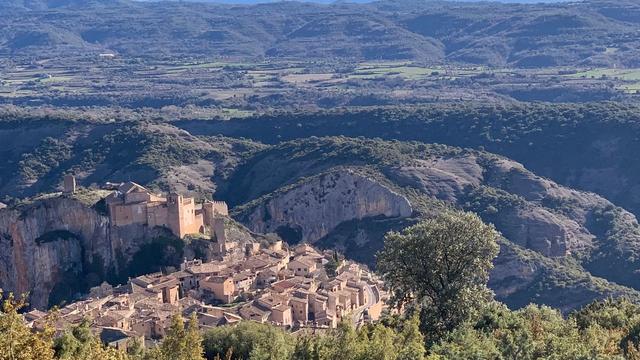
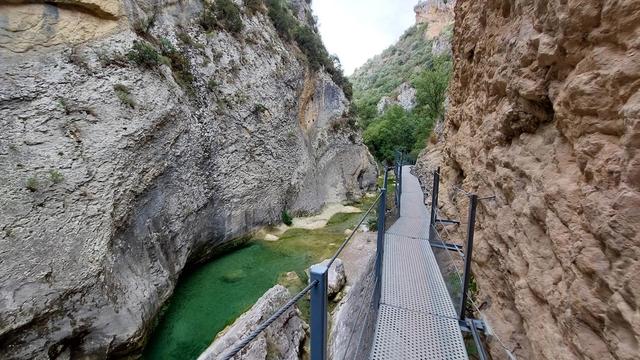
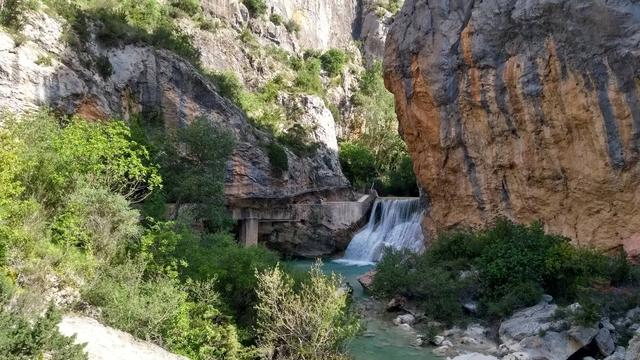
Alquézar is the natural base for a Guara weekend — a stone village stacked above the Vero river, with the 16th-century collegiate church visible from most of the walking routes below it. Start at San Gregorio Viewpoint, just outside town by the chapel of the same name, for the view that explains why: the village sits directly on the canyon rim, its houses following the curve of the limestone plateau. Then walk the Pasarelas del Vero — a signed loop of metal footbridges and catwalks bolted into the canyon walls that drops you into the Vero River Canyon itself, past pools, a short cave with prehistoric rock art, and an old hydroelectric building wedged into the cliff. No technical gear, wetsuit or guide is needed for this one; it's a walking trail, not a descent.
The walkways do get busy — the ticket kiosk charges €4 (€3 if you book online; kids under 12 free) and recommends going between 2 and 4pm to dodge the morning coach groups, with online booking saving a queue in July and August. Budget two to three hours for the full loop with stops, less if you skip the longer western-bank spur. Save some energy — tomorrow is the real canyon.
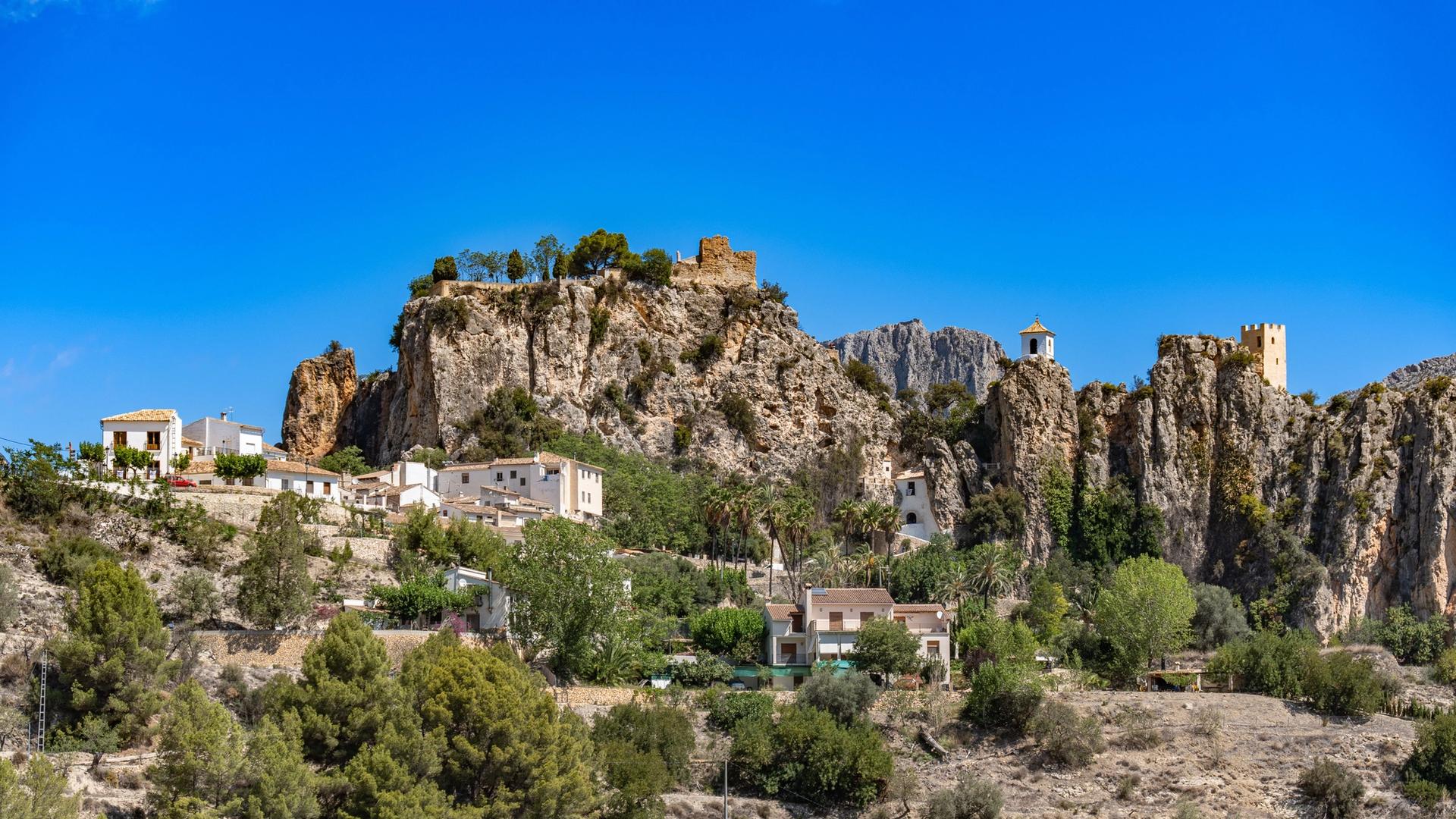
The three stops below are the day in order — the viewpoint first, then the walkways, then the canyon floor itself — and everything starts on foot from Alquézar's old town, so the car stays parked until tomorrow. One thing to know before you reach the rock-art cave on the walkway loop: it isn't a one-off — the Vero valley shelters dozens of caves and rock shelters with prehistoric paintings, a cluster recognized by UNESCO.
Things to do in Aragon
Paid links: booking through them supports YowJourney.
Day 2 — Rodellar and the real canyons (bring a guide)
Rodellar, about 34 km (40–45 minutes) from Alquézar along a road that climbs into the sierra, is the actual outdoor-sports capital of Guara — this tiny village at the meeting of the Alcanadre and Mascún rivers is where most canyoning trips start. Formiga is the standard first descent: roughly 1.5 km and about 90 metres of vertical drop, with 3 to 3.5 hours of descent once you're through the approach — figure on close to 4 hours gear-on to gear-off — mixing short rappels (the biggest around 8–10 m), slides and jumps in a genuinely aquatic canyon — you're in the water for most of it, so a wetsuit (rented from any local outfitter) isn't optional.
Formiga is graded as an easy-to-moderate initiation canyon and is exactly what most Guara operators run for first-timers and families, typically from about age 8–10; the colder, more technical upper section — closed by park regulation from December through June anyway — can be skipped by entering lower down, through Las Polvorosas Cave, which marks the start of the easier second half and is how most operators run the trip for most of the season. Go with a guide unless your group already has its own rope and rescue skills — the risk isn't the grade, it's a canyon like this turning genuinely dangerous fast if a storm hits while you're inside it, so check the forecast the day before, not just the morning of. If you'd rather stay dry, Verdolo Peak, the hiking summit directly above Formiga and the Calcón reservoir, gives you the same limestone-canyon views without getting in the water.
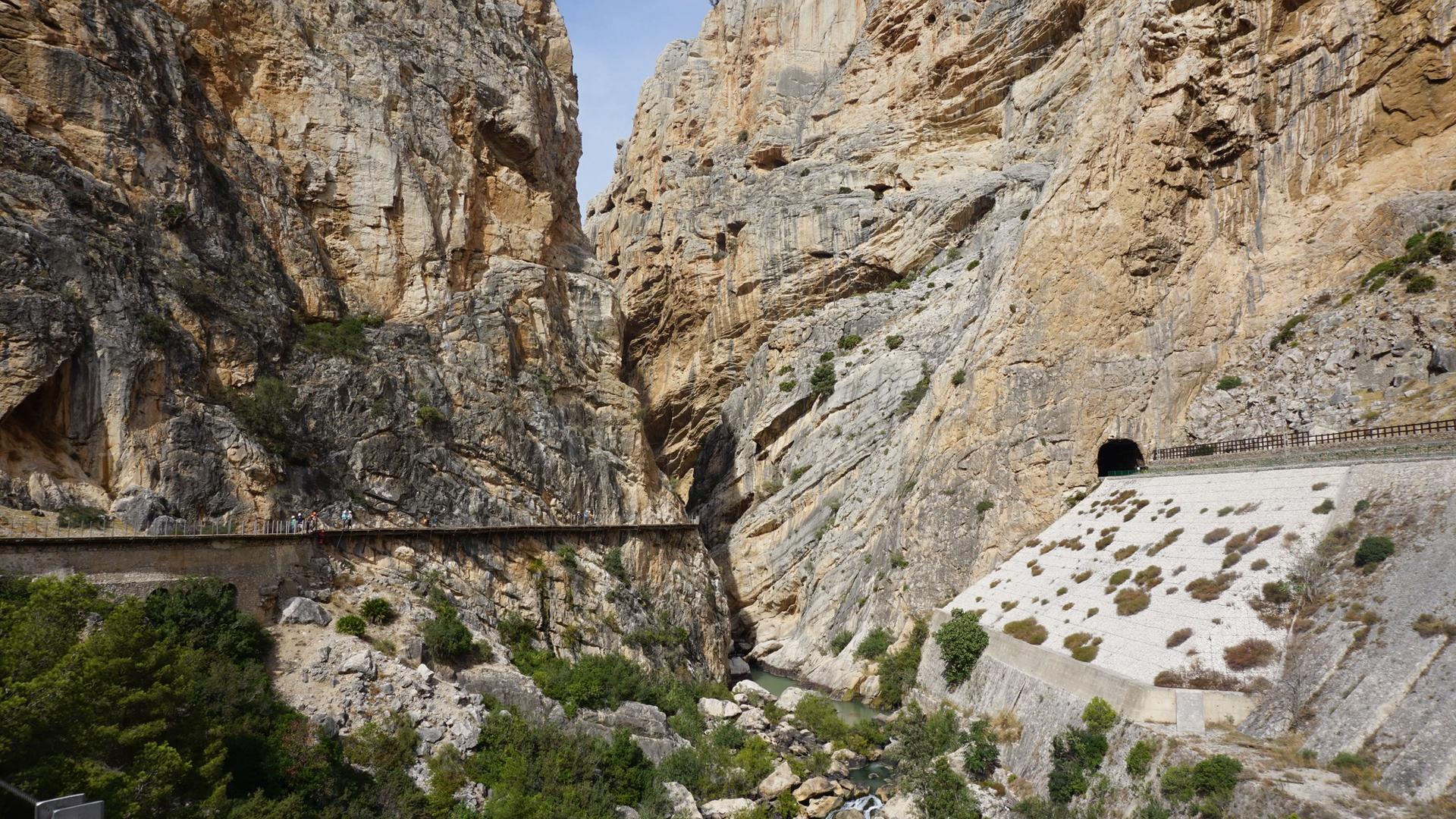
The slot in the photo is a fair preview: most of Formiga runs through exactly this kind of polished corridor, and you swim and wade between rappels rather than walk beside the water. For most of the season groups skip the cold upper half entirely and drop in midway, through Las Polvorosas Cave — a huge recess in the soft conglomerate cliff that served shepherds as a refuge for centuries and now marks the start of the easier lower half.

Formiga Canyon
The weekend's centerpiece: a gorge the Formiga River has carved into a labyrinth of polished rock, where sunlight falling into the narrow slots turns the pools turquoise. It earned its status as the classic initiation route in the birthplace of European canyoning honestly — short rappels, natural slides and jumps stack into a descent that is playful rather than intimidating, which is why local operators run it with everyone from eight-year-olds to seasoned canyoneers.

Verdolo Peak
The dry alternative for anyone in the group sitting the descent out: Verdolo's summit rises directly above Formiga Canyon and the Calcón reservoir, so you trace the same limestone country from above instead of from inside it. Old shepherd trails, now part of the park's hiking network, climb through scrub and low oaks to the top; the surrounding cliffs are nesting ground for large raptors, and the view stretches over turquoise water and ridge after ridge of canyon-cut plateau — best late in the day.
Day 3 (optional) — the Ordesa waterfall trail
If you can add a third day, drive north to Torla-Ordesa — about 95–125 km and roughly two hours from Alquézar or Rodellar, entirely different terrain but the same limestone-and-water logic. Aim to reach the Pradera de Ordesa car park early, or better, plan to be on the bus: from mid-June to late September, plus Easter week, the early-May holiday, and a run of autumn weekends into early November, private cars are turned away from the Pradera and you take the shuttle bus from Torla instead (roughly every 15–20 minutes, a few euros each way). Since this day is usually a summer or autumn add-on, assume you'll need it and check OrdesaBus's exact dates before you go.
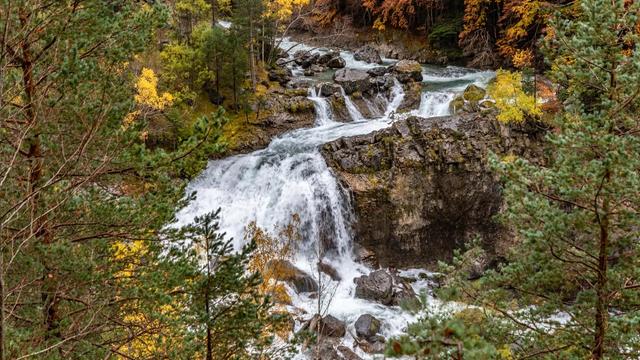
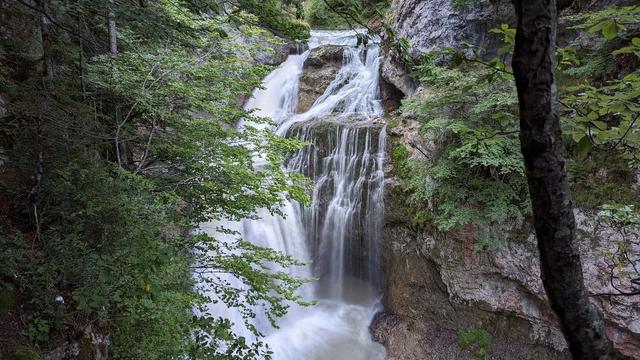
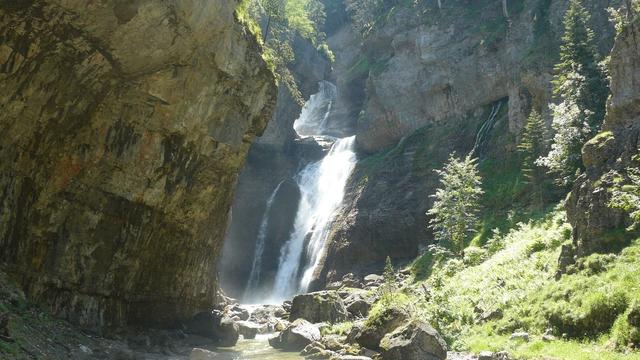
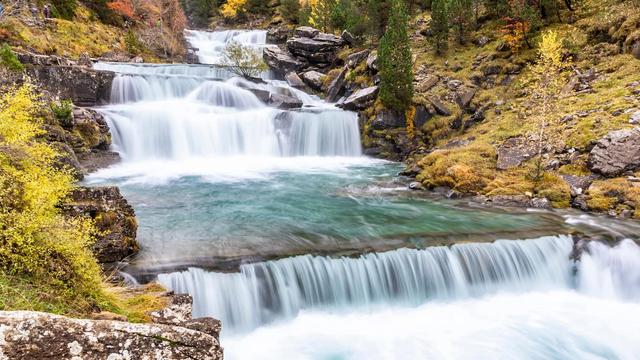
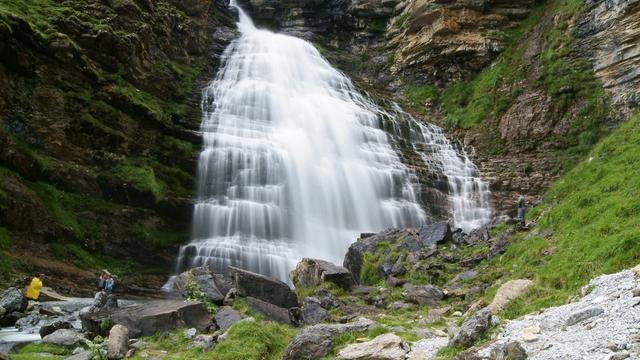
The valley-floor trail follows the Arazas River upstream through a sequence of named waterfalls: Cascada de Arripas first, where the river spreads wide over limestone ledges; then, where the valley narrows, Cascada de la Cueva and Cascada del Estrecho within a few hundred metres of each other; then the valley opens again at Gradas de Soaso, a natural staircase of cascades; and finally Cola de Caballo, the horsetail-shaped waterfall that marks the end of the maintained trail below the Monte Perdido cirque. Round trip from the Pradera to Cola de Caballo and back is around 17–18 km with roughly 600 m of elevation gain — a fit hiker moving steadily can do it in about 6 hours, but budget closer to 7 with stops at the waterfalls, which is realistic after two days in canyons. If that's still too much, turn back at Gradas de Soaso; you'll have seen four of the five waterfalls and cut the day by a third.
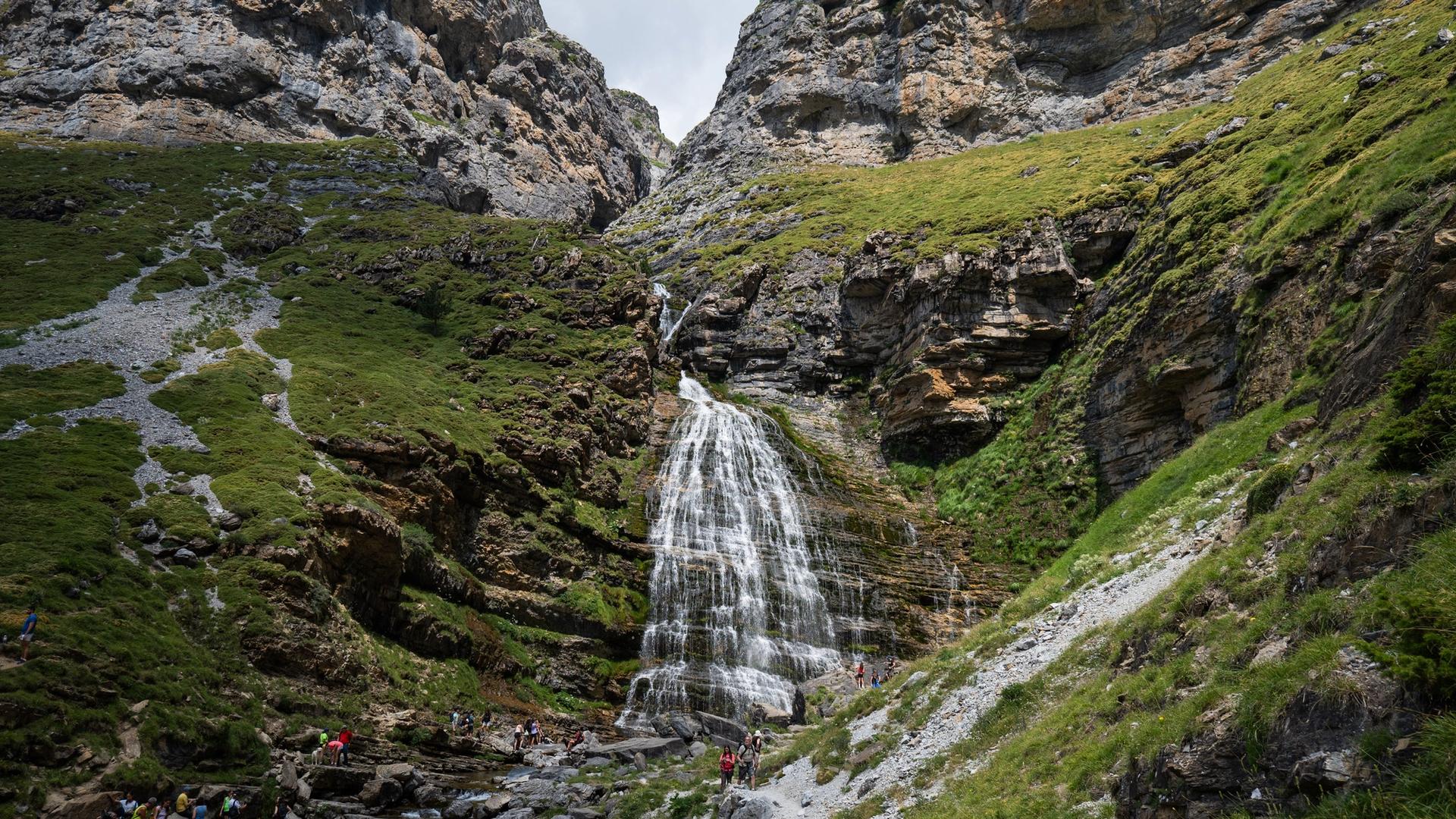
The five falls below are listed in walking order, and together they read the valley's shape for you: the Arazas spreads wide over limestone ledges at Arripas, squeezes through rock at La Cueva and El Estrecho — two falls within a few hundred metres of each other — then steps down the natural staircase of Gradas de Soaso before Cola de Caballo's thin horsetail closes the trail in the glacial cirque under Monte Perdido. All five sit on the same maintained riverside path, so there's no route-finding to do — just decide in advance where you'll turn around.
The waterfall trail, in order
Two days covers Alquézar's walkways and one real canyon at Rodellar; add the third only if you're up for a long day and the two-hour drive to Ordesa. Book the Formiga guide before you leave if you're travelling in July or August — next-day slots exist, but in peak season lock one in a few days ahead. Any thunderstorm forecast is a reason to skip the canyon that day, not push through it. Pack dry clothes for after — outfitters supply the wetsuit — plus cash for the Alquézar walkway kiosk if you didn't book online. It's not a 'just show up' trip, but planned a day or two ahead it's one of the most direct ways to see how water shapes the Pyrenees foothills.