Ytri Tunga is a beach on the southern coast of the Snæfellsnes Peninsula, in West Iceland. It is one of the country's dependable places to see seals in the wild. Harbour and grey seals haul out on the rocks offshore and swim just off the shore, and the colony stays here through the year. The sand is golden rather than the black volcanic sand of most Icelandic beaches, and the shoreline is broken up by rock. Information boards at the beach explain the colony.
Ytri Tunga Beach
Local name: Ytri Tunga
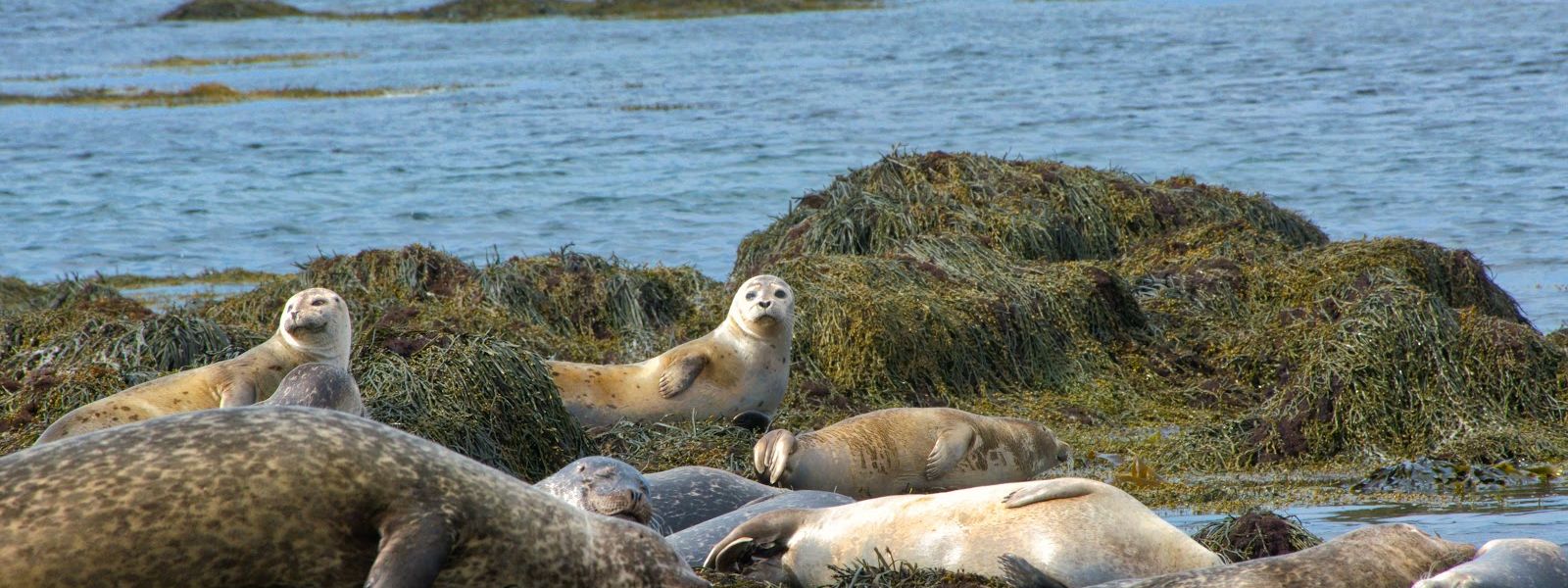
Golden sand instead of the usual Icelandic black, and a colony of harbour and grey seals that stays all year.
- Accessibility
- Car park, information boards and beach are on the level. The route out to the seals crosses rock and is not passable with a wheelchair or a pram.
- Parking
- Gravel car park 136 m from the beach; there is a fee.
- Difficulty
- Level as far as the beach. Beyond it the way to the seals crosses wet rock that has to be stepped over.
- Transport
- No public transport: no bus stop within 5 km.
- Hours
- Open 24 hours, every day.
- Address
- Route 54, 356 Snæfellsbær
What makes it special
The seals are the reason to stop. Harbour and grey seals live here all year, lying on the rocks offshore or swimming just off the beach. They do very little. They rest on the rock, shift position, and settle again, which is exactly what makes them easy to watch and easy to photograph. A long lens or binoculars helps more than getting closer does.
At low tide the rock between the beach and the seals is uncovered, and people pick their way out over it. The sand is golden, not black, which is unusual on this coast, and the shore runs out into flat shelves of rock rather than into surf.
Good to know
- Finding the seals: from the seal information board, walk to the right along the shore. If you are unsure, follow the other visitors.
- Footwear: the way out to the seals crosses bare rock. It is slippery when wet and easy to turn an ankle on. Wear boots with grip.
- Tide: the water rises quickly over the rocks. Keep watching it while you are out, and turn back before the way back is wet.
- Facilities: there are toilets near the beach. There is no drinking water on site, so bring your own.
Getting there
There is no bus to Ytri Tunga. The nearest stop is more than 5 km away, so people arrive by car, on the road along the south side of the Snæfellsnes Peninsula. From the car park it is 136 m to the beach, on the level, with information boards at the top. Reaching the seals themselves is the harder half: from the board you walk right along the shore, and at low tide out across open rock.
Best time to visit
Better: low tide, when the rock between the beach and the seals is uncovered and you can walk out towards them.
Avoid: high tide, when that ground is under water and the seals can only be watched from the beach.
The colony is here in every season, so the state of the tide decides more about your visit than the month does. Check it before you set out.
Sun & daylight
Nearby Places


Similar Places



Featured in our guides
Ytri Tunga Beach on the map
The rock between the beach and the seals floods at high tide. Cross at low tide and you can be cut off when it turns, with the way back through water. The rock is wet and slippery, and an easy place to turn an ankle. Keep watching the sea the whole time you are out on it.
Get directions

Your whole travel map in one place
Get inspired by new places around the world and find the ones worth the journey
Frequently asked questions
Are the seals there all year?
Yes. Harbour and grey seals form a resident colony at Ytri Tunga and are present through the year. They are wild animals, so no visit is guaranteed to produce them.When can you get closest to the seals?
At low tide. The rock between the beach and the seals is uncovered then, and you can walk out across it. At high tide the same ground is under water.Can you reach Ytri Tunga by public transport?
No. There is no bus stop within 5 km of the beach. You need a car.Is it a good stop with children?
The beach itself suits children well. The walk out to the seals is another matter: it crosses slippery rock that has to be stepped over, and the tide comes in over it.