The most beautiful small towns of Catalonia
7 min read12 destinations
Catalonia · Spain
Catalonia packs an unusual range of small-town landscapes into one region: volcanic cones in La Garrotxa, cliff-top villages above the Ter and Sau reservoirs, a Gothic hill town over Costa Brava rice paddies, a fortress town on the Ebro, and stone hamlets scattered across three separate Pyrenean valleys. This list ranks twelve of the strongest, and each entry earns its place for a reason the next town doesn't share — a specific building, a specific hike, a specific season — not just for being pretty.
The ranking starts with Besalú — the most complete medieval ensemble and the easiest first stop from Girona or Figueres — then works outward: the volcanic villages of La Garrotxa, the cliff-edge towns of the Collsacabra, the golden-stone belt of the Empordà, a detour south to the Ebro and the coast, and finally the Pyrenees, climbing from Camprodon to Bagergue, the highest inhabited village in the Val d'Aran.
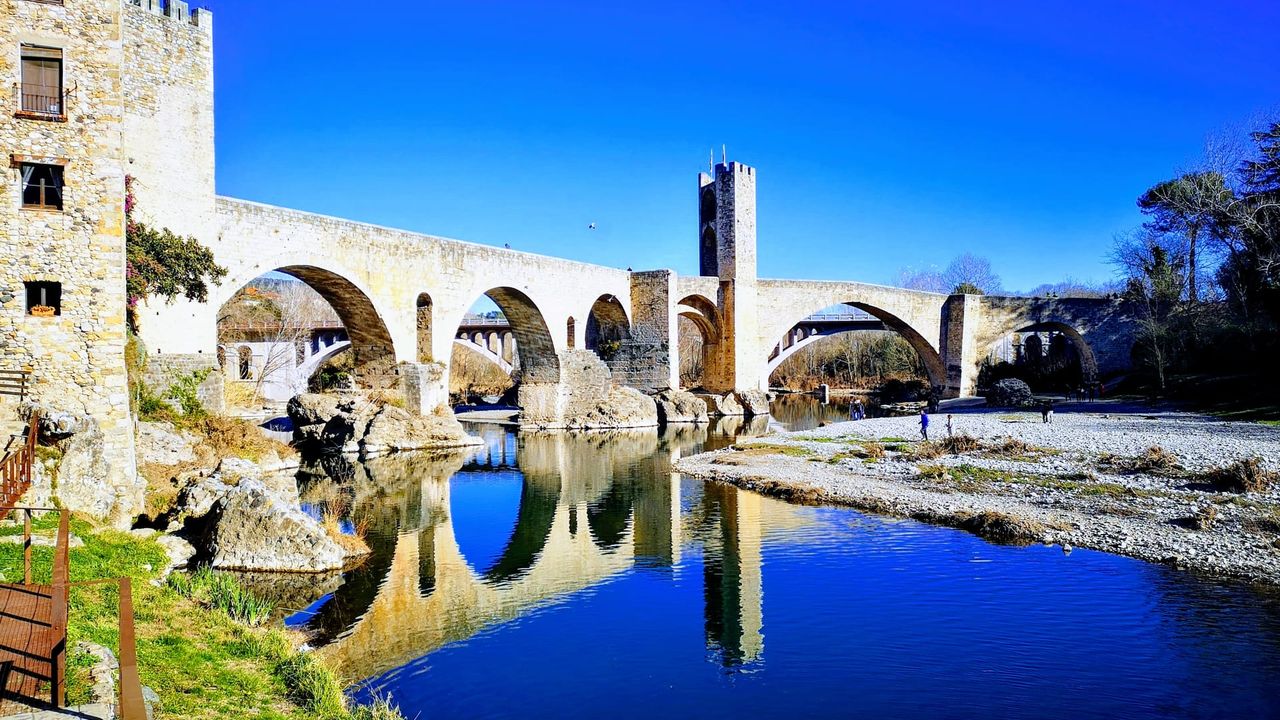
Besalu
Besalú is the obvious first stop: its fortified bridge — begun in the 11th century, angled across the Fluvià with seven arches, its defensive tower a 14th-century addition — is one of the most photographed medieval structures in inland Catalonia. Cross it in early morning before the day-trip buses from Girona and Figueres arrive. Underneath the old town, a 13th-century mikveh survives in a barrel-vaulted stone chamber reached by a 36-step staircase — one of only four medieval Jewish ritual baths preserved anywhere in Europe, and reason enough to stop even after you've seen a dozen other medieval bridges.

Castellfollit de la Roca
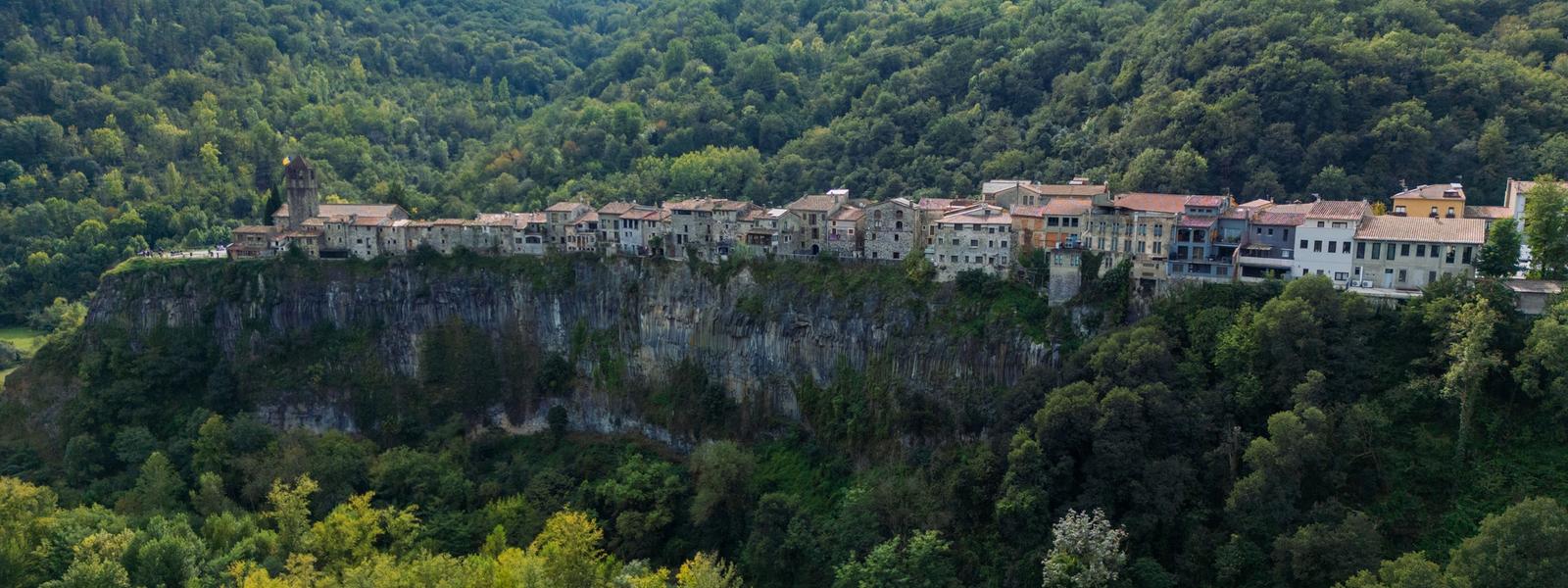
Fifteen minutes from Besalú, Castellfollit de la Roca does something none of the other towns here do: its houses run flush along the edge of a 50-metre basalt cliff built up from stacked lava flows, with nothing between the back walls and the drop. Skip the roadside view and walk down to the Passarel·la-mirador, a footbridge over the Fluvià at river level — from there the cliff and its silhouette of houses catch the evening light, and sunset is when the basalt actually reads black.

Santa Pau
Santa Pau completes the volcanic trio with a different kind of payoff: instead of just looking at the landscape, you can walk into it. A short drive away, the Can Serra trailhead starts a loop through the Fageda d'en Jordà beech forest to the Croscat volcano, whose 160-metre cone is the tallest in the Iberian Peninsula; or skip the car and walk straight from Santa Pau's triangular medieval square along the Ruta dels Gorgs river-gorge trail. Aim for a weekday morning outside autumn, when the beech forest's foliage season draws the crowds.

Rupit
An hour south in the Collsacabra, Rupit trades volcanic rock for granite: its streets are lava-formed steps, and a wooden suspension bridge sways over the river right at the village entrance. The real reason to come is Salt de Sallent, Catalonia's tallest waterfall, dropping about 115 metres in a series of stepped falls, reached by a marked trail from the village — it runs fullest after rain or spring snowmelt, and can slow to a trickle by late summer.

Tavertet
A short drive from Rupit, Tavertet is all edge: the village sits on a limestone terrace that ends abruptly above the Sau reservoir, its stone houses built from the same rock as the cliff beneath them. Come in late afternoon, when the light rakes across the Collsacabra plateau and the reservoir below shifts from grey to blue — there's an unfenced viewpoint at the village edge, just the terrace and the drop.

Pals
On the Costa Brava plain, Pals looks nothing like the mountain villages above it: golden sandstone instead of grey stone, a Gothic quarter instead of a fortified core. Climb the 12th-century Torre de les Hores — a spiral staircase, a few euros — for a view over the Pals rice paddies (source of the region's prized Arròs de Pals), the Begur hills and, on a clear day, the Mediterranean itself.
Things to do in Catalonia
Paid links: booking through them supports YowJourney.

Miravet
South again, on a bend of the Ebro, Miravet is the odd one out: the Templar castle on the hilltop above town is the obvious draw, but the more interesting reason to stop is at street level. Several working pottery studios, including Ferran Segarra's, keep a craft here that goes back to Moorish times, using local clay and a decoration technique still called lápiz — worth timing a visit to catch a potter at the wheel rather than just buying the finished jugs.
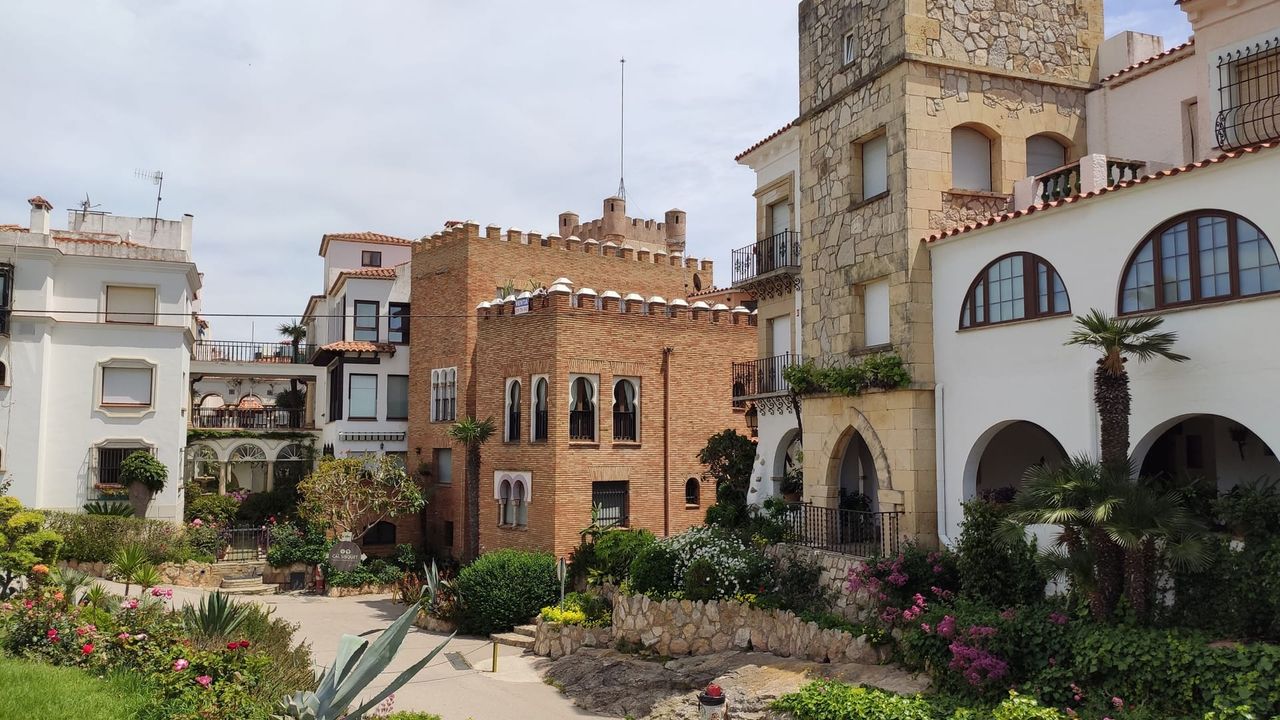
Roc de Sant Gaieta
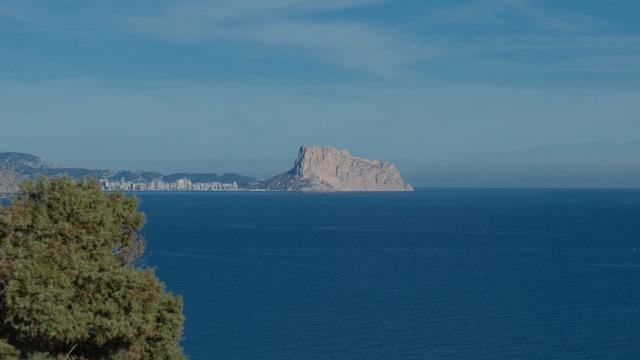
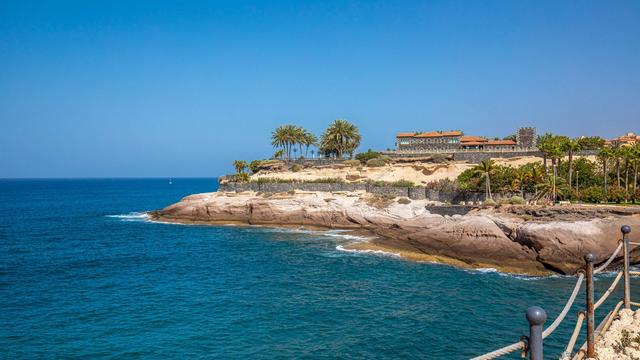
Roc de Sant Gaieta is the one true coastal pick, and unlike everything else on this list, it isn't actually medieval — it was built between 1964 and 1976, developed by Gaietà Bori Tallada and built by Josep Maria Fortuny Rodríguez as a compressed tour of Spanish architectural styles, Mudéjar patios and Gothic arches stacked on a rocky headland above the Mediterranean. Walk it at sunset, when the stone catches the light the same way it would in a genuinely old town — a convincing illusion.

Camprodon
The Pyrenees start here: Camprodon sits at the meeting of the Ter and Ritort rivers under a 12th-century single-arch stone bridge, and unlike the higher villages ahead, it has the amenities of a proper town. Composer Isaac Albéniz was born here in 1860 — his birth house is now a small museum — and Cal Xec, one of the town's old butchers, has sold local fuet and botifarra since 1870; pick some up for the drive further into the valley.
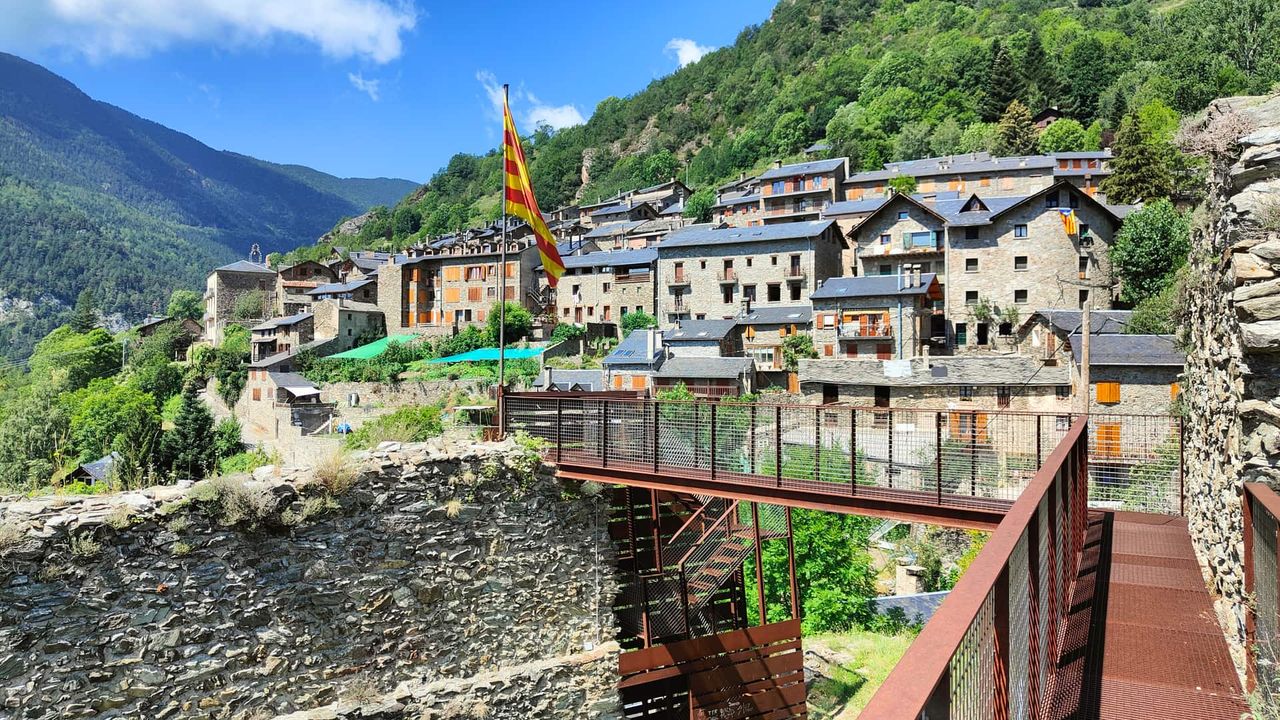
Queralbs
Higher up the Ripollès, Queralbs is where the road effectively stops: its car-free old centre is the last village reachable by road before the Vall de Núria, which from here on is accessible only by the Cremallera de Núria rack railway, running since 1931, or on foot. Take an early train — the 40-minute climb gains 1,000 metres — to beat the crowds heading up to the sanctuary and ski area.
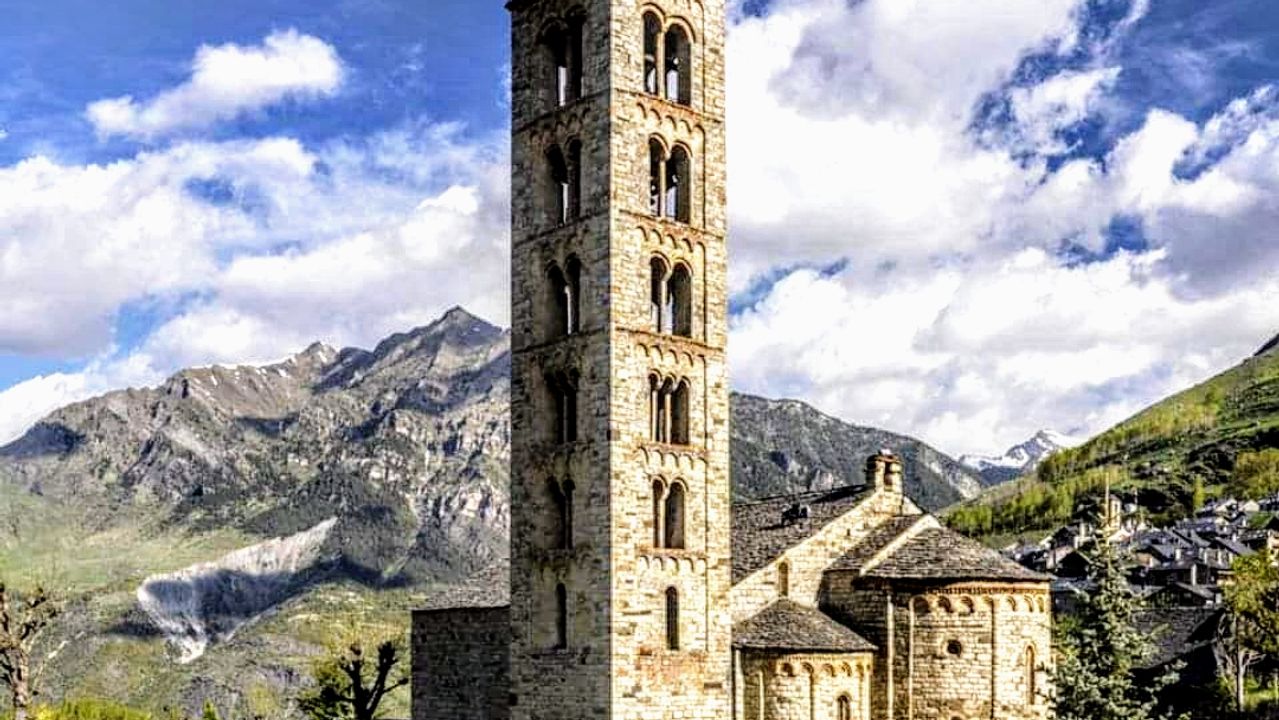
Taull
West again, in the Vall de Boí, Taüll is the payoff for anyone who's been half-noticing the Romanesque churches on this list: Sant Climent de Taüll is part of a UNESCO World Heritage site, and its original 12th-century apse frescoes — moved to Barcelona's MNAC museum between 1919 and 1923 to save them — are now recreated in situ through video mapping rather than a physical copy. Catch a screening in late afternoon, when the church interior is dim enough for the projection to read clearly.
Bagergue
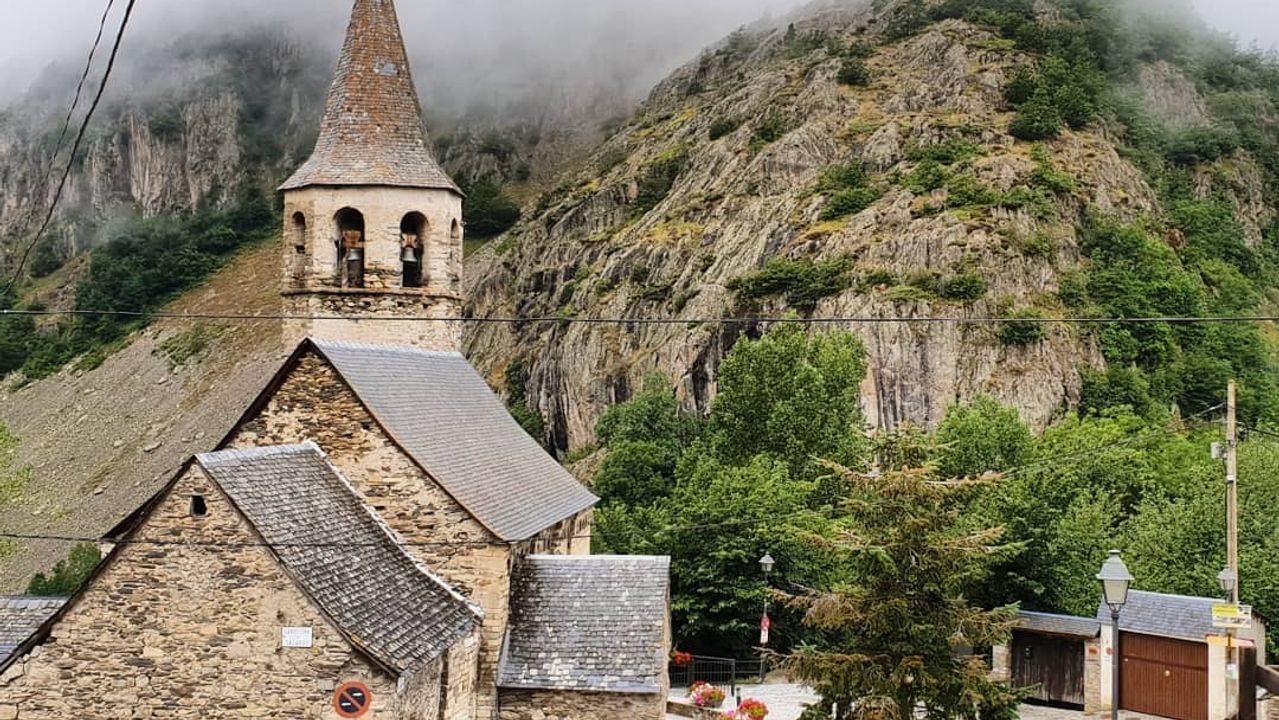
Bagergue closes the list at the top, literally: at around 1,400 metres it's the highest permanently inhabited village in the Val d'Aran, under ten minutes by road from the Baqueira-Beret ski resort. It's one of Spain's officially recognized "most beautiful villages," and the reason to time a visit for June or July is specific — that's when the stone façades disappear behind the flower boxes the village is known for, a contrast none of the other Pyrenean stops on this list really compete with.
Group the volcanic trio — Besalú, Castellfollit de la Roca, Santa Pau — into one day out of Girona or Olot; they're 15–30 minutes apart. Rupit and Tavertet pair up the same way in the Collsacabra, about an hour further south. The Pyrenean stops are a different trip: Camprodon, Queralbs, Taüll and Bagergue sit in three separate valleys with no direct roads linking them, so plan a multi-day loop rather than a single detour. Spring and early summer bring the best combination of open mountain roads, running waterfalls and flower-filled village streets; by high summer the volcanic villages fill with day-trippers from the coast, so aim for morning.