Historic Aragon: 11 Castles, Mudéjar Towers and Stone Villages
7 min read11 destinations
Aragon · Spain
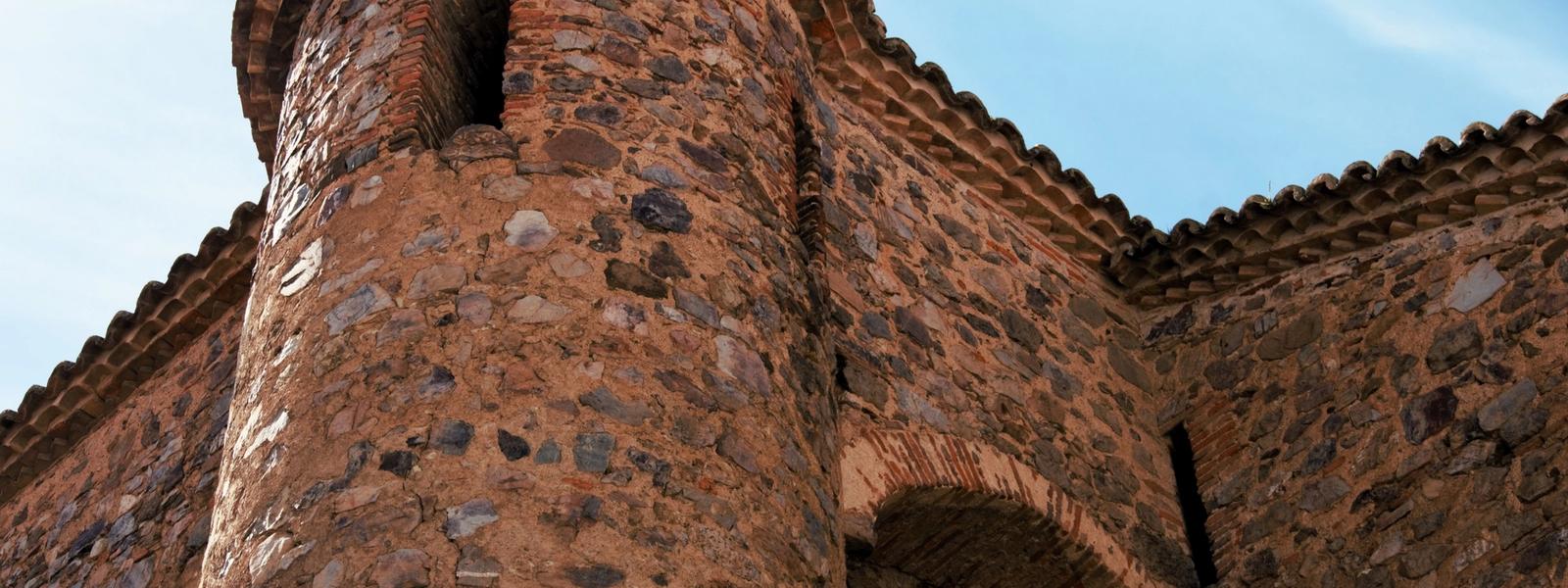
Aragon's history is written in stone twice over. First come the frontier castles — Loarre, Aínsa, Estada and the fortified towns the kings of Aragon and Navarre built and rebuilt through the 11th and 12th centuries, pushing the border south against Muslim-held territory. Then comes the twist: after the Reconquista, the Muslim craftsmen who stayed on kept building, only now for Christian patrons, in the brick-and-tile style called Mudéjar. This list runs Huesca's Pyrenean foothills first, then drops south to the Zaragoza plain for the Mudéjar half of the story.
Calatayud's collegiate tower is the clearest example of that second tradition — one of the monuments named in UNESCO's Mudéjar Architecture of Aragon listing — while Belchite's tower shows the same craft, minus the happy ending. Along the way the list also picks up a monastery that monks built out of a castle's own stone, and a Romanesque bridge below Alquézar.
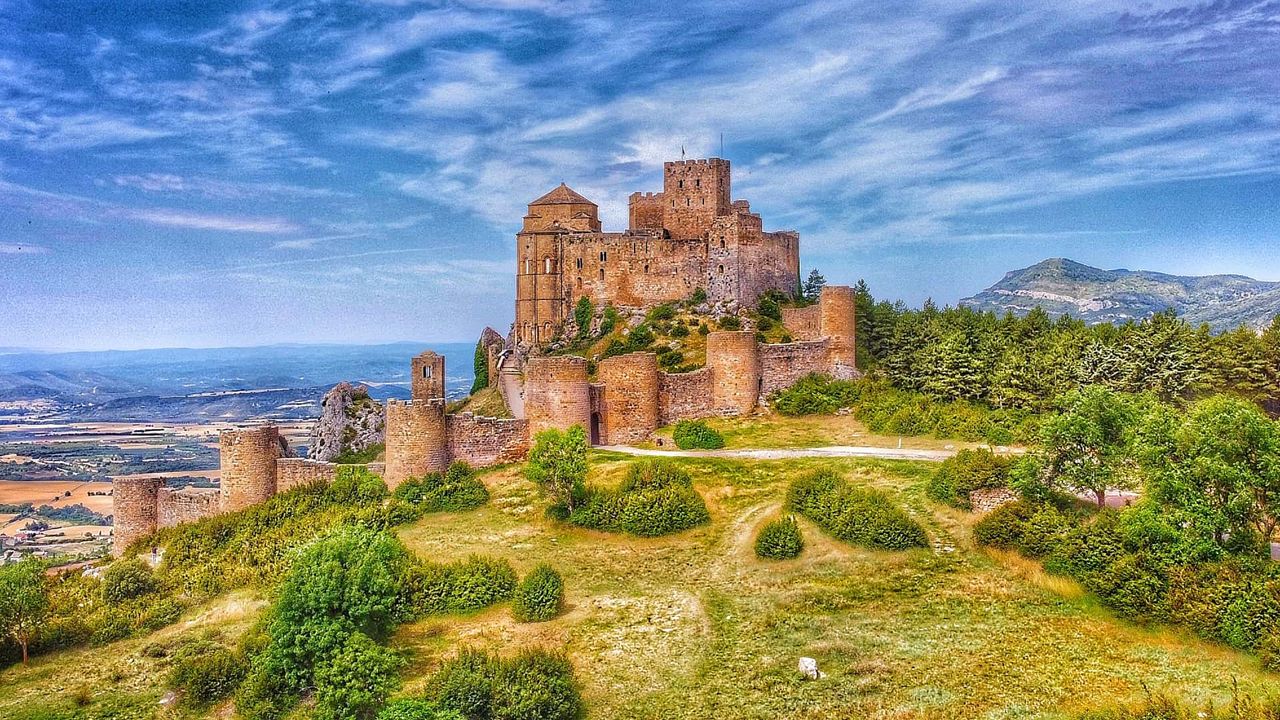
Loarre Castle
Sancho III of Navarre began this frontier fortress around 1033, raising the royal hall, chapel and Queen's Tower that still stand, to hold the line against Muslim-held Huesca; his grandson Sancho Ramírez expanded it from 1071, adding the Romanesque church of San Pedro and the crypt of Santa Quiteria, and installed Augustinian canons inside the walls that same year. He governed from Loarre while pressing the campaign against Huesca — the siege killed him in June 1094; his son Pedro I took the city in 1096 at the Battle of Alcoraz. The fortress survives close to whole — enough that Ridley Scott filmed Kingdom of Heaven here without building a set.

Alquezar
The Muslim commander Jalaf ibn Rashid built the first fortress here in the early ninth century to guard Barbastro's southern approach — the town's name comes straight from the Arabic al-qasr, "the fortress." Sancho Ramírez, the same king rebuilding Loarre in these same decades, took Alquézar in 1067 and installed Augustinian canons who raised the Romanesque collegiate church and cloister that still crown the ridge above the Vero canyon. The medieval street plan below hasn't moved since.

Ainsa
Aínsa was already fortified by the mid-11th century, guarding Sobrarbe's southern frontier; the village around the castle got its founding charter from Alfonso I "el Batallador" in 1124. What survives is unusually whole: the castle (rebuilt through the 16th and 17th centuries on its original core), the Romanesque church of Santa María, and the arcaded main square — rated among the most beautiful in Spain — all standing on the ridge above the confluence of the Cinca and Ara rivers.

Colegiata de Santa Maria la Mayor (Calatayud)
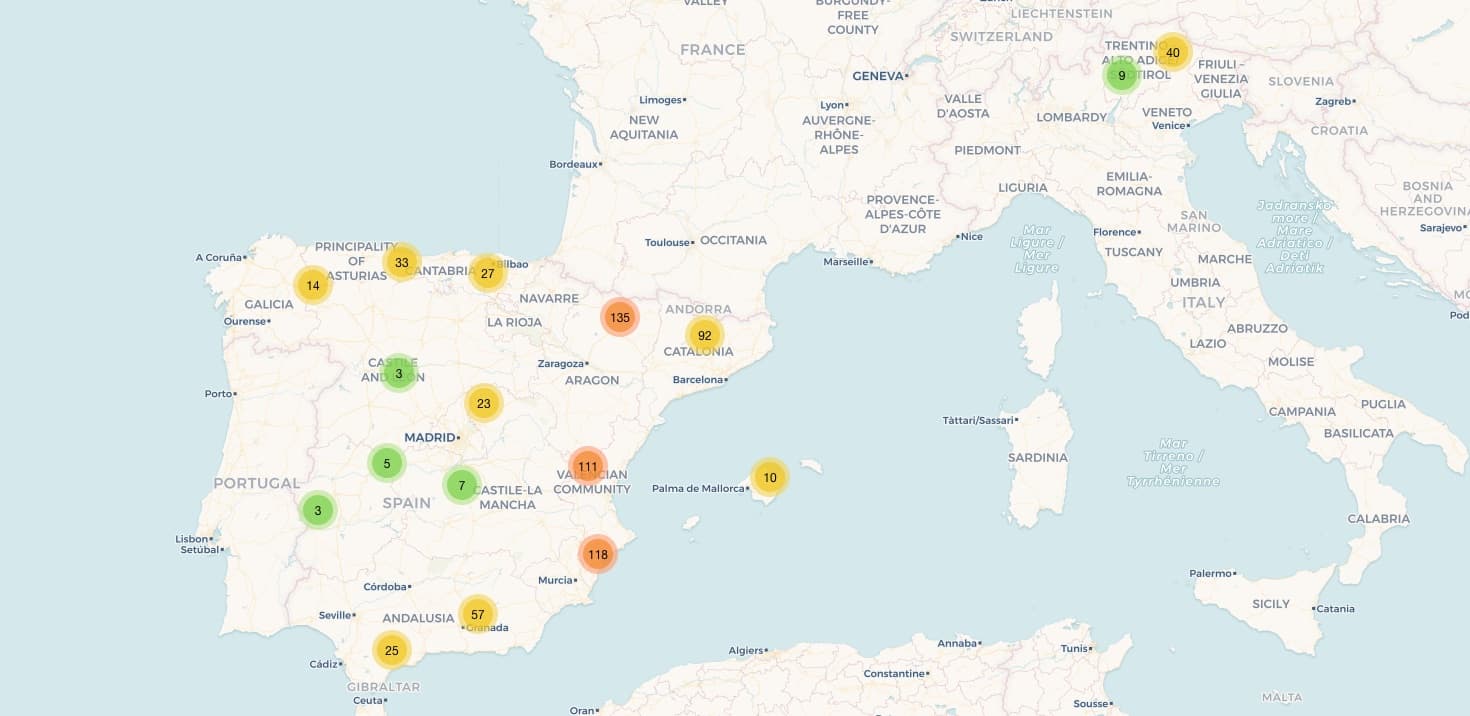
Built in the 12th century on the site of Calatayud's main mosque and consecrated in 1249, this collegiate church is one of the monuments named in UNESCO's 2001 extension of the Mudéjar Architecture of Aragon listing. Its octagonal brick tower, added in the 15th century, climbs almost 72 metres — one of the tallest Mudéjar towers in Aragon — and the cloister from the same building campaign carries the same intricate brickwork. This is Mudéjar art in its most literal form: Muslim builders working for a Christian institution, on the footprint of the mosque it replaced.

Belchite Town Gate
The tower behind this gate belongs to the church of San Martín de Tours, a genuine Mudéjar structure — brick on a stone base, raised in the early 15th century in the same tradition as Calatayud's tower, 75 km away. Belchite was fought over street by street in August–September 1937, and the tower took the worst of it: its upper section is still shattered. Franco refused to rebuild, ordering the ruins left standing as a monument and building a new town alongside them, finished in 1954 by Republican prisoners. The old town is accessible today only on a guided tour.
Things to do in Aragon
Paid links: booking through them supports YowJourney.

Monastery of Piedra
Alfonso II of Aragon granted this old castle — a former Muslim-era fortress — to twelve Cistercian monks from Poblet in 1194; they spent the next 23 years building the monastery out of the fortress's own stone. Monks lived here until Spain's 1835 disentailment forced them out. What's left is a rare combination: Gothic cloisters and vaulted halls standing inside a canyon the Piedra River carved around them, waterfalls and caves included.

Estada Castle
Estada guarded the Ribagorza frontier from around 1062, when Sancho Ramírez first took it from its Muslim garrison; Muslims recaptured it in 1087, and Pedro I — by then king of Aragón — won it back for good in 1097. Only the foundations of the central tower remain today, fused into the limestone ridge above the Cinca–Ésera confluence: no visitor centre, no signage, just a walk up to what's left of the walls and a long view over Somontano.
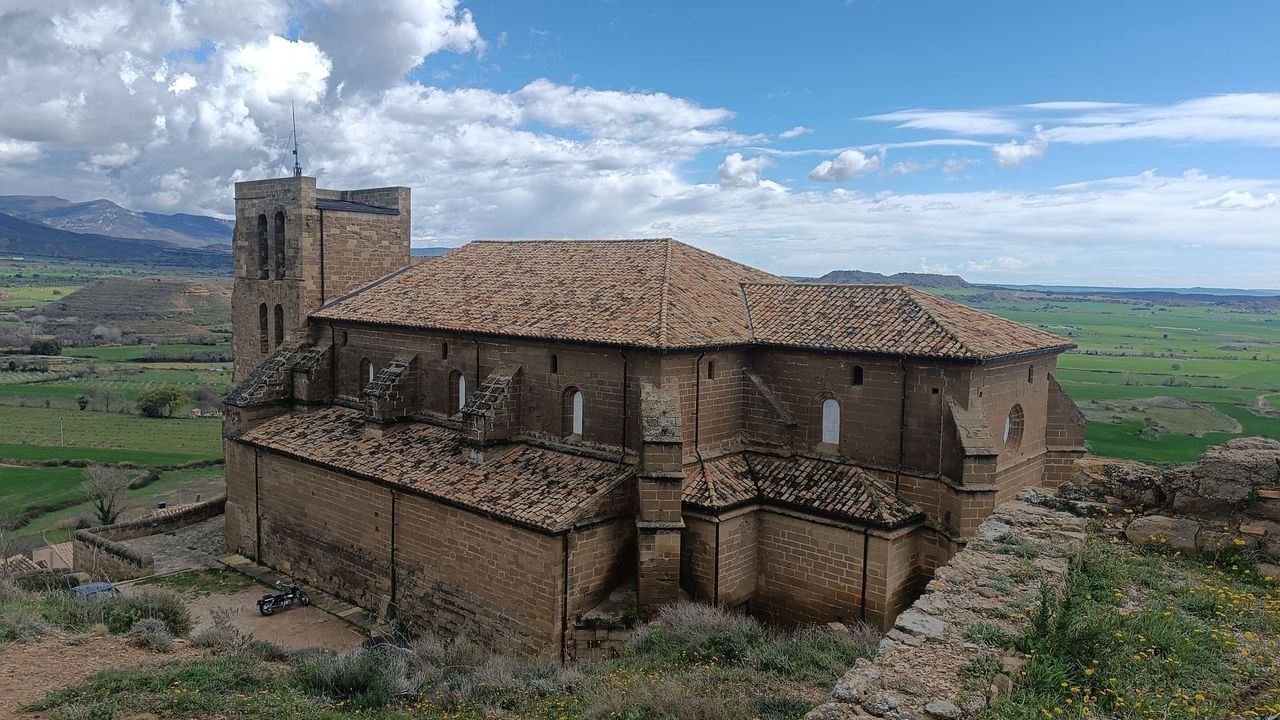
Colegiata de Santa Maria la Mayor
Bolea's collegiate church was built between 1541 and 1559 directly on top of an Arab castle-palace that had guarded this stretch of the Al-Andalus frontier; some of its piers still incorporate 12th-century masonry salvaged from the fortress and an earlier Romanesque church on the same site. The real reason to detour here is the retablo: 20 painted panels and 57 carved wood figures, made between 1490 and 1503 in a Gothic-Mudéjar style, by the painter historians know only as the Master of Bolea.

Aguero
Started in the second half of the 12th century as a full cross-plan church, Santiago de Agüero was never finished — construction stopped in the early 1200s with only the crossing and three apses built, so the nave was simply walled off. What was completed is exceptional: capitals and a tympanum carved by the workshop responsible for San Juan de la Peña, showing the Adoration of the Magi, set right below the red conglomerate cliffs of the Mallos. In the early 12th century, Queen Berta, widow of Pedro I of Aragon, ruled the so-called "kingdom of the Mallos" from here.
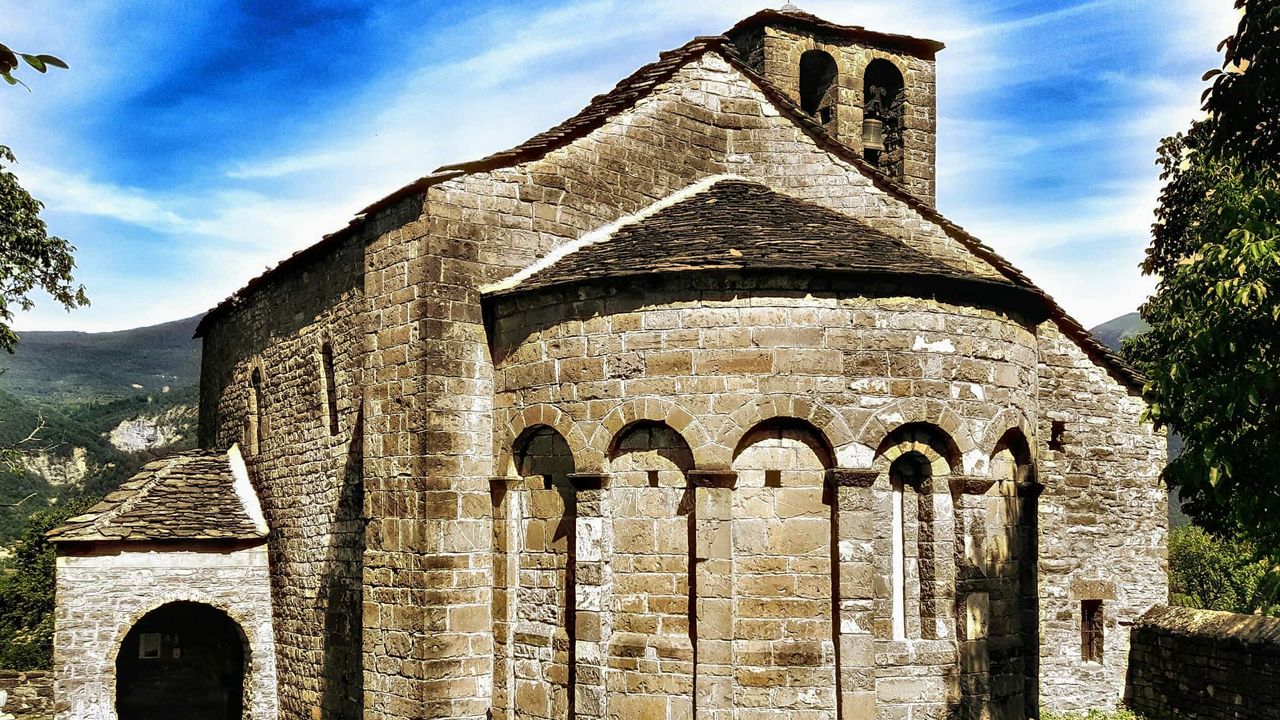
Church of Santa Eulalia
Santa Eulalia is the most refined of the roughly 20 Serrablo churches strung along the Gállego valley — a Romanesque-Mozarabic hybrid from around the year 1000, built by masons working in a style scholars still argue over: Mozarabic influence, or an early local Romanesque all its own. Look for the apse's blind arcade and its triple horseshoe-arched window, the group's signature; the whole Serrablo ensemble was declared a national monument in 1982.

Puente de la Albarda
This "donkey-back" bridge over the Vero — a single 19-metre arch rising 8.5 metres above the water — was rebuilt between the 13th and 16th centuries on the footings of an 11th–12th-century predecessor, on the old road linking Barbastro to Colungo, Alquézar and Sobrarbe. It's an easy add-on: the bridge sits a couple of kilometres outside Alquézar's old town, right on the walking path down into the Vero canyon, so there's little reason to see one without the other.
Split this into two trips rather than one long drive: the Huesca cluster (Loarre, Alquézar, Aínsa, Estada, Bolea, Agüero, the Albarda bridge) sits within an hour or so of each other in the Pyrenean foothills, while Calatayud, the Piedra monastery and Belchite belong to a separate day south of Zaragoza. None of these are big-ticket monuments with reliable year-round hours — several are rural collegiate churches or unstaffed ruins — so check ahead, especially outside summer. Belchite in particular is guided-tour-only; book before you drive out.