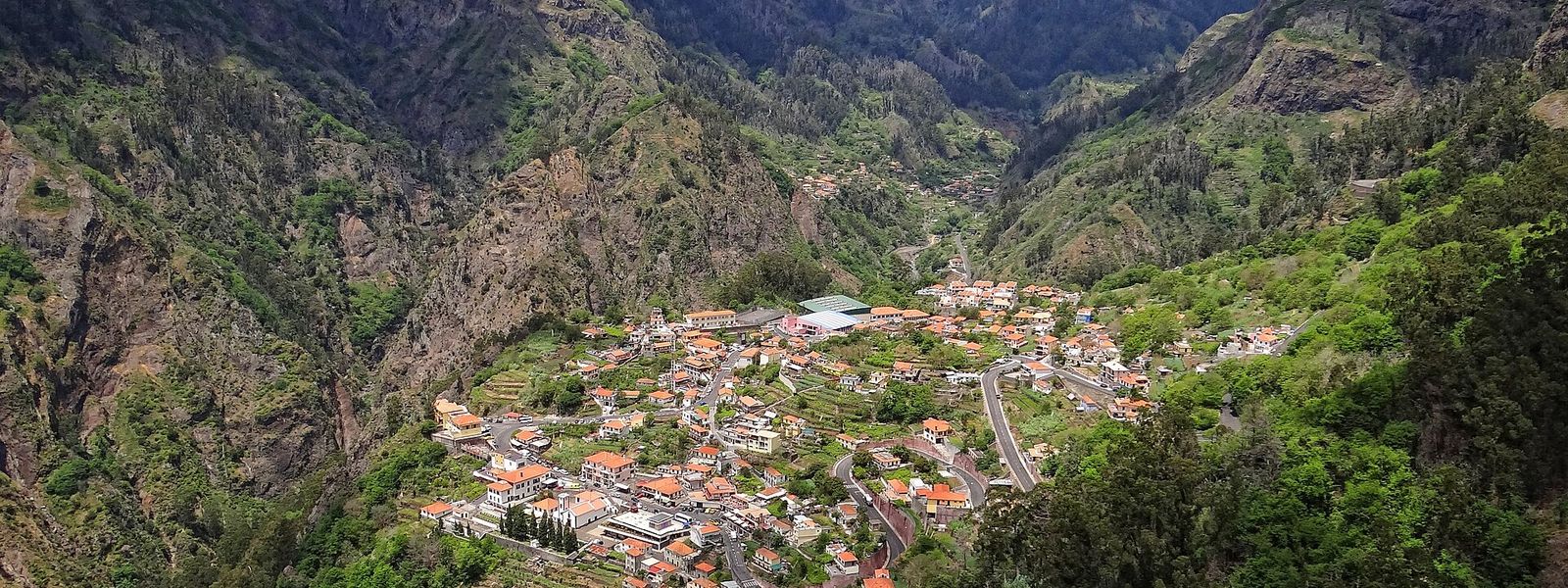
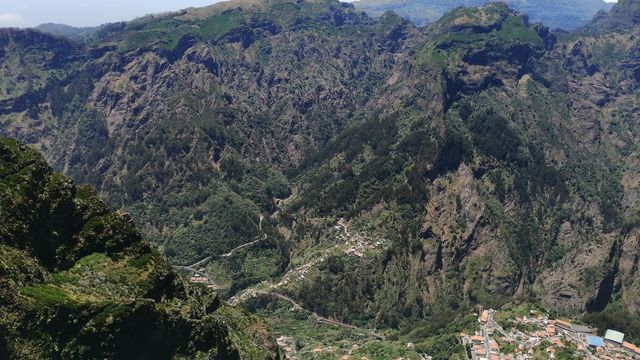
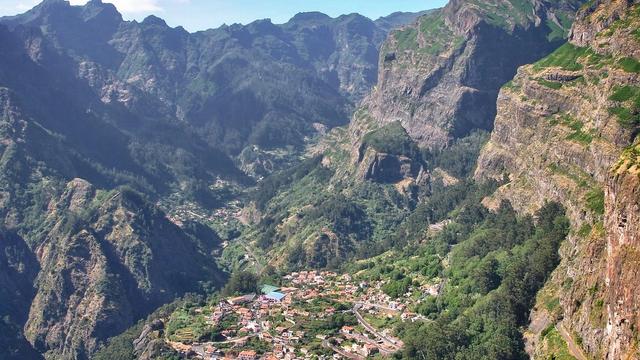
Curral das Freiras is a civil parish in the municipality of Câmara de Lobos, in the mountainous interior of Madeira. It lies in a deep valley enclosed by steep slopes, 29 km from the municipal seat, and was cut off from neighbouring communities until a tunnel towards Funchal opened in 2004. Most of the buildings look out over the main valley, with the hillsides around them worked for cherries and for grapes used in Madeira wine. The parish takes its name from the nuns of the Convent of Santa Clara, who came to own the land at the end of the 15th century, and became independent of Santo António in 1790.
Curral das Freiras
- Currency
- Euro, in place of the escudo since 2002. Multibanco and ATM Express cash machines take international cards almost everywhere and mostly charge nothing of their own, while the Euronet machines clustered in tourist streets take high fees and give poor rates. VAT is already inside every price in shops and restaurants: 23% standard on the mainland, 22% in Madeira and 18% in the Azores.
- Language
- Portuguese, spoken here with a heavy accent even by mainland standards. English gets you about as far as it does on the mainland, and an attempt at a few Portuguese words is always taken well.
- Power plug
- Type C / F, 230 V, 50 Hz
- Visa
- Schengen: entry and short-stay limits follow the common Schengen rules.
- Time zone
- UTC+0 (UTC+1 in summer)
- Tap water
- Safe to drink across the country. Bottled spring water (água mineral) is sold everywhere for those who prefer it.
- Tipping
- Not expected, appreciated for good service. Around 8–10% in a restaurant if the service was exemplary, and it is perfectly acceptable to leave nothing if it was not. No tip for a coffee or a cake; €1–2 if you eat a full meal in a café. Nothing in pubs and bars. In a taxi, round the fare up and add €1–2.
- Emergency
- 112
When to go
Shoulder
Mar – May
The valley greens up and cloud clears off the rim more often than in winter; the terraces of cherry and vine above the village are in leaf.
High season
Jun – Sep
Warmest and busiest, with most of the day traffic arriving from Funchal; the parish holds its festival for Nossa Senhora do Livramento on the last Sunday of August.
Shoulder
Oct – Nov
Quieter on the valley floor, with the sun coming in low over the ridges and cloud capping the peaks more of the time.
Low season
Dec – Feb
The wet stretch in the mountains: cloud settles on the slopes that enclose the valley and the floor loses the sun early, though the air stays cool rather than cold.
How long to stay
Half a day covers a visit from Funchal: the drive in, time on the valley floor, lunch, and out again. Stay the night and the valley changes hands — the day traffic leaves, and the walls around it take the light at both ends of the day. A second night earns its place only if the mountains ringing the valley, rather than the village, are the reason you came.
Getting around
The way in is a tunnel from the Funchal side, opened in 2004. Before it, traffic used the historic mountain route, dangerous enough that it was abandoned once the tunnel took over. Câmara de Lobos, the municipal seat this parish belongs to, sits 29 km away, so the practical approach is from Funchal rather than round the coast. A car is the simplest way to do it. The road drops into the valley in tight bends, and the village itself lies on the valley floor with houses climbing the slopes on both sides.
What to see


Destinations in Curral das Freiras
Frequently asked questions
Where is Curral das Freiras?
In the mountainous interior of Madeira, in a deep valley closed in by cliffs and peaks. Administratively it is a civil parish of the municipality of Câmara de Lobos, 29 km from the municipal seat.How do you reach the valley?
By road through a tunnel that runs south towards Funchal and opened in 2004. It gave the valley safe access for the first time; the older route, the dangerous one, has been abandoned.What does the name mean?
"Pen of the Nuns". The place was first called Curral, or Curral da Serra, for its grazing land. The name changed once the land passed to the nuns of the Convent of Santa Clara between 1492 and 1497; another account ties it to 1566, when the nuns took refuge here during French privateer attacks on Funchal.What is grown on the slopes?
Cherries, and grapes that go into the production of Madeira wine. The steep hillsides ringing the parish are cultivated, while most of the buildings look out over the main valley.Is there a village festival?
Yes. The patron is Nossa Senhora do Livramento, Our Lady of Alleviation, and the parish celebrates in her honour on the last Sunday of August each year.