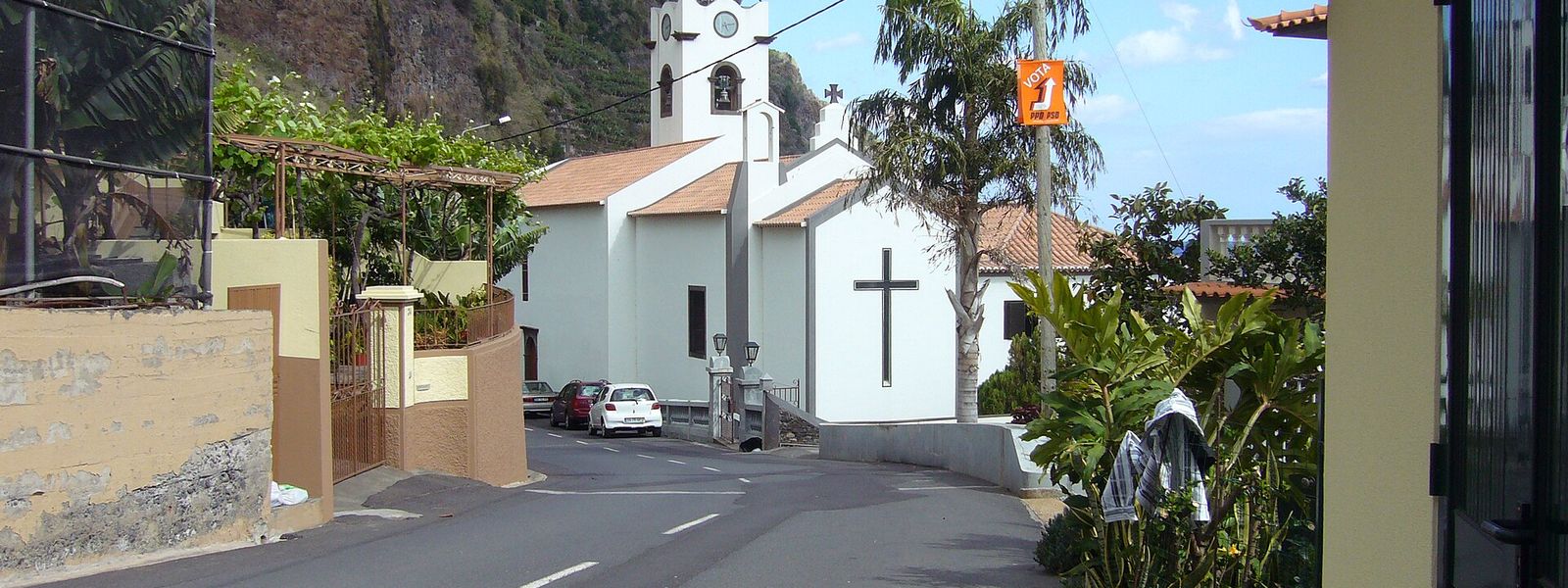
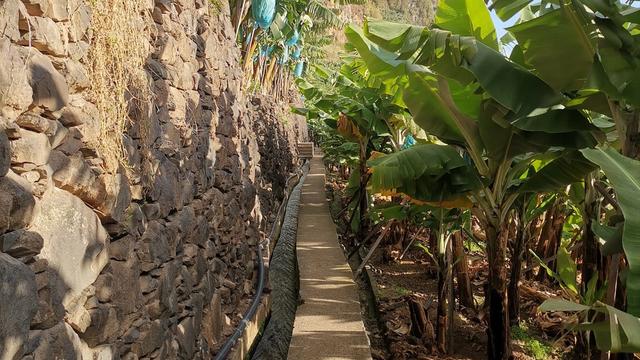
Madalena do Mar is a civil parish in the municipality of Ponta do Sol, on the south-west coast of Madeira, with 508 residents across 2.07 km². The village runs along the shore below terraced banana fields that climb the cliff faces behind it, and bananas are still the main crop. Its name comes from a chapel to Santa Maria Madalena, founded on the estate granted to the settler Henrique Alemão, whom local legend made a Polish prince. There is a primary school, and Ponta do Sol and Arco da Calheta sit either side.
Madalena do Mar
- Currency
- Euro, in place of the escudo since 2002. Multibanco and ATM Express cash machines take international cards almost everywhere and mostly charge nothing of their own, while the Euronet machines clustered in tourist streets take high fees and give poor rates. VAT is already inside every price in shops and restaurants: 23% standard on the mainland, 22% in Madeira and 18% in the Azores.
- Language
- Portuguese, spoken here with a heavy accent even by mainland standards. English gets you about as far as it does on the mainland, and an attempt at a few Portuguese words is always taken well.
- Power plug
- Type C / F, 230 V, 50 Hz
- Visa
- Schengen: entry and short-stay limits follow the common Schengen rules.
- Time zone
- UTC+0 (UTC+1 in summer)
- Tap water
- Safe to drink across the country. Bottled spring water (água mineral) is sold everywhere for those who prefer it.
- Tipping
- Not expected, appreciated for good service. Around 8–10% in a restaurant if the service was exemplary, and it is perfectly acceptable to leave nothing if it was not. No tip for a coffee or a cake; €1–2 if you eat a full meal in a café. Nothing in pubs and bars. In a taxi, round the fare up and add €1–2.
- Emergency
- 112
When to go
High season
Jun – Sep
The driest stretch of the year on this coast, and the warmest water. The coast road through the village carries the summer traffic between Ponta do Sol and Calheta.
Shoulder
Oct – Nov
The sea holds its summer warmth and work goes on in the banana terraces. Rain returns to the island, though this south-facing coast takes less of it than the north.
Low season
Dec – Feb
The wettest and darkest window. It stays mild down at the shore, but there is nothing to do in the village when the rain sets in, and the roads on the slopes above take the worst of the weather.
Shoulder
Mar – May
The valley behind the village is at its greenest and the coast is quieter than in summer, with the sea still cool for swimming.
How long to stay
For most people Madalena do Mar is a stop rather than a base: an hour by the water on the run between Ponta do Sol and Calheta covers the church, the front and the view up the banana terraces. Two or three nights make sense only if quiet is the point. There is no cluster of sights in the parish, and Madeira's headline walks and viewpoints all mean a drive.
Getting around
Madalena do Mar sits at sea level on the south-west coast of Madeira, under the terraced banana slopes that fill the valley behind it, so everything above the village is reached by road. A hire car is the practical way in and out: the south-coast expressway runs west past Ribeira Brava towards Calheta, and the final stretch drops off it down to the shore. Ponta do Sol, the seat of the municipality, and Arco da Calheta are the immediate neighbours, with Funchal and the airport east along the same coast. Once parked, nothing here needs a car — the built-up strip follows the water and is walked end to end.
What to see

Destinations in Madalena do Mar
Frequently asked questions
Where is Madalena do Mar?
On the south-west coast of Madeira, in the municipality of Ponta do Sol, between Ponta do Sol itself and the parish of Arco da Calheta, with Canhas on the slopes above. Funchal and the airport lie east along the same coast.What is Madalena do Mar known for?
Bananas. Terraced fields of banana plants take up much of the land on the cliff faces around the village, and the crop is the main activity of the parish.Who was Henrique Alemão?
The settler whose farm and chapel the parish grew from, and the reason it carries the name of Santa Maria Madalena. Gaspar Frutuoso's Saudades da Terra records that João Gonçalo Zarco granted him the land, that Infante Henrique confirmed the grant on 29 April 1457 and Afonso V on 18 May of the same year, and that he died when rocks falling from Cabo Girão struck his boat as he came back from Funchal. Local tradition made him a Polish prince.How big is the village?
508 residents across 2.07 km²; the 2011 census counted 516. The parish has a primary school, and many islanders still call the place simply Madalena.