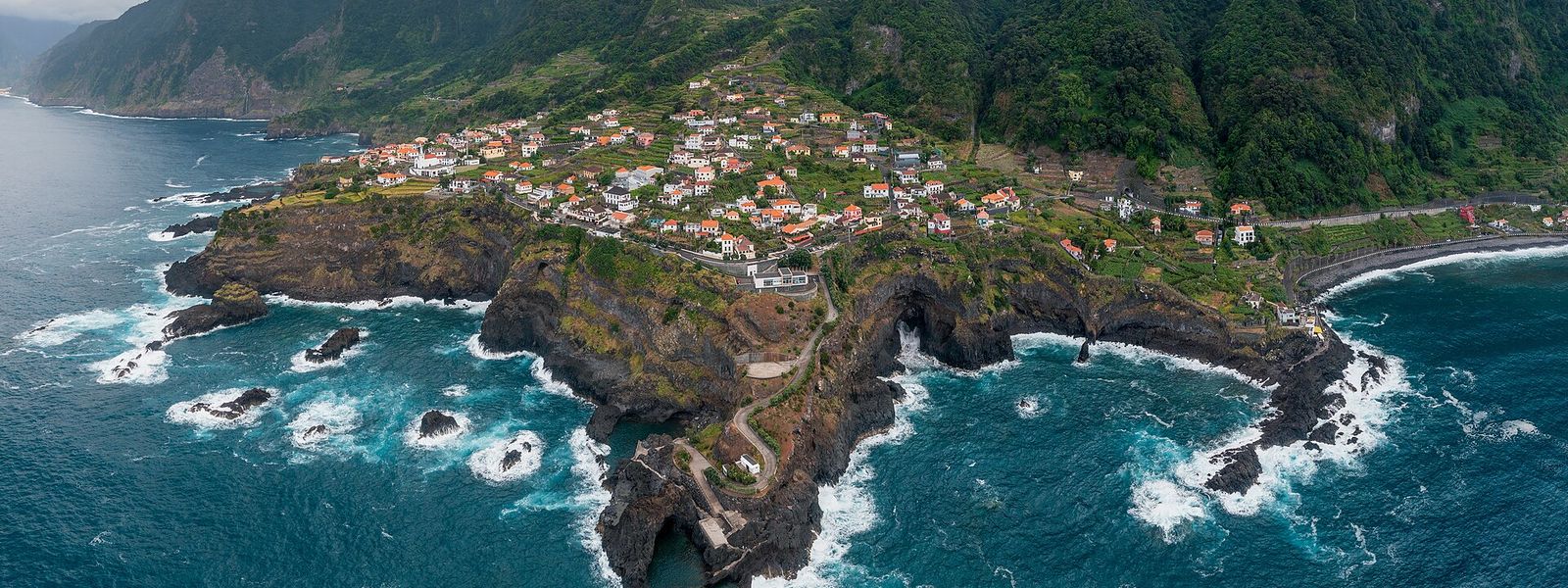
Seixal is a civil parish on the north coast of Madeira, in the municipality of Porto Moniz, on the border with São Vicente. It is the largest parish in Porto Moniz by area — 36.37 km² — and runs from the Atlantic shore up into the interior of the island towards the Paul da Serra plateau. The parish has a population of 612. The name comes from the pebbles on the beach. The climate is subtropical Mediterranean, and the village stands under steep terraced slopes with waterfalls dropping towards the sea.
Seixal
- Currency
- Euro, in place of the escudo since 2002. Multibanco and ATM Express cash machines take international cards almost everywhere and mostly charge nothing of their own, while the Euronet machines clustered in tourist streets take high fees and give poor rates. VAT is already inside every price in shops and restaurants: 23% standard on the mainland, 22% in Madeira and 18% in the Azores.
- Language
- Portuguese, spoken here with a heavy accent even by mainland standards. English gets you about as far as it does on the mainland, and an attempt at a few Portuguese words is always taken well.
- Power plug
- Type C / F, 230 V, 50 Hz
- Visa
- Schengen: entry and short-stay limits follow the common Schengen rules.
- Time zone
- UTC+0 (UTC+1 in summer)
- Tap water
- Safe to drink across the country. Bottled spring water (água mineral) is sold everywhere for those who prefer it.
- Tipping
- Not expected, appreciated for good service. Around 8–10% in a restaurant if the service was exemplary, and it is perfectly acceptable to leave nothing if it was not. No tip for a coffee or a cake; €1–2 if you eat a full meal in a café. Nothing in pubs and bars. In a taxi, round the fare up and add €1–2.
- Emergency
- 112
When to go
High season
Jun – Sep
The driest stretch of the year and the busiest on the north-coast road, though cloud still banks up against this side of the island.
Shoulder
Oct – Nov
Rain returns to the north coast and traffic thins on the coast road; the terraced slopes above the village go green again.
Low season
Dec – Feb
The wet season, and the roughest water of the year: Atlantic swell runs high against the north coast and the mountain roads carry cloud and rain.
Shoulder
Mar – May
Showers ease, water runs strong off the mountain into the ravines, and visitor numbers build towards summer.
How long to stay
Most people give Seixal a morning or an afternoon: the village, the beach below it and the coast on either side fit into a drive round the north of the island. A night or two makes sense if the north coast is the point of the trip and crossing the island every day holds no appeal. The cloud sits differently on this side, and the village goes quiet once the day traffic has moved on.
Getting around
Madeira has no railway, so moving around comes down to a hire car, a taxi or the island buses. Seixal sits on the north coast between São Vicente to the east and Porto Moniz to the west, and the coast road linking the three runs largely through tunnels cut into the cliffs. The airport and Funchal are on the south side, so any arrival means crossing the island — either through the central tunnels or over the Encumeada pass, which trades speed for the view. Buses do reach the north coast; check the timetable before you plan a day around one.
What to see
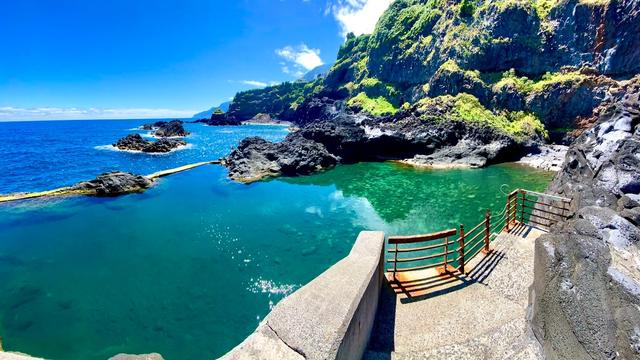


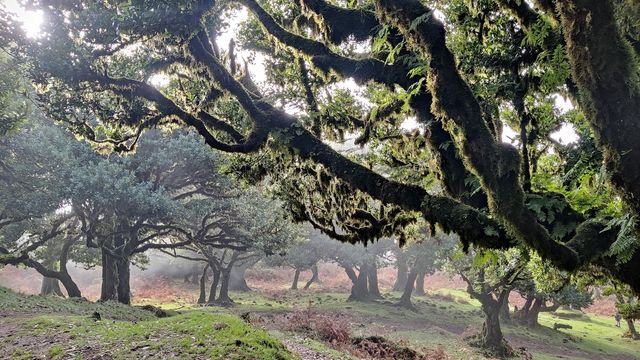


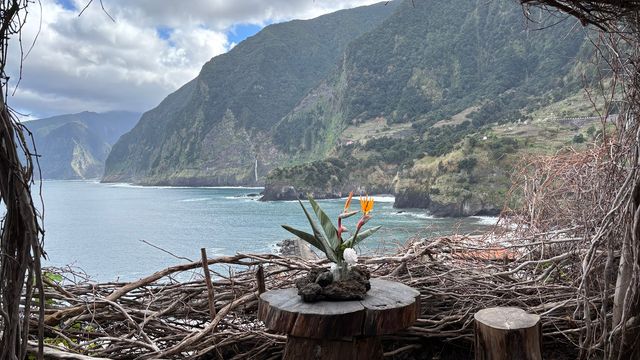

Destinations in Seixal
Frequently asked questions
Is this the Seixal near Lisbon?
No. This Seixal is a civil parish in the municipality of Porto Moniz, on the north coast of Madeira. The mainland Seixal, on the Tagus south of Lisbon, is a separate and much larger place — the two share a name and the same origin for it.Where exactly is Seixal?
On Madeira's north coast, at the eastern edge of the municipality of Porto Moniz where it borders São Vicente. The parish covers 36.37 km², the largest in Porto Moniz by area, and stretches from the Atlantic inland towards the Paul da Serra plateau.How many people live in Seixal?
612. The 2011 census counted 656 across the parish's 36.37 km², most of which is mountain and plateau rather than village.Where does the name come from?
From the pebbles on the beach — seixo is Portuguese for pebble. The mainland Seixal was named the same way.