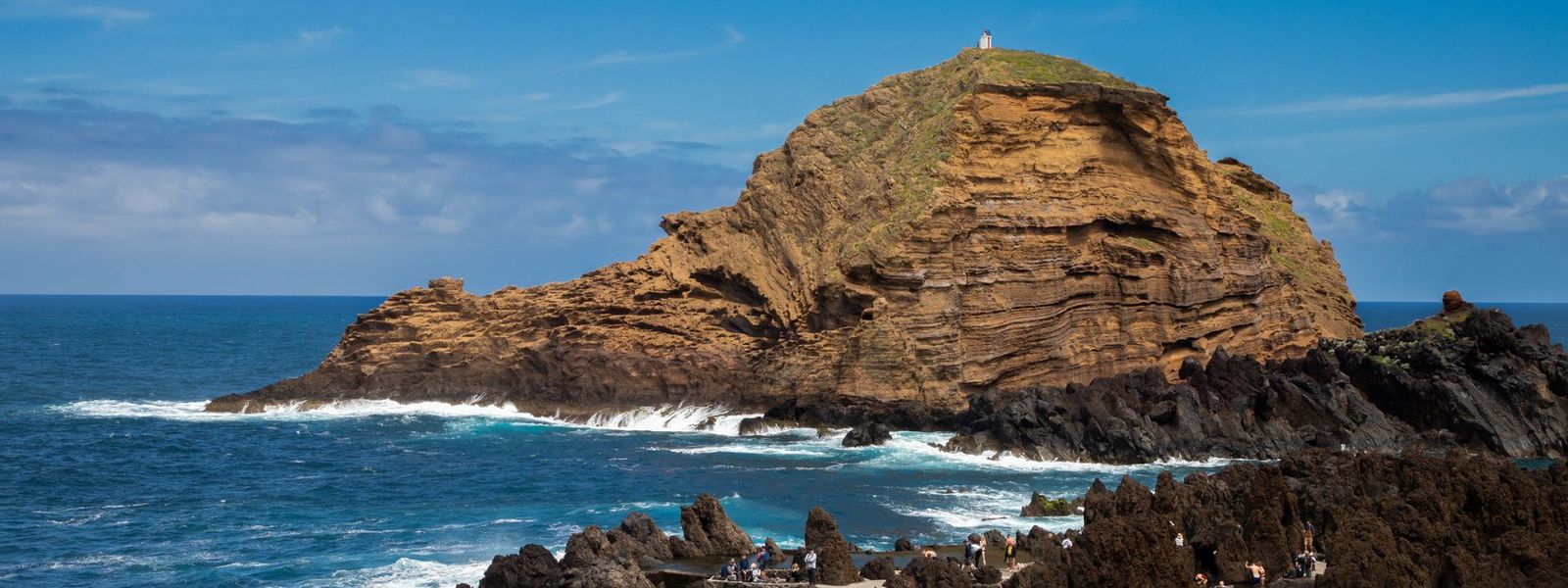
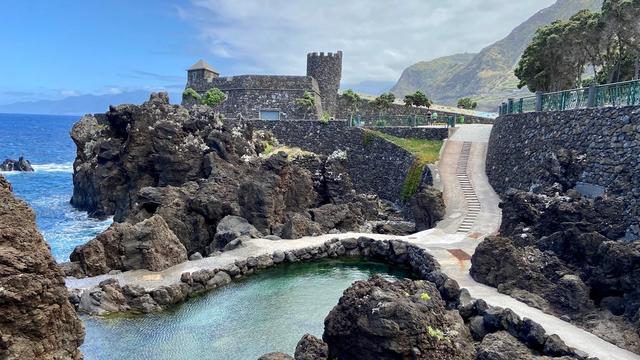
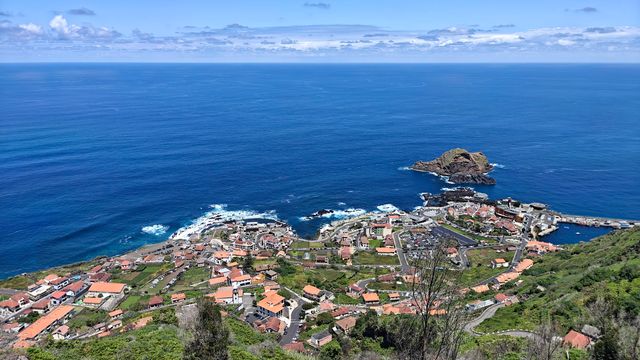
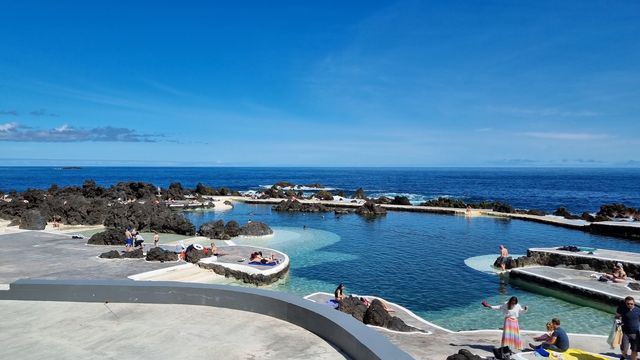
Porto Moniz occupies the north-west corner of Madeira, west of Santana and Machico and north-west of Funchal, with 2,711 residents recorded in 2011 across 82.93 km². The draw is the natural complex of lava pools at the shore, used by residents as much as by visitors. The municipality takes in four parishes — Porto Moniz, Seixal, Ribeira da Janela and Achadas da Cruz — and the main church, Igreja de Nossa Senhora da Conceição, was built in the 18th century. Ponta do Tristão, the northernmost point of the island, lies beyond the main settlement.
Porto Moniz
- Currency
- Euro, in place of the escudo since 2002. Multibanco and ATM Express cash machines take international cards almost everywhere and mostly charge nothing of their own, while the Euronet machines clustered in tourist streets take high fees and give poor rates. VAT is already inside every price in shops and restaurants: 23% standard on the mainland, 22% in Madeira and 18% in the Azores.
- Language
- Portuguese, spoken here with a heavy accent even by mainland standards. English gets you about as far as it does on the mainland, and an attempt at a few Portuguese words is always taken well.
- Power plug
- Type C / F, 230 V, 50 Hz
- Visa
- Schengen: entry and short-stay limits follow the common Schengen rules.
- Time zone
- UTC+0 (UTC+1 in summer)
- Tap water
- Safe to drink across the country. Bottled spring water (água mineral) is sold everywhere for those who prefer it.
- Tipping
- Not expected, appreciated for good service. Around 8–10% in a restaurant if the service was exemplary, and it is perfectly acceptable to leave nothing if it was not. No tip for a coffee or a cake; €1–2 if you eat a full meal in a café. Nothing in pubs and bars. In a taxi, round the fare up and add €1–2.
- Emergency
- 112
When to go
Shoulder
Apr – May
The hillsides are at their greenest and the sea is still cold. The north coast holds cloud where the south is clear, so the weather can differ between the two sides of the island on the same day.
High season
Jun – Sep
The warmest and steadiest stretch of the year, and the busiest along the seafront, with day traffic arriving from Funchal through the middle of the day.
Low season
Oct – Mar
Atlantic swell builds against an exposed north coast and the sea works over the rocks below the village. Cloud and rain sit on this side more than on the south. Never turn your back on the ocean when the swell is running.
How long to stay
Half a day covers the pools and the seafront. Give it a night if you want the rest of the municipality — Seixal, the valley at Ribeira da Janela, the high ground at Achadas da Cruz — and to see the village after the day traffic has driven back south.
Getting around
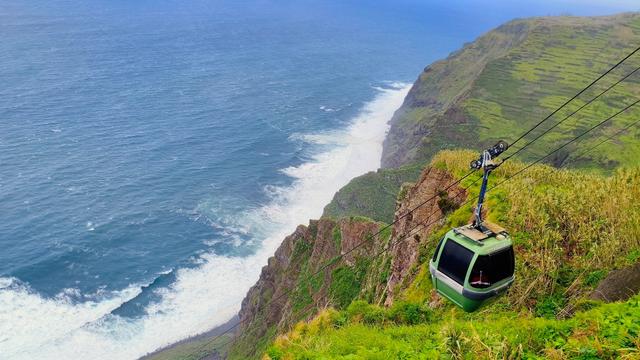
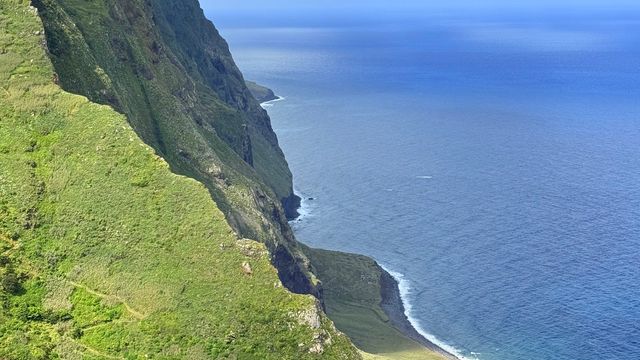
A car does the work here. Madeira's airport is on the other side of the island, so arriving means crossing or rounding it, and the coast road in from São Vicente runs through a chain of tunnels cut into the cliffs. Once you are in the municipality, the four parishes are spread across 82.93 km² of coast and highland — Porto Moniz and Seixal on the water, Ribeira da Janela in its valley, Achadas da Cruz on the high ground — and putting them together in one visit means driving between them. The honest part: this is the cloudy side of Madeira, and the high route in can sit inside cloud while the coast below is clear.
What to see

Destinations in Porto Moniz
Frequently asked questions
What is Porto Moniz known for?
The natural complex of lava pools at the shoreline, where old flows meet the sea. Residents use them as much as visitors do.Where is Porto Moniz?
In the north-west corner of Madeira, west of Santana and Machico and north-west of Funchal. Ponta do Tristão, the northernmost point of the island, lies beyond the main settlement.Which parishes make up the municipality?
Four. Porto Moniz is the largest by population, with 1,668 inhabitants, and holds the main settlement along with Santa Maria Madalena. Seixal is the largest by area, Ribeira da Janela the lowest in density, and Achadas da Cruz the smallest in both population and area. Ribeira da Janela and Achadas da Cruz are the high ones.How far back does the settlement go?
Settlement most likely began in the last quarter of the 15th century. Francisco Moniz O Velho is named among the first settlers, holding uncultivated land here and establishing a farm and a chapel; grain, cattle and timber came first, vines from the 18th century and potatoes from the 19th. The municipality was created on 31 October 1835, then abolished and re-established several times up to 1898.