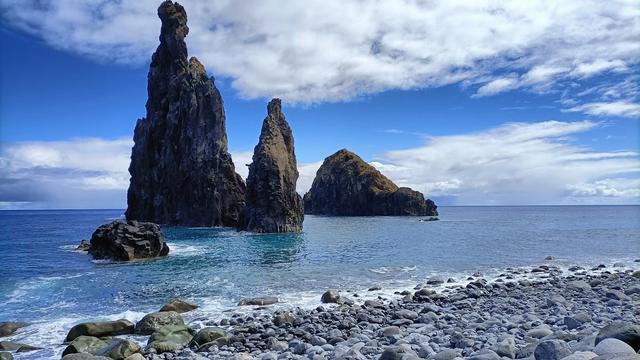
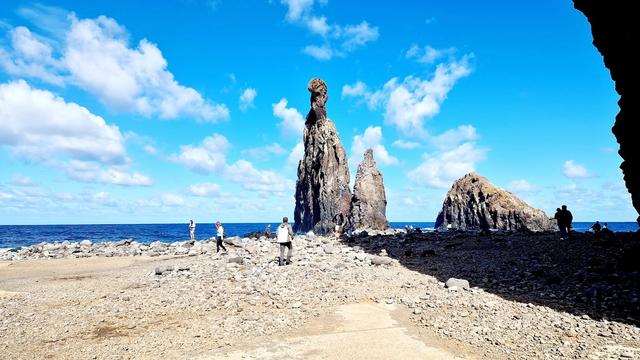
Ribeira da Janela is a civil parish in the municipality of Porto Moniz, on the north coast of Madeira, with about 200 residents across 18.48 km². The ravine it is named after springs from the Paul da Serra plateau at around 1,420 metres and meanders down to the Atlantic, cutting one of the longest valleys on the island; forest dominates the northern and western parts of it, brush the rest. Sea stacks stand offshore at the river mouth. The main road that circles Madeira links the parish to Funchal and Calheta.
Ribeira da Janela

- Currency
- Euro, in place of the escudo since 2002. Multibanco and ATM Express cash machines take international cards almost everywhere and mostly charge nothing of their own, while the Euronet machines clustered in tourist streets take high fees and give poor rates. VAT is already inside every price in shops and restaurants: 23% standard on the mainland, 22% in Madeira and 18% in the Azores.
- Language
- Portuguese, spoken here with a heavy accent even by mainland standards. English gets you about as far as it does on the mainland, and an attempt at a few Portuguese words is always taken well.
- Power plug
- Type C / F, 230 V, 50 Hz
- Visa
- Schengen: entry and short-stay limits follow the common Schengen rules.
- Time zone
- UTC+0 (UTC+1 in summer)
- Tap water
- Safe to drink across the country. Bottled spring water (água mineral) is sold everywhere for those who prefer it.
- Tipping
- Not expected, appreciated for good service. Around 8–10% in a restaurant if the service was exemplary, and it is perfectly acceptable to leave nothing if it was not. No tip for a coffee or a cake; €1–2 if you eat a full meal in a café. Nothing in pubs and bars. In a taxi, round the fare up and add €1–2.
- Emergency
- 112
When to go
Low season
Dec – Feb
The wet part of the year on this coast. Rain feeds the ravine and the valley runs full, while Paul da Serra above sits in cloud and the road over the plateau loses its view.
Shoulder
Mar – May
Clear spells return, the forest on the northern and western slopes of the valley is at its greenest, and the coast road is quiet before the summer arrivals.
High season
Jun – Sep
The busiest stretch. Hire cars run steadily along the north coast road, and this is when the valley is driest and the plateau crossing most likely to be clear.
Shoulder
Oct – Nov
Traffic thins out and the coast goes back to the people who live on it. The Atlantic swell builds, and the north coast takes it head on.
How long to stay
Ribeira da Janela works as a stop rather than a base. The valley, the river mouth and the coast road either side of them fill an unhurried half day, and a second day only makes sense if you plan to walk the valley or carry on along the north coast. Most people who come here are based in Porto Moniz or Funchal and pass through.
Getting around
A car does the work here. The parish sits on the north coast of the Porto Moniz municipality, and the main road that circles Madeira links it to Funchal and Calheta, the two places most visitors set out from. Inland, the road leaves the coast and climbs the valley towards Paul da Serra, the plateau where the ravine rises at around 1,420 metres; that climb takes longer than the distance on the map suggests. Madeira has no railway, and the island's airport lies on the far side of it, on the south-east coast.
What to see


Destinations in Ribeira da Janela
Frequently asked questions
Where is Ribeira da Janela?
On the north coast of Madeira, in the municipality of Porto Moniz. The main road that circles the island connects it to Funchal and Calheta.What is the valley here known for?
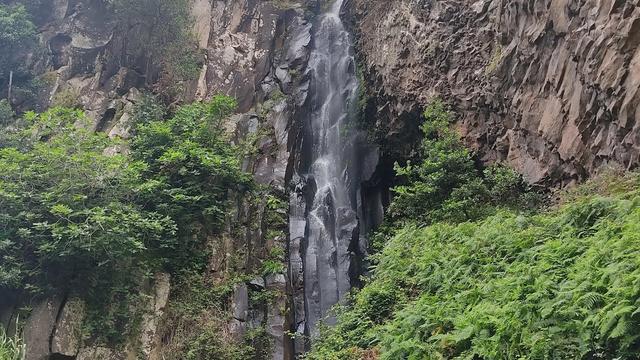
The ravine that gives the parish its name springs from the Paul da Serra plateau at around 1,420 metres and meanders down to the Atlantic. The valley it has cut is one of the longest on Madeira. Forest dominates the northern and western parts of it; brush covers the rest.How many people live in the parish?
Around 200, across 18.48 km². The 2011 census counted 228. A mass exodus in the 1960s emptied the parish, and it has not recovered from it.Do you need a car?
In practice, yes. Madeira has no railway, and the parish is reached by the main roadway that rings the island — the same road that runs on to Funchal and Calheta.