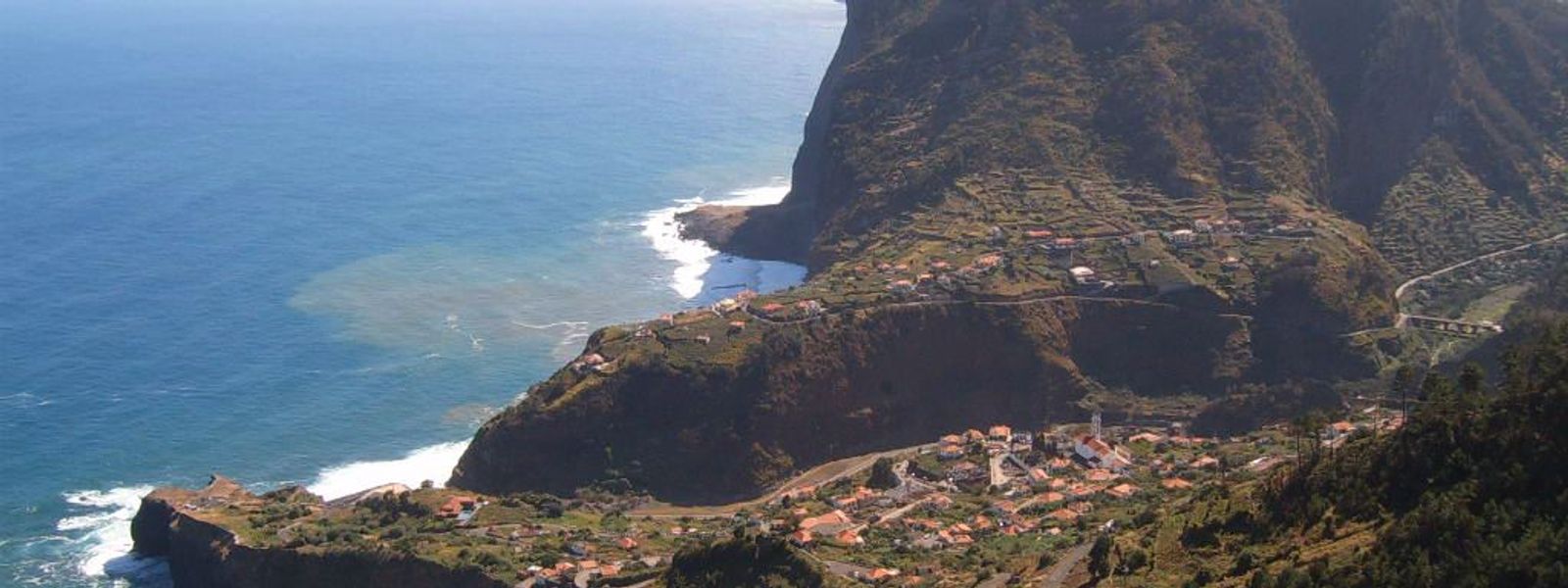
Faial is a civil parish on the north coast of Madeira, in the municipality of Santana, 21 kilometres north of Funchal. Settlers founded it on 20 February 1550 and named it after the faia shrubs (Myrica faya) growing in the valleys between the mountains. The parish covers a string of hamlets — Penha de Águia, Fajã do Mar, Guindaste, Fazenda, Lombo de Baixo among them — linked by the regional road towards Santana, Porto da Cruz and Machico. The church standing today was rebuilt in 1966, after a fire destroyed the original in 1960.
Faial
- Currency
- Euro, in place of the escudo since 2002. Multibanco and ATM Express cash machines take international cards almost everywhere and mostly charge nothing of their own, while the Euronet machines clustered in tourist streets take high fees and give poor rates. VAT is already inside every price in shops and restaurants: 23% standard on the mainland, 22% in Madeira and 18% in the Azores.
- Language
- Portuguese, spoken here with a heavy accent even by mainland standards. English gets you about as far as it does on the mainland, and an attempt at a few Portuguese words is always taken well.
- Power plug
- Type C / F, 230 V, 50 Hz
- Visa
- Schengen: entry and short-stay limits follow the common Schengen rules.
- Time zone
- UTC+0 (UTC+1 in summer)
- Tap water
- Safe to drink across the country. Bottled spring water (água mineral) is sold everywhere for those who prefer it.
- Tipping
- Not expected, appreciated for good service. Around 8–10% in a restaurant if the service was exemplary, and it is perfectly acceptable to leave nothing if it was not. No tip for a coffee or a cake; €1–2 if you eat a full meal in a café. Nothing in pubs and bars. In a taxi, round the fare up and add €1–2.
- Emergency
- 112
When to go
High season
Jun – Sep
The driest and clearest spell on this coast, and the busiest: tour traffic bound for Santana passes through the parish in the middle of the day.
Shoulder
Oct – Oct
Traffic thins out while the sea is still warm, and cloud starts piling against the north slopes in the afternoons.
Low season
Nov – Mar
The north coast takes the Atlantic weather first — frequent rain, the higher valleys under cloud for days at a stretch, and waterproofs more useful than swimwear.
Shoulder
Apr – May
The green is at its strongest after the winter rain, hillsides are in flower and the coast road is quiet.
How long to stay
Half a day covers what the parish itself holds — the church, the coast road, the views down the valleys — and most people see Faial as part of a north-coast run. A night or two here works as a base for that side of the island: Santana is next door, Porto da Cruz 5 kilometres away, Machico 15, and you skip the drive over the interior from Funchal each morning.
Getting around
The regional road network is the whole story here. Faial lies between the municipal seat of Santana and the parish of São Roque do Faial, 21 kilometres north of Funchal, 5 kilometres from Porto da Cruz, 15 kilometres from Machico and 39 kilometres from Porto Moniz at the western end of the north coast. That network gives only limited access to the communities on the south side of the island, so anything on the Funchal side means crossing the interior.
A car is what makes the parish practical: the hamlets — Fajã do Mar, Guindaste, Lombo Galego, Fazenda, Cruzinhas — branch off the main road rather than sitting on it, and walking between them is a serious undertaking on this terrain.
What to see
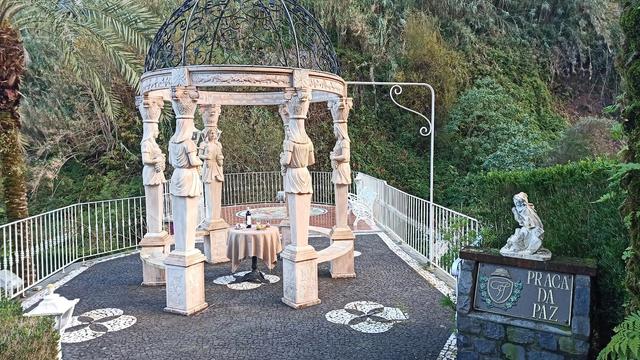
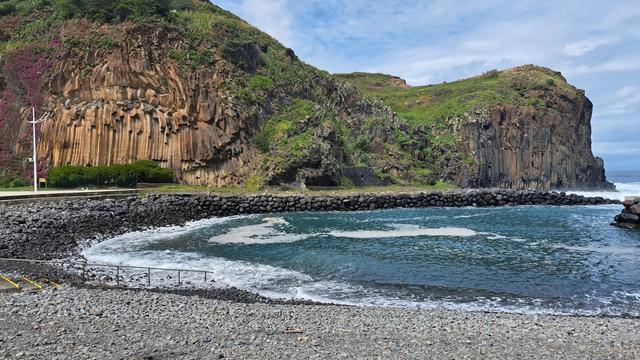


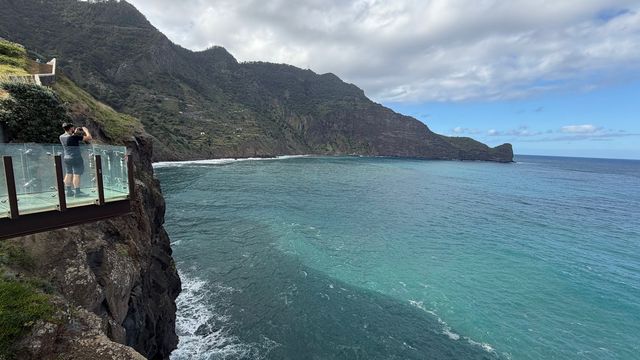
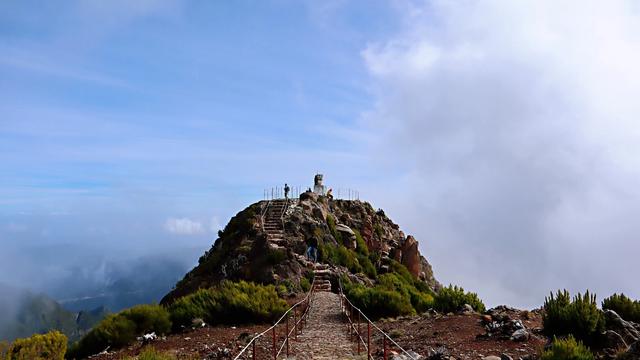
Destinations in Faial
Frequently asked questions
Where exactly is Faial?
On the northern coast of Madeira, in the municipality of Santana, between the municipal seat and the parish of São Roque do Faial. It is 21 kilometres north of Funchal, 5 from Porto da Cruz, 15 from Machico and 39 from Porto Moniz.Where does the name come from?
From the faia (Myrica faya), a shrub native to the valleys between the mountains here. The settlers who founded the parish on 20 February 1550 chose the name for it.Is Faial a single village?
No. It is a parish made up of localities scattered across the valleys and the coast, among them Penha de Águia, Fajã do Mar, Fajã da Murta, Guindaste, Lombo Galego, Fazenda, Cruzinhas and Igreja. Porto da Cruz and São Roque do Faial once belonged to it before becoming parishes of their own.How old is the church?
The building dates from 1966. A fire destroyed the previous church completely in 1960, and it was rebuilt through the initiative of Father António Pestana Martinho. Work on that earlier temple had begun in 1771, under King João V; a chapel to Nossa Senhora da Natividade had stood in the parish since 1519, and one to Nossa Senhora da Penha de França at Fazenda since around 1680.How many people live here?
1,567 at the 2011 census, spread over 24.03 square kilometres.