Forte de São Tiago is a coastal fortress at the seaward edge of Funchal's old town, on Madeira. Built in 1614 and commissioned by the Portuguese Crown, it guarded the island against corsairs and rival European fleets through the 17th and 18th centuries. Extensive restoration in the 1990s turned it into a cultural venue, and from 1994 until 2015 it housed the Madeira Museum of Contemporary Art, which has since moved to Calheta. Stone bastions, watchtowers, ramparts, courtyards and a small chapel stand behind the yellow walls the fort is known for.
Forte de São Tiago
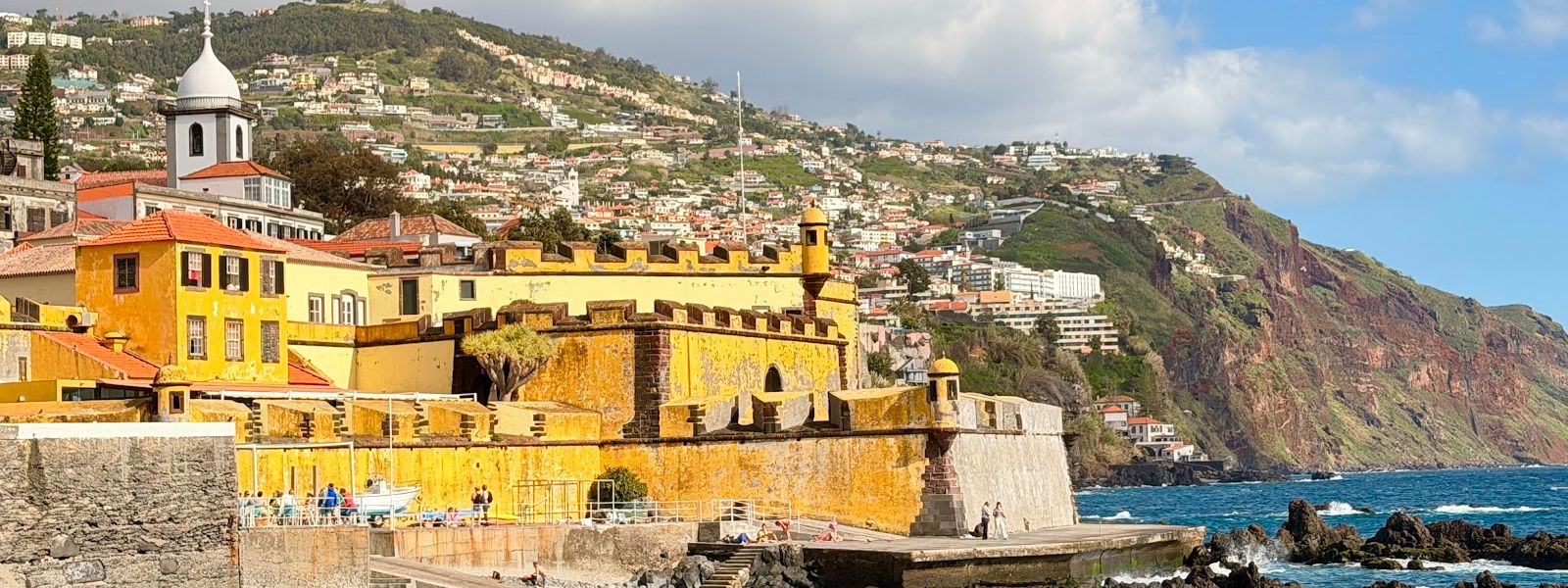
Yellow-walled 17th-century sea fort in Funchal's old town, with a rampart walk above the Atlantic.
- Entrance
- Free of charge; nothing is sold on site.
- Parking
- Free asphalt car park about 130 m away in a straight line; a second car park about 220 m away.
- Difficulty
- No walk in — the fort sits at street level on the seafront, with parking about 130 m away; the only effort is the climb up to the ramparts inside.
- Transport
- Bus stops Rua Bela S Tiago S3A (route 305) and Rua Bela São Tiago (route 268), both within about 190 m.
- Advance booking
- Not needed.
- Hours
- Listed as Monday to Friday, 10:00–17:00, closed Saturday and Sunday; the grounds are also described as open without restriction.
- Address
- Tv. do Forte 8, 9060-123 Funchal, Portugal
What makes it special
The walls are yellow, and against the blue of the Atlantic they carry a long way — the fort reads as a block of colour from the promenade before you get anywhere near it. The rampart walk is the point. It opens out over the open sea on one side and back across the roofs of Funchal on the other, and it stays quieter than the streets immediately behind it. Inside are courtyards, battlements and a small chapel that served the soldiers stationed here, with the walls and watchtowers set to catch sails coming in from the ocean early. The colour itself is modern: the vivid yellow coat went on during the restoration in the 1990s, and it is what makes the fort stand out among the old town's buildings.
Good to know
- Finding the way in: The entrance is not obvious from the street, and once you are inside you have to work out your own route up to the ramparts.
- What is inside: Courtyards, battlements and a small chapel. The contemporary art museum that occupied the fort left for Calheta in 2015.
- Condition: The yellow paintwork is worn, and there is little in the way of displays — the walls and the views are what people come for.
- Facilities close by: Free public toilets about 60 m away, and drinking water within about 200 m.
Getting there
The fort stands right on the seafront at the edge of Funchal's old town, so most people simply walk to it along the promenade, with cafés and restaurants running almost up to the walls. There is a car park about 130 m away in a straight line, on asphalt, and a second about 220 m off. Two bus stops, Rua Bela S Tiago S3A and Rua Bela São Tiago, sit within roughly 190 m of the fort. The last stretch is the awkward part: the way in is not obvious from the street, so follow the walls round and keep looking.
Best time to visit
Best: A weekday, which is when the fort itself is open to walk into.
Avoid: Saturday and Sunday, when it is listed as closed.
Even on a closed day the promenade under the walls is there to walk, and it is a known spot for watching the sun come up over the sea. The yellow walls take full sun, and the photograph everyone takes is from the seaward side, with the wall in the frame and the Atlantic behind it.
Sun & daylight
Nearby Places




Similar Places
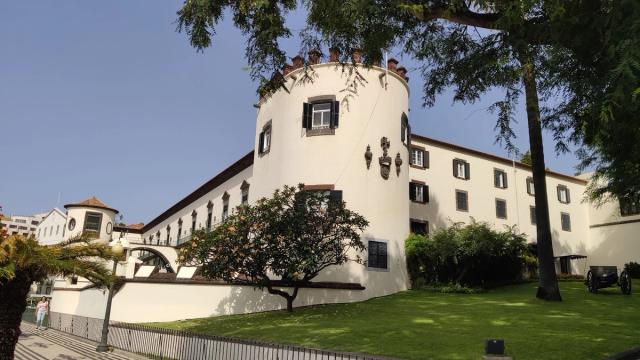
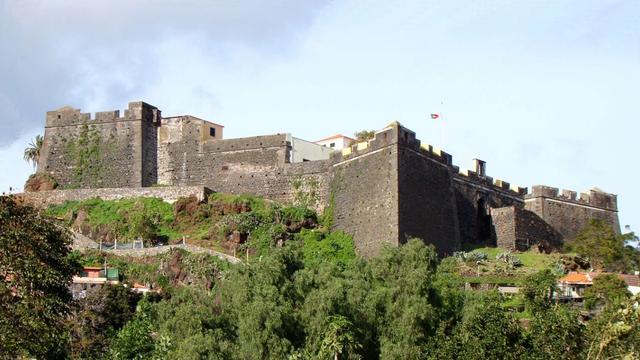
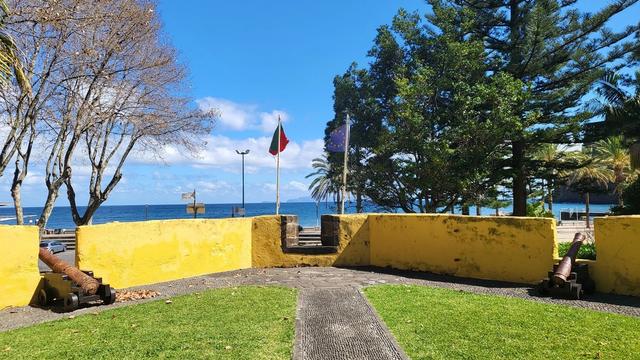
Forte de São Tiago on the map
The seaward ramparts are open to the drop onto rock and water below. Stay back from the edges and keep children in hand.
Get directions
Your whole travel map in one place
Get inspired by new places around the world and find the ones worth the journey
Frequently asked questions
Is there anything to see inside the fort?
Courtyards, battlements, ramparts and a small chapel built for the garrison. The Madeira Museum of Contemporary Art occupied the fort from 1994 until 2015 and has since moved to Calheta, so do not come expecting a collection.Why is the fort yellow?
The vivid yellow exterior was applied during the restoration of the fort in the 1990s. It is not the original 17th-century finish, and it is the reason the building stands out so sharply from the rest of the historic district.Can I get there by bus?
Yes. Two stops, Rua Bela S Tiago S3A on route 305 and Rua Bela São Tiago on route 268, are both within about 190 m of the fort.Is it suitable for children?
Yes, and there is no walk in to tire them out. The seaward ramparts are open to the drop, though, so keep children close once you are up on the walls.Is the entrance easy to find?
No. The way in is not obvious from the street, and people walk past it. Follow the walls round until you find the opening, then keep heading upwards for the rampart walk.