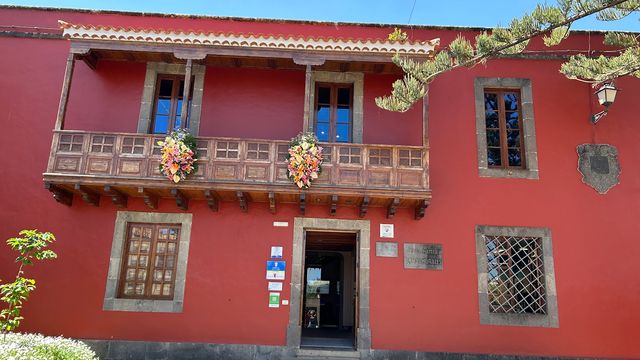
The Antonio Padrón House Museum is a public museum in Gáldar, Gran Canaria, run by the island government, the Cabildo de Gran Canaria, which acquired it in 1981. It occupies the house where the painter Antonio Padrón (1920–1968) lived, worked and died, and it opened on 8 May 1971. The collection covers his student studies, an experimental phase and the expressionist work of his last years, together with sculpture in local Gáldar stone, clay pieces and two murals on the staircase.
Antonio Padron House Museum
Local name: Casa-Museo Antonio Padrón
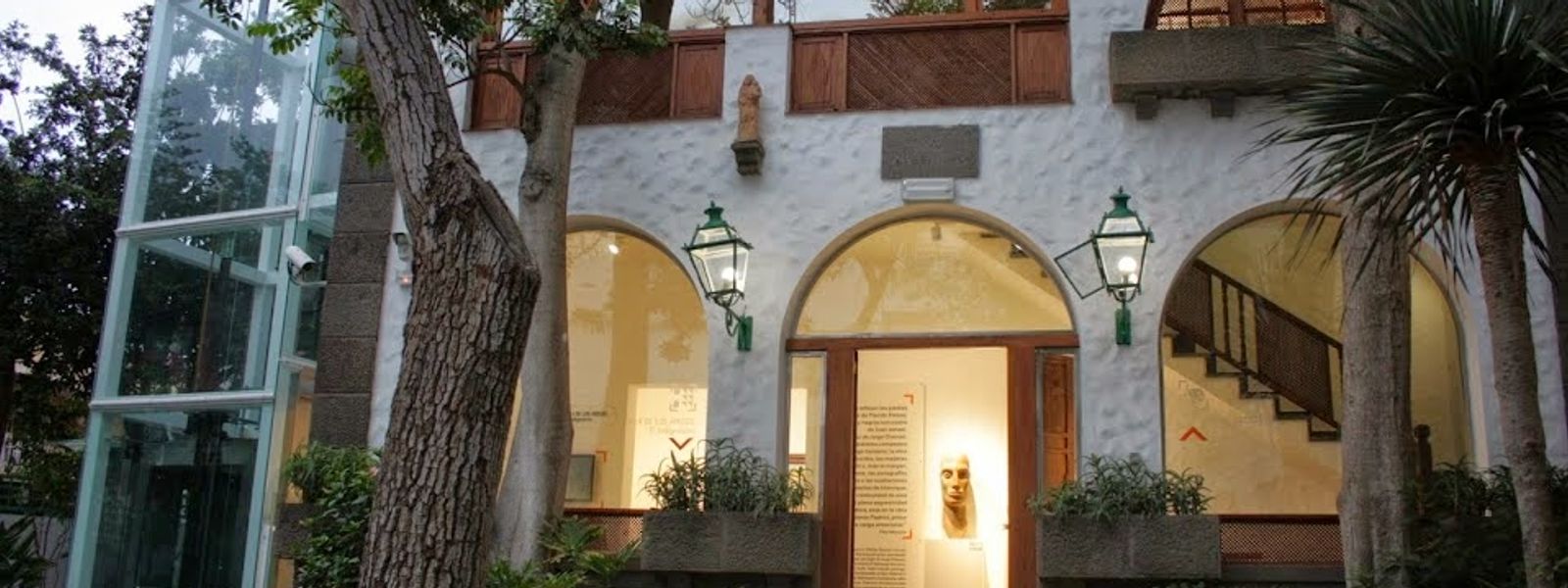
Painter's house and studio museum with a walled fountain garden and more than a hundred works by Antonio Padrón
- Entrance
- Free.
- Accessibility
- Wheelchair-accessible entrance and toilets, with a lift to the upper floor.
- Parking
- No public car park at the door: the nearest parking, about 80 m away, is private, and a free car park about 160 m away is for customers only.
- Difficulty
- None: the museum is in the town centre and you walk in from the street.
- Transport
- Bus stop Seat (Servicios), about 230 m away.
- Hours
- Tuesday to Sunday 10:00–18:00; closed on Monday.
- Address
- C. Capitán Quesada, 3, 35460 Gáldar, Las Palmas, Spain
What makes it special
The fountain is the first thing you hear. The entrance garden is a walled square of 100 square metres, its high walls topped with latticework, laid out by Padrón himself on cross-shaped paving, with flowerbeds that turn the space into a small maze and Canarian endemic plants growing beside tropical ones.
Inside, two murals he painted climb the staircase: children making kites, and camels. His studio is upstairs with his equipment still in it. Among the canvases is Piedad, the painting he was working on in his last days, left unfinished. The work runs from academic studies made at the San Fernando school in Madrid, through years of mixing earth into the paint and breaking figures into geometric shapes, to the dense expressionist canvases from 1964 onwards. Island myths, customs and folklore fill them, painted in the ochres and reds Padrón tied to the volcanic land of Gran Canaria.
Good to know
- Staff at the entrance talk visitors through Padrón's life and painting methods; ask them, as they know the work well.
- There are toilets inside, the entrance and toilets are wheelchair accessible, and a lift serves the upper floor.
- Parking beside the museum is private or customers-only, so expect to park further out in Gáldar and walk.
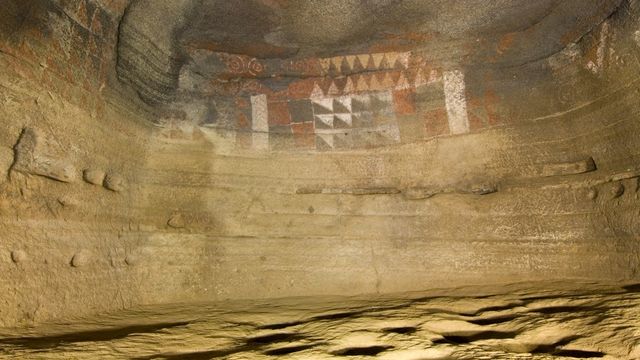
- The Cueva Pintada, the painted pre-Hispanic cave in Gáldar that fed Padrón's interest in the island's indigenous past, makes a natural pairing.
Getting there
The museum stands in the old centre of Gáldar, close to Plaza de Santa Lucía, with an information board at the door. The nearest bus stop, Seat (Servicios), is about 230 m away in a straight line. For drivers, the parking close by is a private car park about 80 m away and a free customers-only one about 160 m away, so plan to leave the car elsewhere in town and finish on foot through the streets of the centre.
Best time to visit
Best: a grey or wet day, Tuesday to Sunday.
Avoid: Monday, when the museum is closed.
Almost everything here is indoors, so the visit loses nothing to cloud or rain, and the high walls around the garden keep it sheltered whatever the weather does.
Things to do nearby
All tours in Gáldar on GetYourGuide
Paid links: booking through them supports YowJourney.
Sun & daylight
Nearby Places
Similar Places

Your whole travel map in one place
Get inspired by new places around the world and find the ones worth the journey
Frequently asked questions
Who was Antonio Padrón?
A painter from Gáldar, born in 1920, who lived, worked and died in this house. He also sculpted, worked in clay and composed music. His expressionist paintings draw on the myths, customs and folklore of Gran Canaria and on the art of its pre-Hispanic people.What is there to see besides the paintings?
The walled entrance garden with its central fountain, two murals on the staircase, Padrón's studio with his equipment, and his sculpture in Gáldar stone and clay.Is the museum wheelchair accessible?
Yes. The entrance and the toilets are wheelchair accessible, and a lift goes up to the upper floor.Can I park at the museum?
There is no public car park at the door. The nearest parking, about 80 m away, is private, and a free car park about 160 m away is for customers only.