The Tomás Morales House Museum is a historic house museum in Moya, Gran Canaria, set in the birthplace and family home of Tomás Morales (1884–1921), the modernist poet best known for Las Rosas de Hércules. The Cabildo de Gran Canaria bought the house from the poet's heirs in 1966 and opened it as a museum in October 1976. Its rooms hold his personal belongings, furniture and works of art, and the museum runs the Tomás Morales International Poetry Prize.
Tomas Morales House Museum
Local name: Casa-Museo Tomás Morales
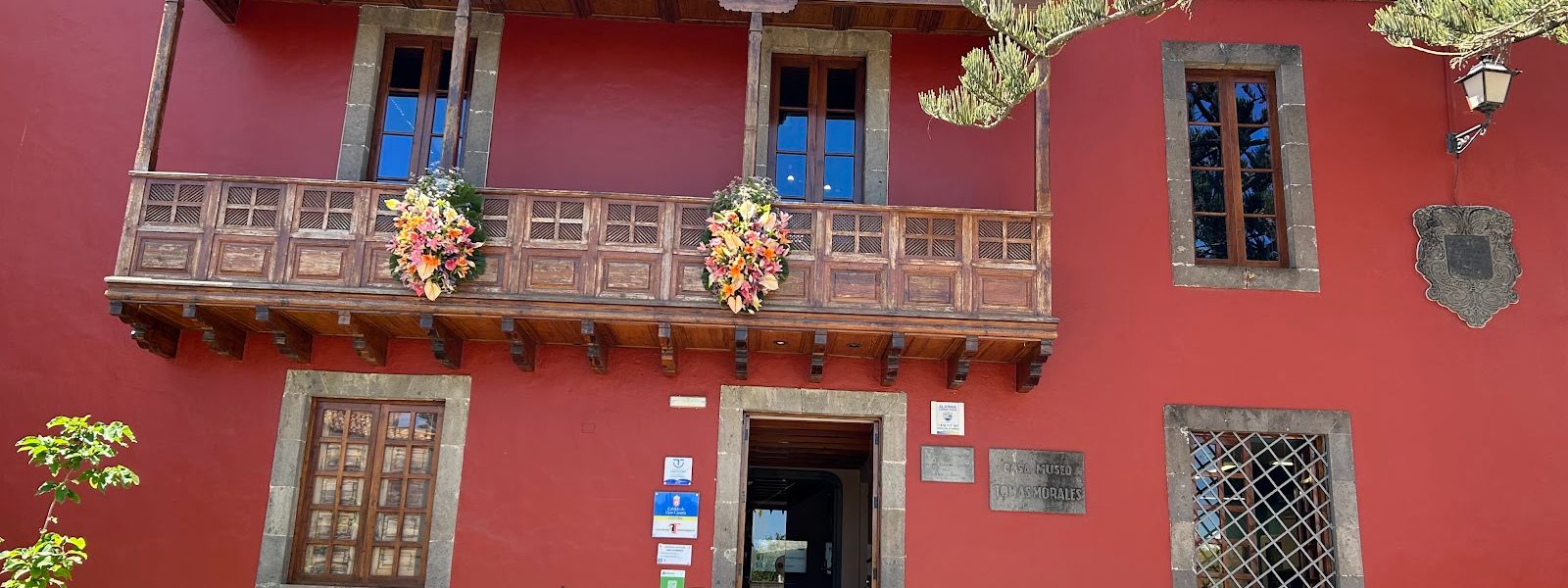
Historic house museum in the Moya birthplace of modernist poet Tomás Morales, with his furniture, portraits and garden.
- Entrance
- Free entry; the guided tour is free too.
- Accessibility
- Wheelchair-accessible entrance; no wheelchair-accessible parking or seating.
- Parking
- Asphalt car park about 140 m away; no wheelchair-accessible parking.
- Difficulty
- None: the museum is in town, with bus stops about 90 m and a car park about 140 m away.
- Transport
- Bus stops Iglesia De Moya (about 90 m) and La Cantonera (about 120 m).
- Hours
- Tuesday to Sunday 10:00–18:00; closed on Mondays.
- Address
- Plaza Tomás Morales, s/n, 35420 Moya, Las Palmas, Spain
What makes it special
Portraits of Tomás Morales and his literary friends hang in the house where he was born on 10 October 1884. The rooms are kept as a family home of his day, with his furniture, personal belongings and pieces of art, and the point of the visit is the household itself. You come away knowing how people lived in Gran Canaria in his lifetime as well as who he was.
Morales wrote about the sea and his island. His collection Las Rosas de Hércules placed him among the poets who opened Spanish verse to the modern, and in 2011 the Canary Islands dedicated their Day of Canary Letters to him. A guided tour carries his life and work through the rooms, and the house has a garden as well.
Good to know
- Captions are in Spanish only. Read up on Morales before you go, or bring a translation app.
- Ask at reception about a guided tour: it fills the gap the Spanish-only captions leave.
- The museum has toilets.
- The entrance is wheelchair accessible, but there is no wheelchair-accessible parking.
- The parish church of Nuestra Señora de Candelaria stands beside the museum and pairs naturally with the visit.
Getting there
The museum stands in the centre of Moya, beside the parish church of Nuestra Señora de Candelaria, with a town map board just outside. By bus, get off at Iglesia De Moya or La Cantonera: the two stops sit about 90 m and 120 m away in a straight line, so the walk is over almost as soon as it starts. Drivers have an asphalt car park about 140 m away.
Best time to visit
Best: any day from Tuesday to Sunday, in any season.
Avoid: Mondays, when the museum is closed.
Moya lies on the north side of the island, where cloud often settles on the slopes, and an indoor visit like this one holds up whatever the weather does.
Things to do nearby
All tours in Moya on GetYourGuide
Paid links: booking through them supports YowJourney.
Sun & daylight
Nearby Places
Similar Places

Your whole travel map in one place
Get inspired by new places around the world and find the ones worth the journey
Frequently asked questions
Who was Tomás Morales?
A modernist poet from Gran Canaria, born in this house on 10 October 1884 and dead in 1921. He studied medicine in Cádiz and Madrid, practised as a doctor in Agaete, and wrote Las Rosas de Hércules, his poems of the sea and his island.Is there information in English?
No. The captions are in Spanish only, so a translation app or some reading beforehand helps.Can you reach the museum by bus?
Yes. The Iglesia De Moya and La Cantonera stops are about 90 m and 120 m from the museum.Is the museum wheelchair accessible?
The entrance is wheelchair accessible. There is no wheelchair-accessible parking and no accessible seating.When did the house become a museum?
The Cabildo de Gran Canaria bought it from the poet's heirs in 1966 and opened it as a house museum in October 1976.