Casa de los Coroneles is a historic manor house in La Oliva, on Fuerteventura in Spain's Canary Islands. Little solid documentation survives, but it is believed to date from 1740, built under Colonel Melchor de Cabrera Bethencourt, and it served as the seat of the island's colonels. The house is built in the Canarian-Andalusian style around a central courtyard, is listed as cultural property and now houses an art gallery with exhibitions and other events.
Casa de los Coroneles
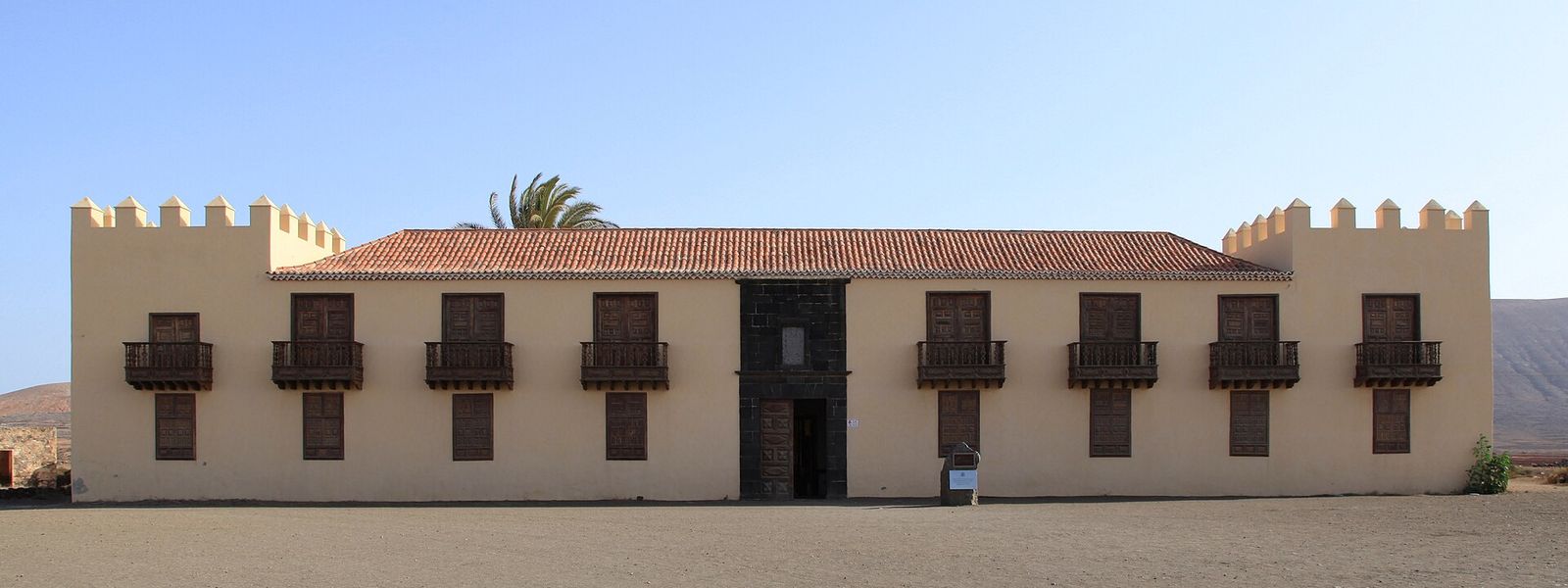
18th-century colonels' mansion with a sixteen-window facade and twin battlements, now an art gallery.
- Entrance
- An entrance fee is charged.
- Accessibility
- Wheelchair-accessible entrance.
- Parking
- Free public car park about 560 m away in a straight line; a second car park about 410 m away.
- Difficulty
- No approach to speak of: a walk from car parks about 410 m and 560 m away in a straight line.
- Transport
- Bus stops Iglesia and La Oliva, both about 625 m away.
- Address
- Casa de los Coroneles, C. los Coroneles, 28, 35640 La Oliva, Las Palmas, Spain
What makes it special
Count the windows on the north front: eight on the ground floor, eight above, and every upper one with its own wooden balcony. In the 18th century many people on the island lived in houses without a single window, so sixteen of them on one facade announced exactly who was in charge. The twin battlements at either end make the same point. They had no military use and were added as a show of political weight.
Inside, the rooms open onto a central courtyard and stay cool on a hot day. The restored woodwork is the best thing in the house. The rooms themselves stand empty of furniture and serve as gallery space for changing art exhibitions. Outside, the ruins of the old outbuildings sit among rocks where ground squirrels dart about.
Good to know
- The rooms hold no period furniture. Come for the architecture, the woodwork and whatever art exhibition is on.
- Some of the information inside is in Spanish only.
- Restoration work has closed the interior before while the grounds stayed open, so check the house is open before building a day around it.
- There are toilets inside the house.
- The ground squirrels by the outbuildings are an introduced species. Watch them, but keep your food to yourself.
Getting there
The house stands on the edge of La Oliva, and most visitors arrive by car. There is a free public car park about 560 m away in a straight line and another car park about 410 m away, and the rest is a walk across to the house. By bus, the nearest stops are Iglesia and La Oliva, both about 625 m away, with a map board beside them. Public toilets are also marked about 540 m from the house.
Best time to visit
Best: the hot middle of the day, when the rooms around the courtyard stay cool. Avoid: counting on sunlit photographs of the main facade in winter. The sixteen-window front faces north, so it stays in shade through the cooler months, and only in summer does the low evening sun from the north-west reach across it.
Things to do nearby
All tours in Fuerteventura on GetYourGuide
Paid links: booking through them supports YowJourney.
Sun & daylight
Nearby Places
Similar Places
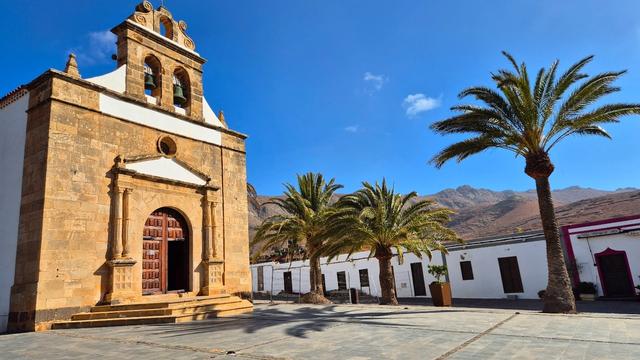
Casa de los Coroneles on the map
Get directions
Your whole travel map in one place
Get inspired by new places around the world and find the ones worth the journey
Frequently asked questions
When was Casa de los Coroneles built?
It is believed to date from 1740, built under Colonel Melchor de Cabrera Bethencourt. Little solid documentation of its history survives.What is inside the house?
Rooms built around a central courtyard, with restored woodwork. There is no period furniture, and the space is used for art exhibitions and other events.Where do I park?
There is a free public car park about 560 m away in a straight line, and another car park about 410 m away.Is it wheelchair accessible?
The entrance is wheelchair accessible.Is it worth visiting with children?
Yes. Besides the house, there are the ruins of the outbuildings to explore and ground squirrels living among the rocks outside.