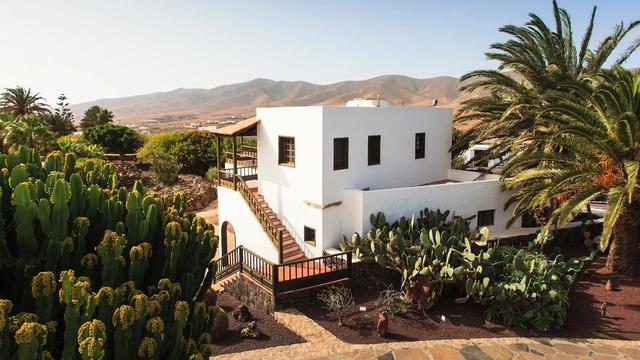
La Cilla Grain Museum occupies a cilla, a granary built in La Oliva in 1819 in the traditional Majorero style to store the cereals and other produce owed to the Church as tithe. It served that purpose only until the Mendizábal disentailment of 1836 and the end of the tithe a year later. The Cabildo of Fuerteventura bought the building in 1997 and opened the museum the same year. It displays farm tools once used on the island, with explanatory panels and photographs.
La Cilla Grain Museum
Local name: Museo del Grano La Cilla
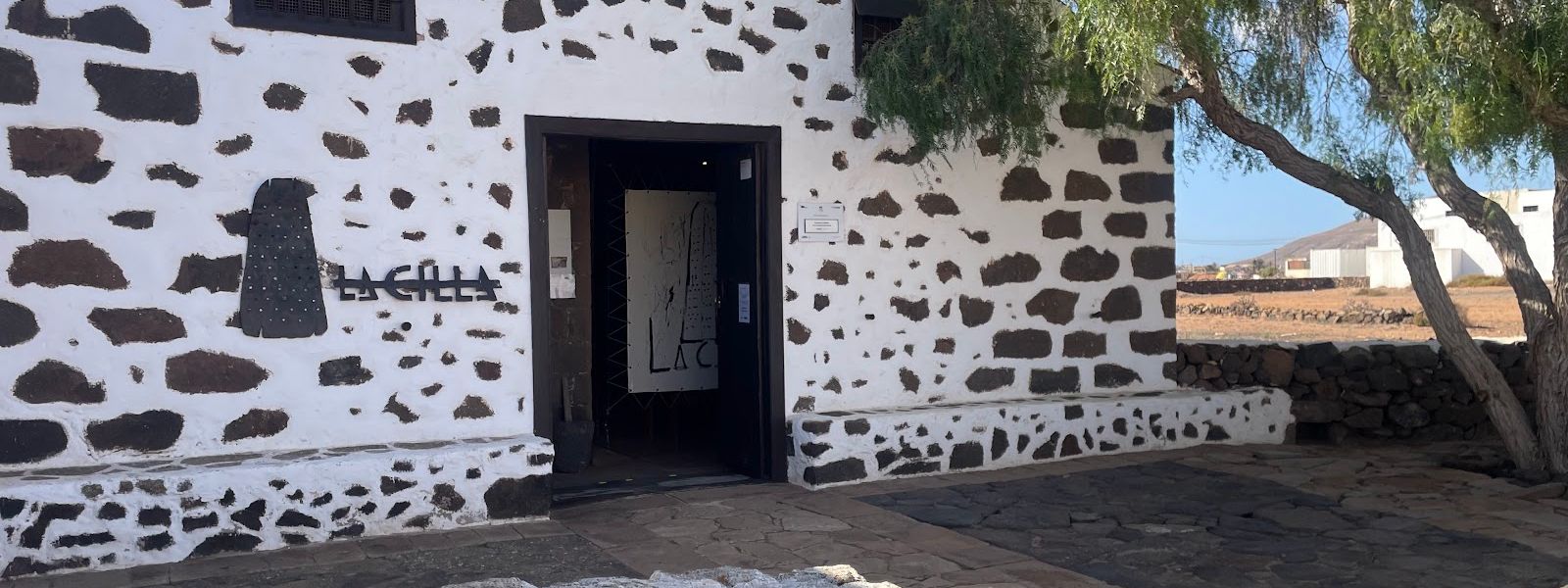
Tithe granary of 1819 in La Oliva, now a museum of the island's farm tools, panels and photographs.
- Entrance
- €1.50 per person; bring cash.
- Parking
- Free car park about 180 m away; a second car park about 360 m away.
- Difficulty
- None: about 180 m on foot from the free car park along village streets, then straight in.
- Transport
- Iglesia bus stop about 150 m away; La Oliva stop about 190 m away.
- Hours
- Tuesday to Saturday 10:00–16:00; closed Sunday and Monday.
- Address
- C. la Orilla, 5, 35640 La Oliva, Las Palmas, Spain
What makes it special
Farmers on Fuerteventura once handed the Church a tenth of their harvest, and this building is where La Oliva's share was stored. The island's four older cillas, at Antigua, Tetir, Tiscamanita and Tindaya, had needed constant and costly repairs since about 1750. Colonel Agustín de Cabrera Bethencourt secured a new one here in 1815, but his quarrel with the island burgher Julián Leal Sicilia held the work back until 1819. Then history overtook it. In 1836 the state seized Church property, and the granary had held grain for barely seventeen years.
Inside, the tools of island farming are set out with panels and photographs explaining how each was used. The panels are in Spanish. Reception hands out translations, including a booklet in English, and reading it through is the real visit: it tells how people lived when farming was the island's main livelihood.
Good to know
- The museum is closed on Sunday and Monday.
- Panels are in Spanish; ask at reception for the translations, which include English and German.
- Bring cash for the entry fee.
- The collection is small and the interest lies in the texts, so leave time to read them.
- Public toilets stand about 230 m away.
Getting there
The museum stands in La Oliva. A free car park lies about 180 m away in a straight line, with a second car park about 360 m off. Buses stop at Iglesia, about 150 m away, and at La Oliva, about 190 m away. From either the car park or the stop, the rest is on foot along the village streets.
Best time to visit
Best: any opening day from Tuesday to Saturday, arriving with enough time before closing to read the translations at an easy pace.
Avoid: Sunday and Monday, when the museum is closed.
The visit is entirely indoors, so it also suits a grey or windy day when the beaches lose their appeal.
Things to do nearby
All tours in Fuerteventura on GetYourGuide
Paid links: booking through them supports YowJourney.
Sun & daylight
Nearby Places
Similar Places
La Cilla Grain Museum on the map
Get directions
Your whole travel map in one place
Get inspired by new places around the world and find the ones worth the journey
Frequently asked questions
What is a cilla?
A granary where the cereals and other produce owed to the Church as tithe were stored. La Oliva's was built in 1819 in the traditional Majorero style.Is there information in English?
The panels are in Spanish, but reception hands out translations, including an English booklet and a German version.Why was the granary used for so short a time?
The Mendizábal disentailment of 1836 let the state seize Church property, and the tithe stopped being collected the following year. The Cabildo of Fuerteventura bought the building in 1997 and turned it into the museum.Where can I park?
A free car park lies about 180 m away, and there is a second car park about 360 m away.