
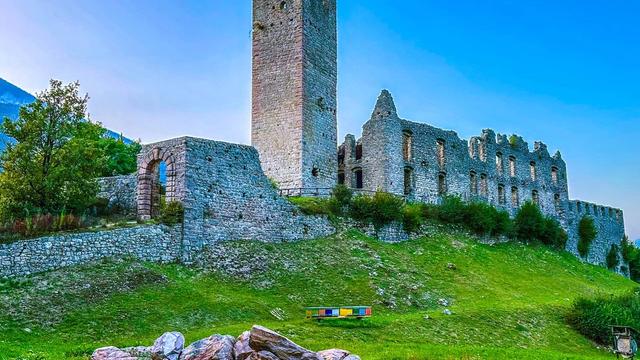
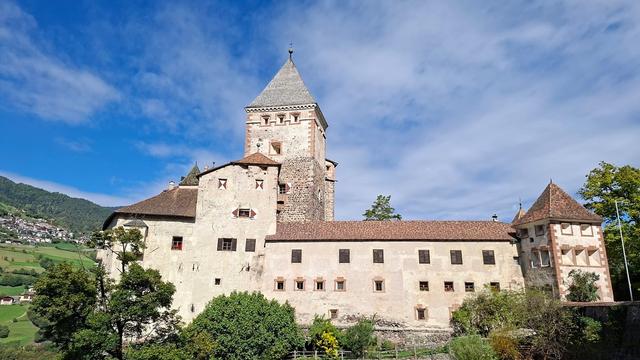
Castel Thun is a Gothic castle set high on a ridge above the Val di Non, at Vigo di Ton in the Dolomites region of northern Italy. It carries the name of the Thun family, who held it for generations, and now works as a museum of art and history under the Castello del Buonconsiglio, with furnished rooms over several floors, guided tours and an audio guide available.
- Entrance
- Ticketed. Cards, contactless and cash are all accepted, and a local visitor card issued by hotels can cover admission.
- Accessibility
- Wheelchair-accessible entrance and wheelchair-accessible parking bays.
- Parking
- Paid car park below the castle: €4 at a 2025 visit, and the machine would not take credit cards then, so bring cash. Free spaces and paid street parking also exist nearby.
- Difficulty
- 250 m uphill on foot from the car park to the gate.
- Transport
- Bus stop Castel Thun, 162 m from the castle; Toss Sud Via Verdi is 815 m away.
- Hours
- Open daily, 10:00–18:00.
What makes it special
Bats roost in the castle, and the museum counts the colony as part of the place rather than tidying it out of the story. Inside, the rooms come one after another over several floors, furnished in Empire style and filled with the objects of the Thun family, who gave the castle its name and held it for generations. The position does the rest. The walls stand on a ridge, and the valley opens out below on every side, so the windows keep handing back the view you walked up for.
Good to know
- Toilets: at the castle entrance. The cafeteria behind the castle has none, so use them before you walk round the back.
- Cold indoors: in winter and early spring the rooms hold a cellar chill — bring a jacket for inside, not just for the walk up.
- Food: the cafeteria behind the castle does pizza with local wine and beer, and bottles can be bought to take away.
- Rain plan: bad weather is no reason to drop it — the rooms and the valley views both hold up.
Getting there
Everything arrives from below. The road climbs through Vigo di Ton to the parking under the walls, and the last stretch is on foot, uphill to the gate with the castle above you the whole way. A bus stop carries the castle's name and sits close to the approach, so the visit works without a car — the climb to the gate is the same one drivers make. Near the entrance you pass an information office, and a guidepost stands by the path for whatever else runs from here.
Best time to visit
Best: a grey or wet day — the visit is mostly indoors, and one visitor came in bad weather and still rated the castle and the views highly.
Avoid: winter and the first weeks of spring if you feel the cold.
The rooms stay cold through those months, so dress for standing still indoors rather than for the walk. Only the approach from the car park is outdoors, which is why a wet forecast costs so little here.
Sun & daylight
Nearby Places
Similar Places

Your whole travel map in one place
Get inspired by new places around the world and find the ones worth the journey
Frequently asked questions
How long does a visit take?
Plan on a couple of hours. One visitor spent two and covered the floors of furnished rooms without rushing.Can you get there without a car?
Yes. A bus stop carries the castle's name and sits close to the approach; from there the last part is on foot, uphill to the gate.Is a guided tour or the audio guide needed?
Neither is compulsory. Guided tours run through the rooms, and the audio guide adds background for anyone who wants it — one visitor recommended it without calling it essential.Is it suitable for children?
It is listed as good for children. The rooms are walked through in sequence, and the only outdoor stretch is the climb up from the car park.