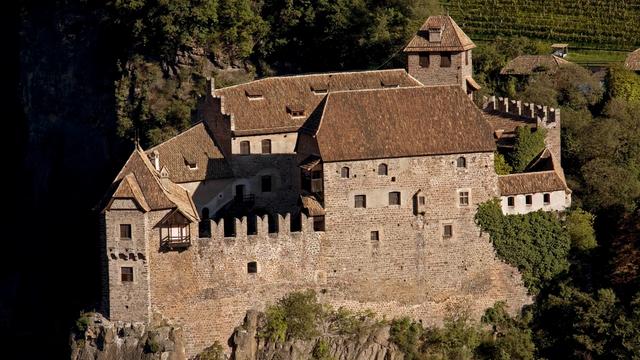
Bruneck Castle sits on the hill directly above the old town of Brunico, in the Puster Valley of South Tyrol. The Brixen prince-bishop Bruno von Kirchberg had the fortress raised in the second half of the 13th century; it enters the record in 1276 and was enlarged under Prince-Bishop Albert von Enn, whose work on the town walls and moat was finished by 1336. For centuries a castle leader held it as the bishop's representative. Today the building houses the Messner Mountain Museum Ripa, with restored rooms and displays on mountain cultures.
Bruneck Castle

A prince-bishop's fortress, now Messner's museum of the world's mountain peoples.
- Entrance
- Paid entry, with reduced tickets for seniors, families and children. Cards and contactless accepted.
- Accessibility
- Step-free entrance and wheelchair-accessible parking. Many stairs inside; one visitor noticed a lift near the tower. The tower stair itself is narrow and dark.
- Parking
- Paid car parks about 130 m below the castle entrance, open to all. Wheelchair-accessible spaces available.
- Difficulty
- On foot from the car parks below, up a hill one visitor described as fairly steep, then several floors of stairs inside.
- Transport
- Bus stops Oberragen – Ragen di sopra and Bruneck, Pinta Bühel – Brunico, Pinta Bühel, both about 140 m from the castle.
- Hours
- 10:00–18:00 every day except Tuesday, when the castle is closed. Times change with the season.
What makes it special
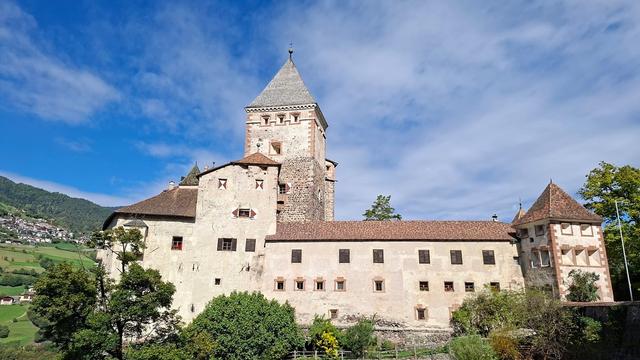
The climb up the tower is the part people remember. The stair narrows and darkens as it goes, and the floor of the top platform is weathered enough that you feel it give as you cross. From up there the roofs of the town lie below and the valley opens out east and west.
The museum underneath is Reinhold Messner's Ripa, and its subject is not the castle but the mountain peoples of the world — Himalaya, Andes, Alps and beyond — set out through restored rooms, with film screens along the way and a suggested route printed on the map handed out at the entrance.
It divides visitors. One found the whole thing random: a clock from the 1470s standing beside the plastic shell of a 1990s Volvo toy, with many objects left unexplained. Another walked every floor and came away impressed by the number of displays and by the room to move between them.
Good to know
- Two to three hours is a fair estimate for the full circuit; the collection runs over several floors.
- Hours shift from season to season, so check the museum's own listing before you fix a date.
- Labels are thin. Information comes in three languages, but many exhibits carry none at all and several rooms are kept dark.
- Sundays are quiet in town. One visitor found a single bar open, so do not count on lunch in Brunico afterwards.
- Toilets on site are free for visitors; the ones down near the car parks charge.
Getting there
You arrive in Brunico and finish on foot. The castle stands above the old town, and the last stretch is a walk up a hill steep enough that one visitor called it an effort. Guideposts at the foot of the approach mark the way up. The car parks and the nearest bus stops all sit below the castle, so everyone makes the same climb, whichever way they came into town. In wet weather the slope, not the museum, is what to plan around.
Best time to visit
Best: A weekday from opening, while the tower stair is still clear and the platform at the top empty.
Avoid: Tuesday, the one day of the week the museum stays shut, and Sunday if you were counting on eating in the town afterwards.
Later in the day people gather on the tower, and the way up is narrow enough that passing means waiting your turn. Opening times also change with the season, so fix the date against the museum's own listing rather than a printed timetable.
Access & restrictions
Settle the photography question at the desk before you start. One visitor's review said no photographs were allowed beyond the first floor; another walked the whole museum without finding a sign to that effect and put the question to staff instead. That is the sensible move here.
No-touch markers stand beside the displays and are meant seriously — much of what is shown is household gear, cloth and tools brought in from mountain regions. Otherwise the etiquette is ordinary museum etiquette: keep to the suggested route where the rooms are numbered, and give way on the tower stair to whoever is coming down.
Sun & daylight
Nearby Places
Similar Places


Bruneck Castle on the map
The tower stairs run dark and narrow in places, with little room to pass anyone coming down. At the top, the platform floor is weathered and gives underfoot — you can feel it bow as you walk across. Do not crowd onto it, and take the stair one party at a time.
Get directions
Your whole travel map in one place
Get inspired by new places around the world and find the ones worth the journey
Frequently asked questions
What is inside Bruneck Castle today?
The Messner Mountain Museum Ripa: restored rooms, collections and film screens devoted to the mountain peoples of the world. The collection, rather than the building, is the subject of the visit. A map handed out at the entrance suggests a route through the floors.Do the displays explain themselves?
Only partly. Information appears in three languages, but rooms are numbered without matching signage on the walls, several are kept dark, and plenty of objects carry no explanation. One visitor found the sequence random, a 15th-century clock next to a 1990s toy car shell.Is it worth bringing children?
Children are welcome and pay a reduced ticket, but one visitor thought younger ones would get little from the collection itself. The tower is the draw for them, and its stairs are dark and narrow.Who built the castle, and when?
The Brixen prince-bishop Bruno von Kirchberg, in the second half of the 13th century; the fortress is first mentioned in 1276. Prince-Bishop Albert von Enn enlarged it and completed the town walls and moat by 1336. The tower has appeared on the town's coat of arms since the second half of the 15th century.