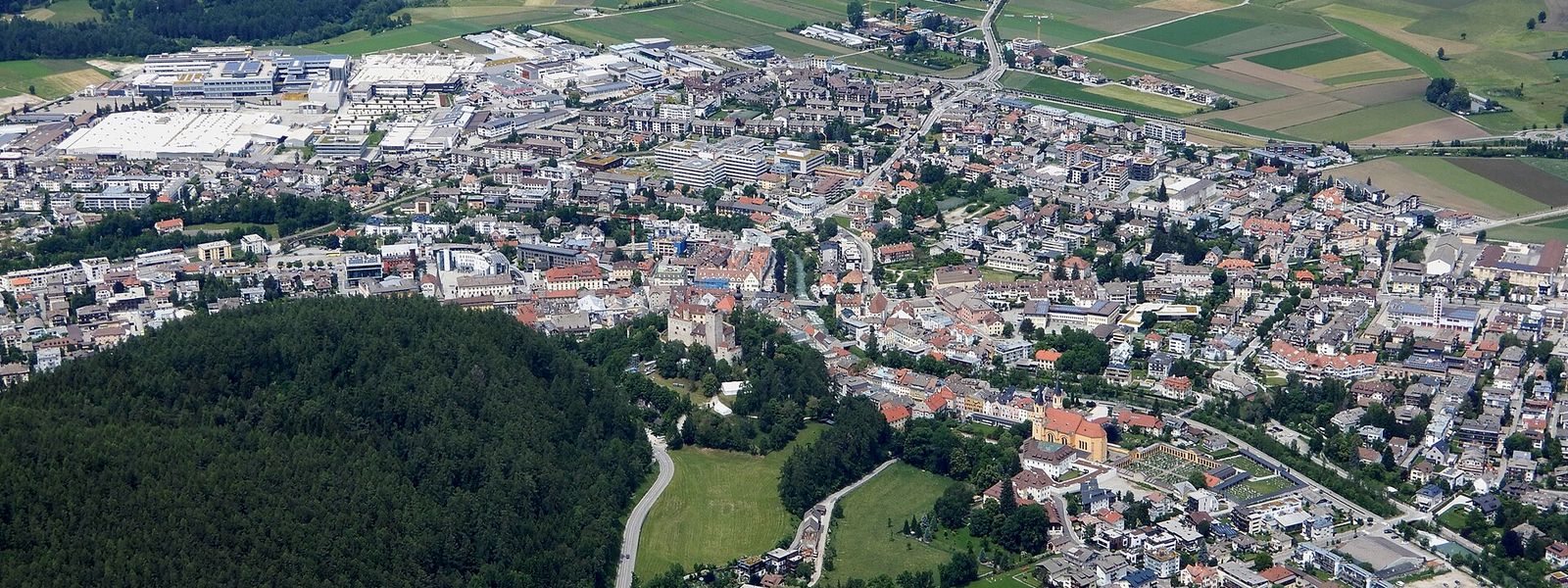
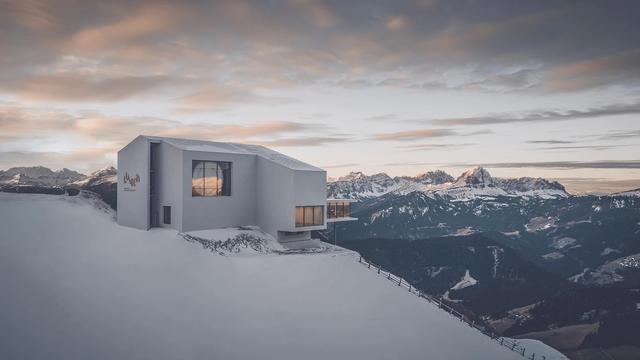
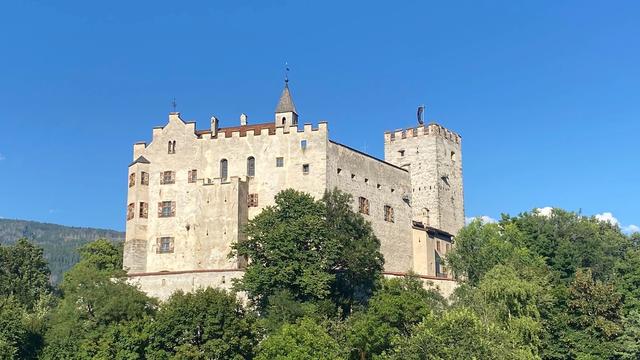
Brunico stands at 838 m in the middle of a wide valley floor in eastern South Tyrol, at the confluence of the Ahr and the Rienz, and it is the economic and cultural centre of the Puster Valley. A prince-bishop's castle, first recorded in 1276, sits above the old lane of merchants' houses that grew up from the early fifteenth century. To the south rises Kronplatz, the town's home mountain and a Dolomite ski area, with the Messner Mountain Museum Corones by Zaha Hadid on the summit at 2,275 m. Brixen lies 35 km to the west, Bolzano 70 km away, and the Austrian border 40 km east.
Brunico
- Currency
- Euro (EUR, €). ATMs are widespread in cities and towns and accept major international credit and debit cards. Credit cards are accepted in urban and tourist areas; cash is essential in rural regions and small towns.
- Language
- German and Italian are both official, and locally German dominates: in the 2024 census 78.71% of residents named German as their first language, 19.31% Italian and 1.98% Ladin.
- Power plug
- Europlug (Type C), Schuko (Type F) and Type L (Italian three-round-pin) sockets are in use. Voltage is 230V, 50Hz.
- Visa
- Schengen visa-free for 90 days (non-EU/EEA citizens). EU, EEA and Swiss citizens may stay indefinitely. All non-EU/EEA/Swiss visitors must declare their presence within 8 days of arrival. Stays longer than 90 days require an appropriate visa and residence permit.
- Time zone
- Central European Time (CET): UTC+01:00. Central European Summer Time (CEST): UTC+02:00 (last Sunday in March to last Sunday in October).
- Tap water
- Safe to drink. Tap water is well maintained throughout Italy and perfectly drinkable. In some peninsular areas it may be cloudy with a slight taste; most Italians prefer bottled water. Public fountains marked 'Acqua potabile' are safe to refill from. Avoid fountains marked 'Acqua non potabile'. Southern coastal areas may have an unusual taste due to desalination but water is always safe.
- Tipping
- Not customary. Restaurants include a service charge (coperto); waiters do not expect tips. Leaving loose change in bars and cafés is common. Tips cannot be added to credit card bills—bring cash if you wish to tip.
- Emergency
- 112 (Carabinieri, general emergency); 113 (Polizia di Stato); 115 (Fire Department); 118 (Medical Rescue).
When to go
High season
Dec – Mar
Ski season on Kronplatz, and the town is at its busiest. Winters on this valley floor are chilly, with a wide swing between night and midday.
Low season
Apr – May
The gap between skiing and walking. The valley is at its quietest and the meadows on the slopes come back green.
High season
Jun – Sep
Summers here are warm rather than hot, and the walking season runs across the Puster Valley and up Kronplatz. Mornings on the valley floor start cool whatever the forecast says — bring a layer.
Shoulder
Oct – Nov
The Stegener Market, the largest in Tyrol, takes over the town at the end of October. After it the valley waits for snow and much of the tourist trade pauses.
How long to stay
Two or three days cover the town and the mountain above it: the castle, the old lane through the centre, and a day on Kronplatz with the Messner museum at the top. Brunico earns its extra nights as a base — a week from here reaches the Tauferer Ahrntal, Val Badia and the length of the Puster Valley by train and bus, and in winter the ski season on Kronplatz fills that week on its own.
Getting around
The Pustertal railway is the spine of the valley. Trains run hourly in each direction on the Franzensfeste–Innichen line, some continuing to Lienz, and most of them are accessible to people with reduced mobility. At Franzensfeste the connection to Bolzano and the Brenner is timed at four minutes; a few trains carry on to Innsbruck without a change, and coming from Vienna or Graz you can enter the valley from the Lienz end instead.
Buses run by SAD reach the side valleys — the Tauferer Ahrntal to the north, Val Badia to the south. By car the direct approach is the Brenner motorway from north or south, with the Reschen Pass, the road over from Lienz in East Tyrol and the pass route from St. Moritz as the scenic alternatives. Pooled shuttles link the town with Verona, Munich and Innsbruck airports. One thing to know before you search: route planners list the town under both names, Brunico and Bruneck, and some carry only one of them.
What to see
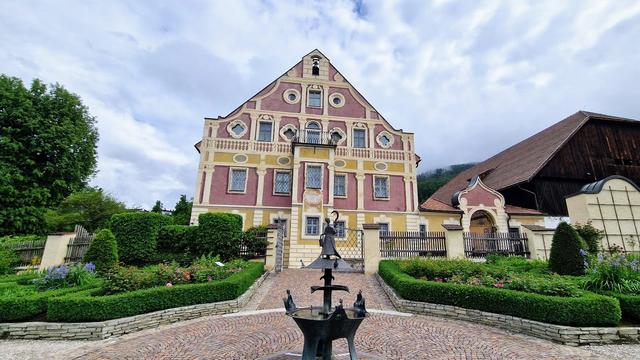
Destinations in Brunico
Frequently asked questions
How do you reach Brunico by train?
Brunico sits on the Pustertal line between Franzensfeste and Innichen, with onward running to Lienz. Trains go hourly in each direction. Change at Franzensfeste for Bolzano and the Brenner — the connection is four minutes — and a few services run through to Innsbruck without a change.Brunico or Bruneck — which name should you search for?
Both belong to the same town: Brunico is the Italian name, Bruneck the German one, and Bornech or Burnech the Ladin. Route-planning sites do not always carry both, so if one name returns nothing, try the other.What is Kronplatz?
The massif that rises south of town, part of the Dolomites and the local home mountain. It is a ski area, and on the summit at 2,275 m stands the Messner Mountain Museum Corones, designed by Zaha Hadid.What language is spoken in Brunico?
Mostly German. In the 2024 census 78.71% of residents gave German as their first language, 19.31% Italian and 1.98% Ladin. Both German and Italian are official, so signs, menus and timetables carry two names for most things.When is the Stegener Market?
At the end of October. It is the largest market in Tyrol and the biggest date in the town's year, one of a run of markets and festivals held here across the seasons.