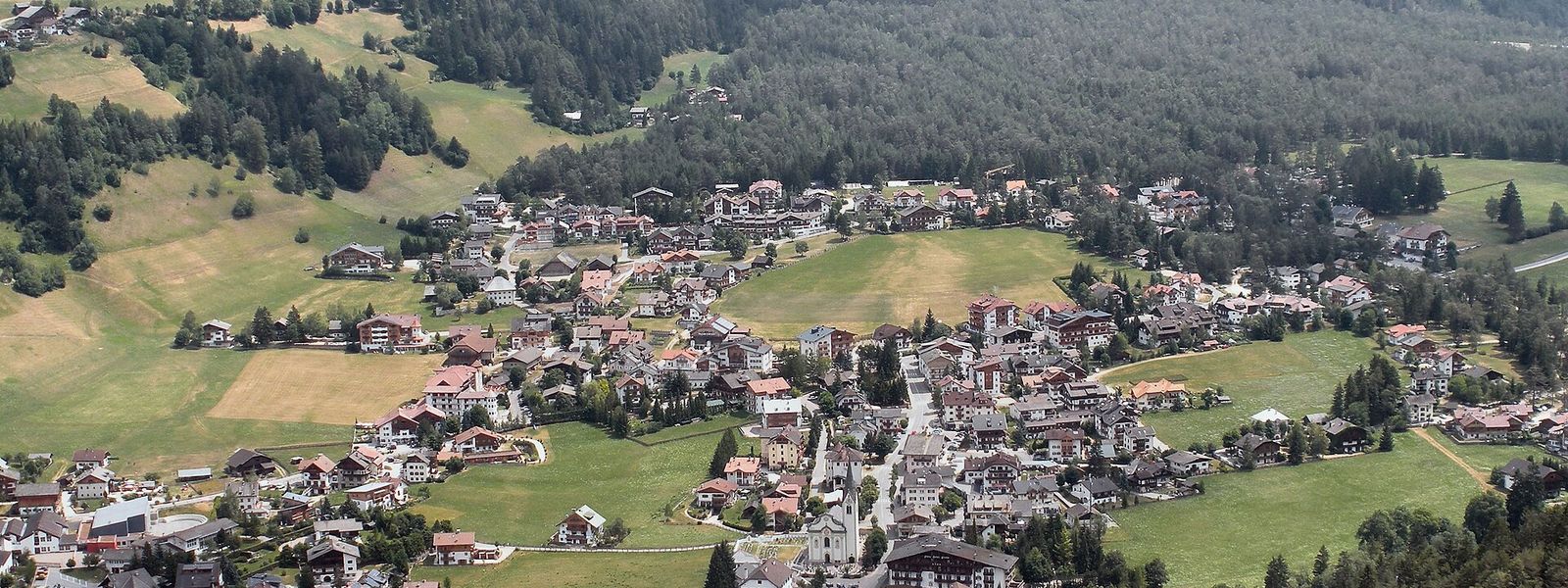
Marebbe is a comune in South Tyrol, about 50 km northeast of Bolzano, at 1,186 m above sea level. Seven villages and hamlets make it up: San Vigilio (Al Plan) is the largest, with Longega, Rina, Pliscia, La Pli de Mareo, Curt and Mantena spread across 160 square kilometres of valley, forest and rock. Ladin is the everyday language here. The upper part of the municipality belongs to the Fanes-Sennes-Braies Nature Park, and that is what most visitors come for.
Marebbe
- Currency
- Euro (EUR, €). ATMs are widespread in cities and towns and accept major international credit and debit cards. Credit cards are accepted in urban and tourist areas; cash is essential in rural regions and small towns.
- Language
- Ladin is the first language of 92.23% of residents, ahead of Italian at 4.32% and German at 3.45% (2024 census) — a far stronger Ladin majority than in South Tyrol as a whole. Place names come in three forms: San Vigilio, Al Plan and St. Vigil are the same village.
- Power plug
- Europlug (Type C), Schuko (Type F) and Type L (Italian three-round-pin) sockets are in use. Voltage is 230V, 50Hz.
- Visa
- Schengen visa-free for 90 days (non-EU/EEA citizens). EU, EEA and Swiss citizens may stay indefinitely. All non-EU/EEA/Swiss visitors must declare their presence within 8 days of arrival. Stays longer than 90 days require an appropriate visa and residence permit.
- Time zone
- Central European Time (CET): UTC+01:00. Central European Summer Time (CEST): UTC+02:00 (last Sunday in March to last Sunday in October).
- Tap water
- Safe to drink. Tap water is well maintained throughout Italy and perfectly drinkable. In some peninsular areas it may be cloudy with a slight taste; most Italians prefer bottled water. Public fountains marked 'Acqua potabile' are safe to refill from. Avoid fountains marked 'Acqua non potabile'. Southern coastal areas may have an unusual taste due to desalination but water is always safe.
- Tipping
- Not customary. Restaurants include a service charge (coperto); waiters do not expect tips. Leaving loose change in bars and cafés is common. Tips cannot be added to credit card bills—bring cash if you wish to tip.
- Emergency
- 112 (Carabinieri, general emergency); 113 (Polizia di Stato); 115 (Fire Department); 118 (Medical Rescue).
When to go
High season
Dec – Mar
Ski season. Snow lies on the valley floor, San Vigilio works at capacity and the single valley road carries all of it.
Low season
Apr – May
Between the seasons. The snow line retreats up towards Fanes, the high paths stay wet and the villages go quiet.
High season
Jun – Sep
Walking season. The Fanes plateau above the valley draws the crowds, while the meadows around Rina and Pliscia stay green to the treeline.
Low season
Oct – Nov
The larches on the valley sides turn yellow, then the weather closes in and Marebbe empties out.
How long to stay
Two or three days suit Marebbe as a stop rather than a destination: a day up towards the Fanes plateau, a day on the lower valley paths, an evening in San Vigilio. A week is not too much if the valley is the whole holiday — the municipality runs to 160 square kilometres, and the outlying hamlets such as Rina and Pliscia are a separate outing from the main village.
Getting around
A car does most of the work here. The way in is from the Val Pusteria, which Marebbe touches at Brunico: the road turns south and climbs to Longega, where it forks — one branch up into the Val Badia, the other on to San Vigilio at the head of the valley. Nothing carries on over the top. The mountains close the valley, so every drive is out and back the same way, and there is one road in and one road out — when it is blocked, there is no way round. The nearest railway is the Val Pusteria line through Brunico, with valley buses running down to meet it. Innsbruck, Venice and Verona are the usual airports.
What to see

Destinations in Marebbe
Frequently asked questions
Marebbe, Mareo or Enneberg — which name is right?
All three. Marebbe is the Italian name, Mareo the Ladin one and Enneberg the German; the municipality is officially trilingual and all three forms turn up on maps and signs.Which villages belong to Marebbe?
Seven: San Vigilio (Al Plan / St. Vigil), Longega (Zwischenwasser), Rina (Welschellen), Pliscia (Plaiken), La Pli de Mareo, Curt (Corte) and Mantena. San Vigilio is the largest.Where exactly is Marebbe?
In South Tyrol, in the eastern Dolomites, about 50 km northeast of Bolzano and 1,186 m up. Its territory borders nine municipalities, Cortina d'Ampezzo and Brunico among them.How many people live in Marebbe?
3,162, across 160 square kilometres and seven settlements. The valley floor at San Vigilio holds most of them; the rest sit on the slopes and in the side valleys.