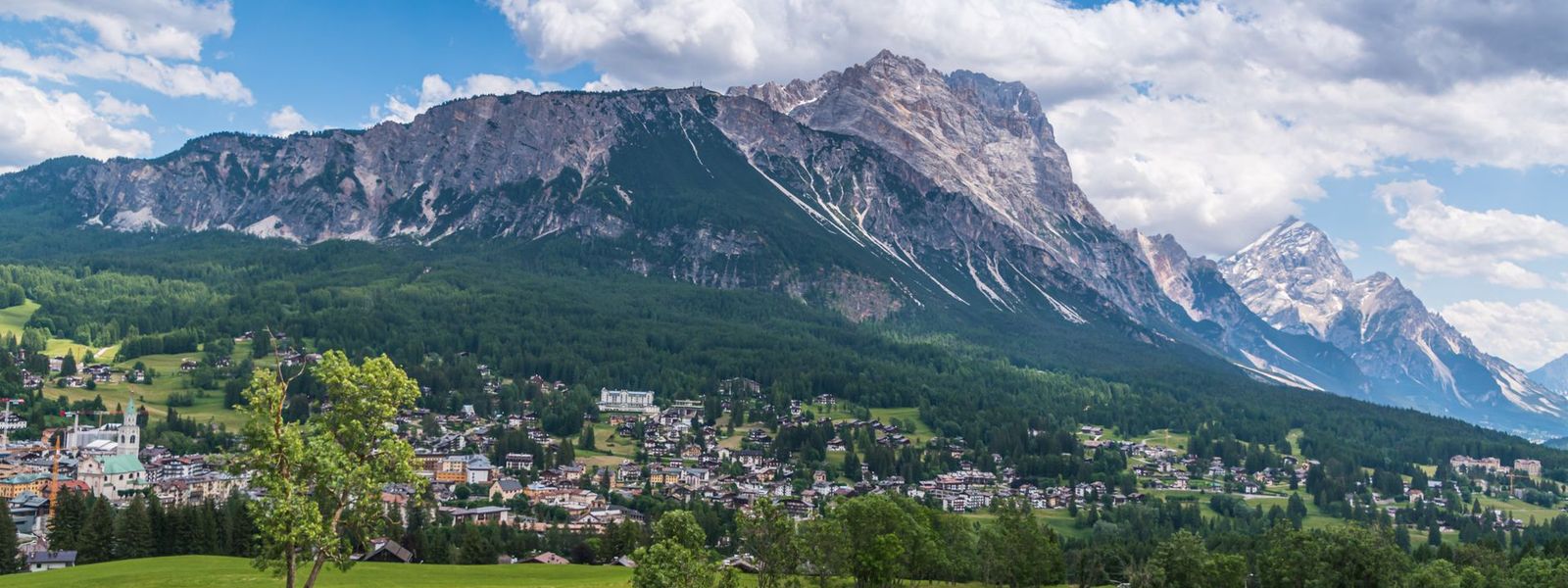
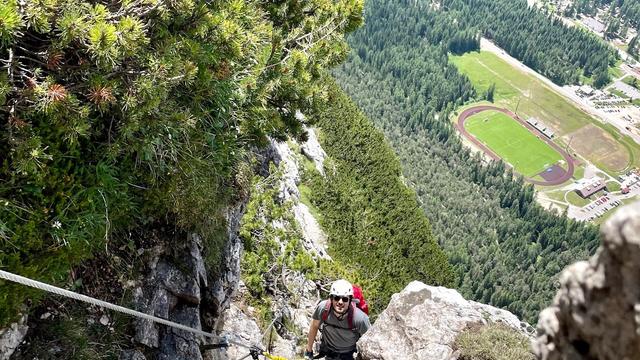
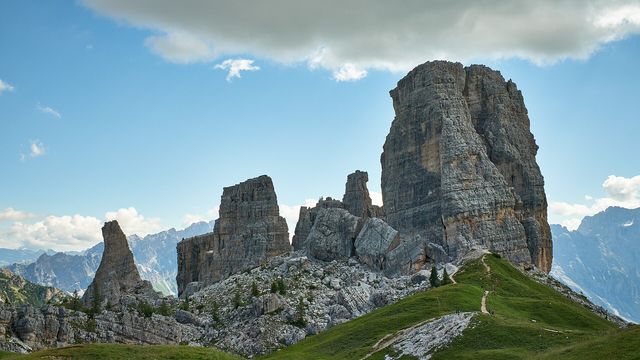
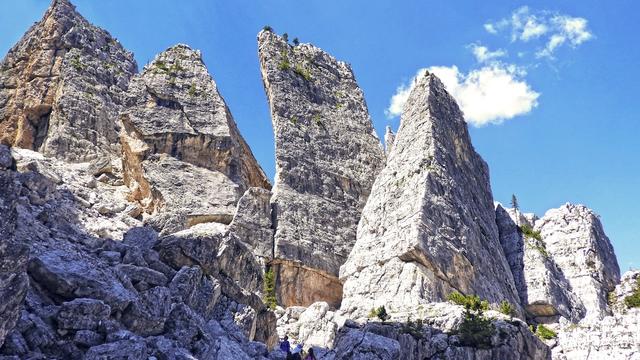
Cortina d'Ampezzo stands at 1,224 m on the Boite river, in the Ampezzo valley in the province of Belluno, ringed by the Tofane, Pomagagnon, Cristallo, Sorapiss and Cinque Torri. Much of the surrounding land belongs to the Natural Park of the Ampezzo Dolomites. The town lives on tourism: in winter the population rises from about 7,000 to 40,000, and Lonely Planet has called it one of Italy's most famous, fashionable and expensive ski resorts. Skiing covers 115 km of pistes on 34 lifts across three areas, part of the Dolomiti Superski network; in summer the same mountains carry hiking routes, via ferratas and the Great War Tour. Cortina hosted the Winter Olympics in 1956 and again in 2026, jointly with Milan.
Cortina d'Ampezzo
- Currency
- Euro (EUR, €). ATMs are widespread in cities and towns and accept major international credit and debit cards. Credit cards are accepted in urban and tourist areas; cash is essential in rural regions and small towns.
- Language
- Italian is official; alongside it most of the town speaks Ampezzano, a local variant of Ladin, a Rhaeto-Romance language. Since 2007 street and village names have been signed in Ladin as well. Unlike the German-speaking valleys further north, German is not an official language here. English is widely understood in the hotels, shops and ski schools.
- Power plug
- Europlug (Type C), Schuko (Type F) and Type L (Italian three-round-pin) sockets are in use. Voltage is 230V, 50Hz.
- Visa
- Schengen visa-free for 90 days (non-EU/EEA citizens). EU, EEA and Swiss citizens may stay indefinitely. All non-EU/EEA/Swiss visitors must declare their presence within 8 days of arrival. Stays longer than 90 days require an appropriate visa and residence permit.
- Time zone
- Central European Time (CET): UTC+01:00. Central European Summer Time (CEST): UTC+02:00 (last Sunday in March to last Sunday in October).
- Tap water
- Safe to drink. Tap water is well maintained throughout Italy and perfectly drinkable. In some peninsular areas it may be cloudy with a slight taste; most Italians prefer bottled water. Public fountains marked 'Acqua potabile' are safe to refill from. Avoid fountains marked 'Acqua non potabile'. Southern coastal areas may have an unusual taste due to desalination but water is always safe.
- Tipping
- Not customary. Restaurants include a service charge (coperto); waiters do not expect tips. Leaving loose change in bars and cafés is common. Tips cannot be added to credit card bills—bring cash if you wish to tip.
- Emergency
- 112 (Carabinieri, general emergency); 113 (Polizia di Stato); 115 (Fire Department); 118 (Medical Rescue).
When to go
High season
Dec – Mar
The ski season fills the town: the resident population of about 7,000 rises towards 40,000, with Christmas and New Year the fullest days of the year. Late December and early January bring some of the lowest temperatures recorded anywhere in Italy. February is the driest month.
Shoulder
Apr – May
Snow cover on the pistes is guaranteed through April, but the shoulder weather is wet, cold and very windy, and the valley quietens between the two seasons.
High season
Jun – Aug
Summer is a second high season, and mid-August is the busiest of it — camp sites fill up. Valley temperatures reach 25°C. June and July are the wettest months of the year, so pack for rain even on a walking week.
Shoulder
Sep – Nov
Autumn runs wet, rainy, cold and very windy, and the town is at its quietest between the summer walkers and the first skiers.
How long to stay
Three to four days is a workable stay. That covers the three ski areas — Faloria-Cristallo-Mietres, Tofana-Socrepes and Cinque Torri-Lagazuoi — or, in summer, two or three walking routes with the Regole museums left over for bad weather. Allow a week if Cortina is a base for the wider Dolomiti Superski, since the Lagazuoi link alone opens another 400 km of pistes on the Sella Ronda circuit. A single day gets you the car-free centre and one lift, and little else.
Getting around
The centre is compact enough to walk, and Corso Italia and Piazza Angelo Dibona are cobbled and closed to cars. Se.Am. runs the small orange local buses around the immediate vicinity; from the bus station, Dolomitibus reaches the surrounding towns, the ski areas and the mountain passes, but does so infrequently — read the timetables at the station before building a day around them. Skibuses do not run between 10am and 2pm and finish at 5pm. Combination tickets covering buses and lifts pay off over several days. One local bus climbs to the Auronzo refuge beneath the Tre Cime di Lavaredo.
Taxis are expensive: about €3 per kilometre, and the fare counts the run out from Cortina to collect you as well, so the 8 km from the Pocol lifts into town costs around €30. Car hire is available in Cortina, with a driver if wanted. In winter most visitors drive in and then drive around town, and congestion is frequent; in summer the roads carry cyclists grinding uphill.
Local rules
The centre is closed to cars. Corso Italia and Piazza Angelo Dibona are cobbled and absolutely car-free — park outside the zone and walk in.
Check road conditions before driving in winter. The valley floor is low enough to stay clear of treacherous surfaces for much of the year, but conditions on the mountain passes around it are far worse. Stick to the most travelled passes; they get cleared first.
Street signs are in Ladin. Since 2007 the names of streets and villages have been signed in Ladin as well as Italian, so what is on the post may not be what is in the map app.
What to see




Destinations in Cortina d'Ampezzo
Frequently asked questions
How do you reach Cortina d'Ampezzo without a car?
The Cortina Express coach runs from Venice Marco Polo Airport the whole way into town, a journey of roughly 2.5–3 hours; book in advance, on the website or through the app. Two pieces of luggage are included in the fare, as are skis or a snowboard. Coaches also run from Venice and Treviso with ATVO and Cortina Express. There is no station in town — the railway closed in 1964 — and the nearest ones are Calalzo, 35 km to the south, and Toblach, 31 km to the north. From Calalzo the Cortina Link service, run by Trenitalia and Dolomitibus, connects the trains to the town.Is there an airport at Cortina d'Ampezzo?
The airport built for the 1956 Winter Olympics is closed; the town has a heliport. The usable airports are the Venice pair — Marco Polo at 148 km and Treviso at 138 km, both about two and a quarter hours away by road. Innsbruck is 170 km away but has no coach or bus service to Cortina, so without a hire car that route means a taxi.How big is the skiing?
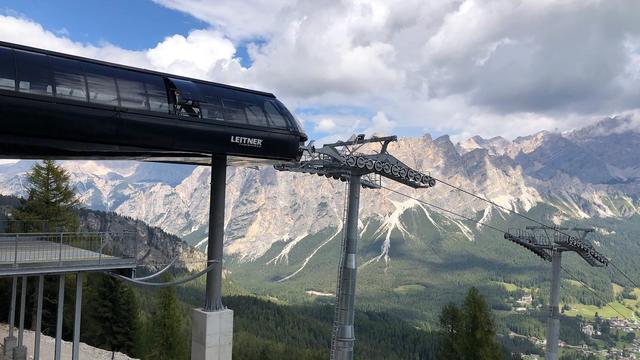
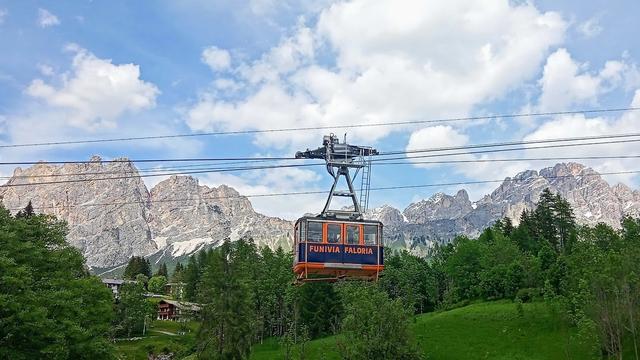
Cortina has 115 km of pistes and 34 lifts, divided between Faloria-Cristallo-Mietres, Tofana-Socrepes and Cinque Torri-Lagazuoi, with snow cover guaranteed on over 95% of it from December to April. The town sits among the 12 resorts of the Dolomiti Superski area, and the Lagazuoi link puts another 400 km of Sella Ronda pistes within reach. The longest run, the Armentarola in the Lagazuoi-5 Torri area, starts by the Lagazuoi refuge at 2,752 m and is reached by cable car. Cross-country skiers have 70 km of trails, part of it along the old railway line, and six ski schools work in town.What is there to do outside the ski season?
Walking, mostly. Routes are marked in the red-white-red flashes used across the Alps and numbered to match the 1:25000 map; Dolomitibus stops are often placed at the trailheads, and one local bus climbs to the Auronzo refuge under the Tre Cime di Lavaredo. The Great War Tour runs 80 km between Lagazuoi and Sass de Stria, through the trenches and tunnels of the open-air museum, and is easier on foot or by mountain bike in summer than on skis in winter. Cortina is also the base of the Lavaredo Ultra Trail races and the start and finish of the Dolomites Gold Cup Race.