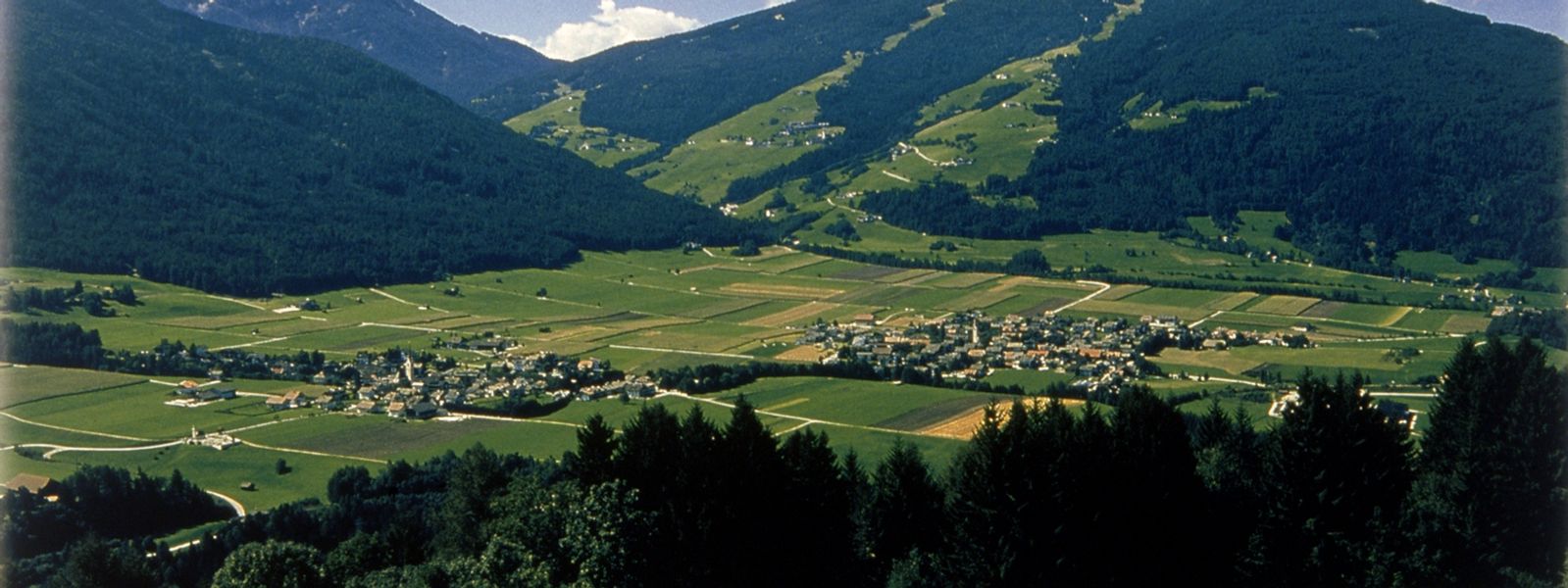
Valdaora is a comune in South Tyrol, northern Italy, about 60 kilometres northeast of Bolzano and 1,048 metres up in the Puster Valley. Four villages make it up: Oberolang (Valdaora di Sopra), Mitterolang (Valdaora di Mezzo) and Niederolang (Valdaora di Sotto) along the valley floor, with Geiselsberg (Sorafurcia) on the slope above them. About 3,200 people live across its 49 square kilometres, and German is the everyday language. Kronplatz rises to the west, and the municipality borders Prags and Rasen-Antholz, which hold the Braies and Anterselva valleys.
Valdaora
- Currency
- Euro (EUR, €). ATMs are widespread in cities and towns and accept major international credit and debit cards. Credit cards are accepted in urban and tourist areas; cash is essential in rural regions and small towns.
- Language
- The 2024 census records German as the first language of 95.64% of residents, Italian 3.89% and Ladin 0.47%. Everyday life runs in German, and both forms of each place name appear on signs.
- Power plug
- Europlug (Type C), Schuko (Type F) and Type L (Italian three-round-pin) sockets are in use. Voltage is 230V, 50Hz.
- Visa
- Schengen visa-free for 90 days (non-EU/EEA citizens). EU, EEA and Swiss citizens may stay indefinitely. All non-EU/EEA/Swiss visitors must declare their presence within 8 days of arrival. Stays longer than 90 days require an appropriate visa and residence permit.
- Time zone
- Central European Time (CET): UTC+01:00. Central European Summer Time (CEST): UTC+02:00 (last Sunday in March to last Sunday in October).
- Tap water
- Safe to drink. Tap water is well maintained throughout Italy and perfectly drinkable. In some peninsular areas it may be cloudy with a slight taste; most Italians prefer bottled water. Public fountains marked 'Acqua potabile' are safe to refill from. Avoid fountains marked 'Acqua non potabile'. Southern coastal areas may have an unusual taste due to desalination but water is always safe.
- Tipping
- Not customary. Restaurants include a service charge (coperto); waiters do not expect tips. Leaving loose change in bars and cafés is common. Tips cannot be added to credit card bills—bring cash if you wish to tip.
- Emergency
- 112 (Carabinieri, general emergency); 113 (Polizia di Stato); 115 (Fire Department); 118 (Medical Rescue).
When to go
High season
Dec – Mar
Ski season on Kronplatz above the village, with snow down on the valley floor at 1,048 metres. Days are short and the sun goes off the valley early behind the ridges.
Low season
Apr – May
The gap between the seasons: the skiing is finished, the high paths are still under snow, and the meadows in the valley green up while the villages stay quiet.
High season
Jun – Sep
Walking season, with the busiest weeks falling in August. Long light on the slopes above the four villages, and the side valleys take most of the traffic.
Low season
Oct – Nov
The larches go gold on the slopes through October, then November empties the valley out between the hiking and the ski seasons.
How long to stay
Two or three nights cover the village and one of the side valleys next door. Treat Valdaora as a base for the eastern Dolomites — Kronplatz, Anterselva, Braies, Bruneck — and four to six nights is the honest number, because each of those is its own day out and the driving between them adds up.
Getting around
The Puster Valley railway runs the length of the valley below the villages, and the stop here is the station named Valdaora-Anterselva. The SS49 follows the same valley floor and is the way in by car; Bruneck, the nearest town, borders the municipality to the west. Regional buses work the valley road and turn off it into the side valleys.
All of that stays on the valley floor. Kronplatz, the Anterselva and Braies valleys and the slopes above the four villages need a car, a bus or a lift, and a car is what makes the side valleys straightforward.
What to see
Destinations in Valdaora
Frequently asked questions
Where is Valdaora?
In the Puster Valley of South Tyrol, northern Italy, about 60 kilometres northeast of Bolzano and 1,048 metres above sea level. Its neighbouring municipalities are Bruneck, Mareo, Prags, Rasen-Antholz and Welsberg-Taisten.Why is Valdaora also called Olang?
South Tyrol is bilingual and every place carries two names: Olang is the German form, Valdaora the Italian one. German is the first language of the large majority here, so Olang is the form in local use.What do the three wheels on the coat of arms mean?
They stand for Mitterolang, Oberolang and Niederolang and the way the three sit in a line along the valley. The emblem — three cart wheels on a green bend across a silver field — was granted in 1968.Does Valdaora work as a base for the eastern Dolomites?
It does. Kronplatz rises directly to the west, Bruneck is the next town along the valley, and the Anterselva and Braies valleys open off the municipalities next door. Valdaora itself stays a working village of about 3,200 people spread over 49 square kilometres of valley floor and slope.