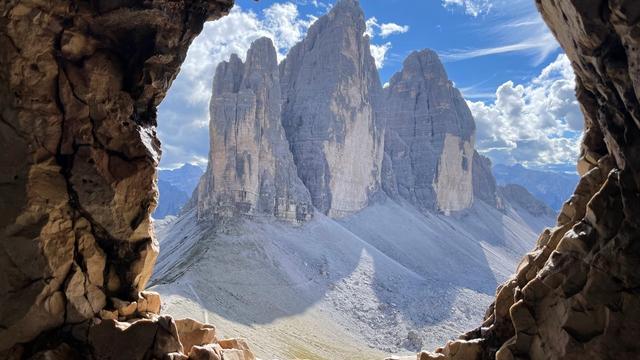
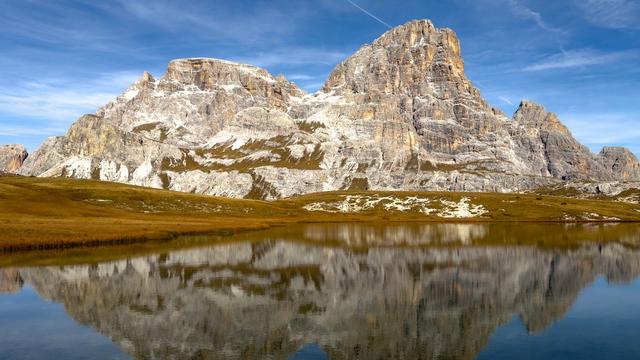
Sesto is a village at the head of the Alta Pusteria in South Tyrol, on the Austrian border, at 1310 m. The municipality covers just over 80 km² of the Sesto Dolomites, and the row of peaks above it — Cima Nove, Cima Dieci, Cima Undici, Cima Dodici — is read as a sundial, each summit named for the hour the sun stands over it. Val Fiscalina leads south from Moso towards Tre Cime di Lavaredo. Walking and climbing in summer, skiing in winter, and Italian and German both in daily use on signs and menus.
Sesto

- Currency
- Euro (EUR, €). ATMs are widespread in cities and towns and accept major international credit and debit cards. Credit cards are accepted in urban and tourist areas; cash is essential in rural regions and small towns.
- Language
- German and Italian are both official; German dominates in villages and mountain areas, Italian in lower towns. Ladin is spoken in some eastern valleys. English is widely understood in tourist zones, ski resorts and hotels, but less common in rural villages.
- Power plug
- Europlug (Type C), Schuko (Type F) and Type L (Italian three-round-pin) sockets are in use. Voltage is 230V, 50Hz.
- Visa
- Schengen visa-free for 90 days (non-EU/EEA citizens). EU, EEA and Swiss citizens may stay indefinitely. All non-EU/EEA/Swiss visitors must declare their presence within 8 days of arrival. Stays longer than 90 days require an appropriate visa and residence permit.
- Time zone
- Central European Time (CET): UTC+01:00. Central European Summer Time (CEST): UTC+02:00 (last Sunday in March to last Sunday in October).
- Tap water
- Safe to drink. Tap water is well maintained throughout Italy and perfectly drinkable. In some peninsular areas it may be cloudy with a slight taste; most Italians prefer bottled water. Public fountains marked 'Acqua potabile' are safe to refill from. Avoid fountains marked 'Acqua non potabile'. Southern coastal areas may have an unusual taste due to desalination but water is always safe.
- Tipping
- Not customary. Restaurants include a service charge (coperto); waiters do not expect tips. Leaving loose change in bars and cafés is common. Tips cannot be added to credit card bills—bring cash if you wish to tip.
- Emergency
- 112 (Carabinieri, general emergency); 113 (Polizia di Stato); 115 (Fire Department); 118 (Medical Rescue).
When to go
High season
Dec – Mar
Ski season. Snow lies on the valley floor at 1310 m, the village is at its busiest, and the sun drops behind the Meridiana peaks well before the sky goes dark.
Low season
Apr – May
The gap between seasons: the valley floor is bare while the high paths in the Sesto Dolomites still hold snow, and the village empties out.
High season
Jun – Sep
Walking and climbing season, and the reason most people come — Val Fiscalina and the Tre Cime routes carry the crowds, thickest in July and August.
Low season
Oct – Nov
Clear cold air and gold larches early on, then the first snow settles on the peaks and the village stands quiet between its two seasons.
How long to stay
Three or four days is the honest measure for Sesto itself — one for Val Fiscalina, one for the Monte Elmo side, one for a longer route into the Sesto Dolomites, and weather usually claims one of them. A week works if the village is a base for the wider Alta Pusteria rather than the goal in itself. Skiers stay longer as a matter of course; walkers crossing the Dolomites often give it a night and move on.
Getting around
The valley road is the spine of the place: it comes up from San Candido, runs through Sesto and Moso, and climbs on over the Passo Monte Croce di Comelico into the Veneto. Approaches are by car, or by the Val Pusteria railway to San Candido and Dobbiaco with a local bus for the last stretch up the valley. Val Fiscalina, the side valley that carries most of the walking traffic, ends against the wall of the Sesto Dolomites, and the last part of any route there is on foot whatever you arrived in. Tre Cime di Lavaredo belongs to the same range, but the road approach to it climbs from Misurina on the far side. Without a car you are tied to bus timetables, and the trailheads sit up two separate valleys.
What to see

Destinations in Sesto
Frequently asked questions
Where is Sesto?
At the head of the Alta Pusteria in South Tyrol, in the far north-east of Italy on the Austrian border, at 1310 m. The municipality covers 80.42 km² and has a population of 1,838.Can you reach Sesto by train?
The Val Pusteria railway runs along the main valley with stations at San Candido and Dobbiaco, and the last leg up to Sesto is by bus or car.Is Sesto a base for Tre Cime di Lavaredo?
The Tre Cime stand in the same range, and Sesto looks straight into it. The road approach climbs from Misurina on the southern side; from Sesto the peaks are reached on foot through Val Fiscalina.What is the Meridiana di Sesto?
The line of summits above the village — Cima Nove, Cima Dieci, Cima Undici, Cima Dodici — named for the hours at which the sun stands over each of them, seen from the valley below. It is why the skyline here carries a name of its own.