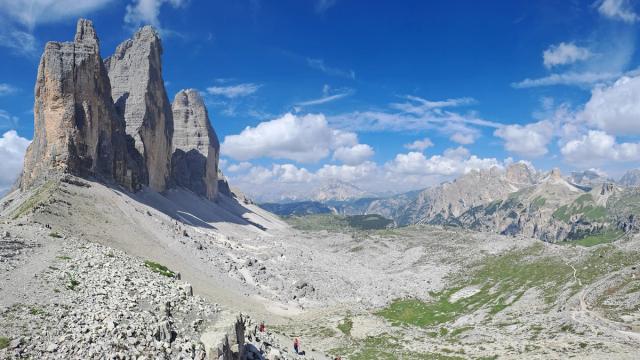
Dobbiaco sits at 1,239 m in the Puster Valley in South Tyrol, northern Italy, about 70 km north-east of Bolzano and on the Austrian border. Around 3,300 people live in the municipality, and the German name for the town is Toblach. The Tre Cime di Lavaredo stand nearby, and the Rienz leaves the Toblacher See just outside town. Gustav Mahler spent the summers of 1908–10 here, in a wood cabin in the pine forests, composing his ninth symphony and Das Lied von der Erde. The town hosts FIS Cross-Country World Cup races and stages of the Tour de Ski.
Dobbiaco

- Currency
- Euro (EUR)
- Language
- German, Italian
- Power plug
- Type C/F/L, 230 V
- Visa
- Schengen
- Time zone
- UTC+1 / UTC+2 (CET/CEST)
- Tap water
- Safe; most Italians prefer bottled
- Tipping
- Not expected; leave coins in bars, cafés
- Emergency
- 112
Things to do
All tours in Dobbiaco on GetYourGuide
Paid links: booking through them supports YowJourney.
When to go
High season
Dec – Mar
Snow season, and the cross-country trails are the draw — Dobbiaco hosts World Cup races and Tour de Ski stages through the winter. Days are short and the valley floor loses the sun early.
Low season
Apr – May
Between the seasons. The snow goes off the valley floor, the winter crowd has left and the summer one has not arrived, and the town is at its quietest.
High season
Jun – Sep
Walking season, with long daylight and warm afternoons. The Tre Cime di Lavaredo pull traffic through the valley from early morning, and August is the busiest stretch of the year.
Shoulder
Oct – Nov
October brings clear air and low light on the peaks with far fewer people about. By November the valley has gone quiet again and is waiting for snow.
How long to stay
Three or four days is a realistic stay: a day for the town and the Toblacher See, a day for the Tre Cime di Lavaredo, and one more for a neighbouring valley — Prags, Gsies, or the run south into Cortina d'Ampezzo. Skiers come for longer, since the cross-country network is the reason to be here in winter. Passing through on the Puster Valley road, one night is enough to get the measure of the place.
Getting around
The railway through the Puster Valley stops in town, running west down the valley towards Bolzano and east over the border into Austria. Roads follow the same line along the valley floor, with a second one climbing south towards Cortina d'Ampezzo. For the side valleys, a car does the real work.
Toblach Airport lies about a kilometre south: Italy's northernmost, a grass runway 700 metres long and 50 metres wide, run by the Italian Air Force as a military field. It opens to civilian traffic at weekends and on holidays from May to October — somewhere to land a light aircraft, not a way into the valley.
What to see



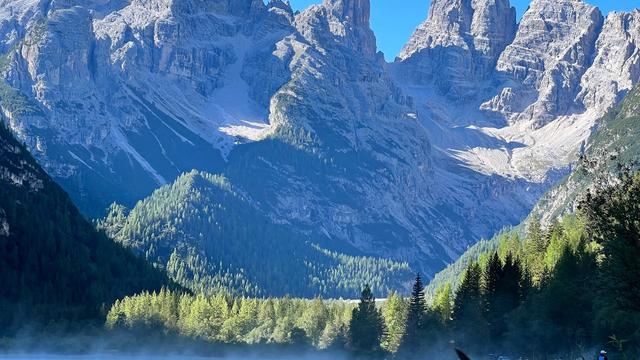
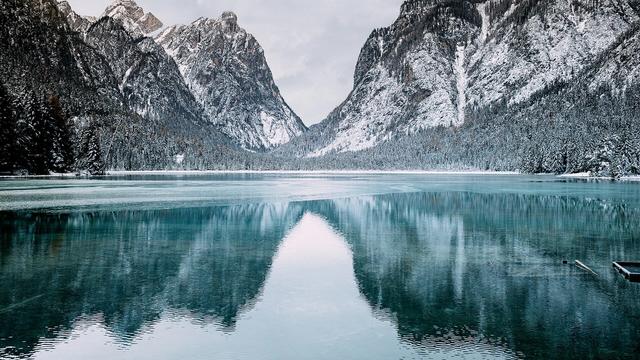
Destinations in Dobbiaco
Frequently asked questions
Are Dobbiaco and Toblach the same place?
Yes. Dobbiaco is the Italian name and Toblach the German one for the same comune in South Tyrol. Maps, signs and timetables in the province carry both.Can you fly into Dobbiaco?
Not on a scheduled flight. Toblach Airport, about a kilometre south of town, is Italy's northernmost airfield: a military grass strip 700 metres long and 50 metres wide, managed by the Italian Air Force, open to civilian traffic at weekends and on holidays from May to October.What is Dobbiaco known for besides skiing?
Gustav Mahler worked here in the summers of 1908–10, in a wood cabin in the pine forests outside the town, where he composed his ninth symphony and Das Lied von der Erde and began his tenth. The settlement itself is old: it appears as in vico Duplago in a document of the bishopric of Freising in 827.What is close by?
The Tre Cime di Lavaredo, known in German as the Drei Zinnen, are the landmark of the area. The municipality borders Gsies, Innichen, Niederdorf and Prags on the South Tyrolean side, Auronzo di Cadore and Cortina d'Ampezzo to the south, and Innervillgraten across the Austrian border.