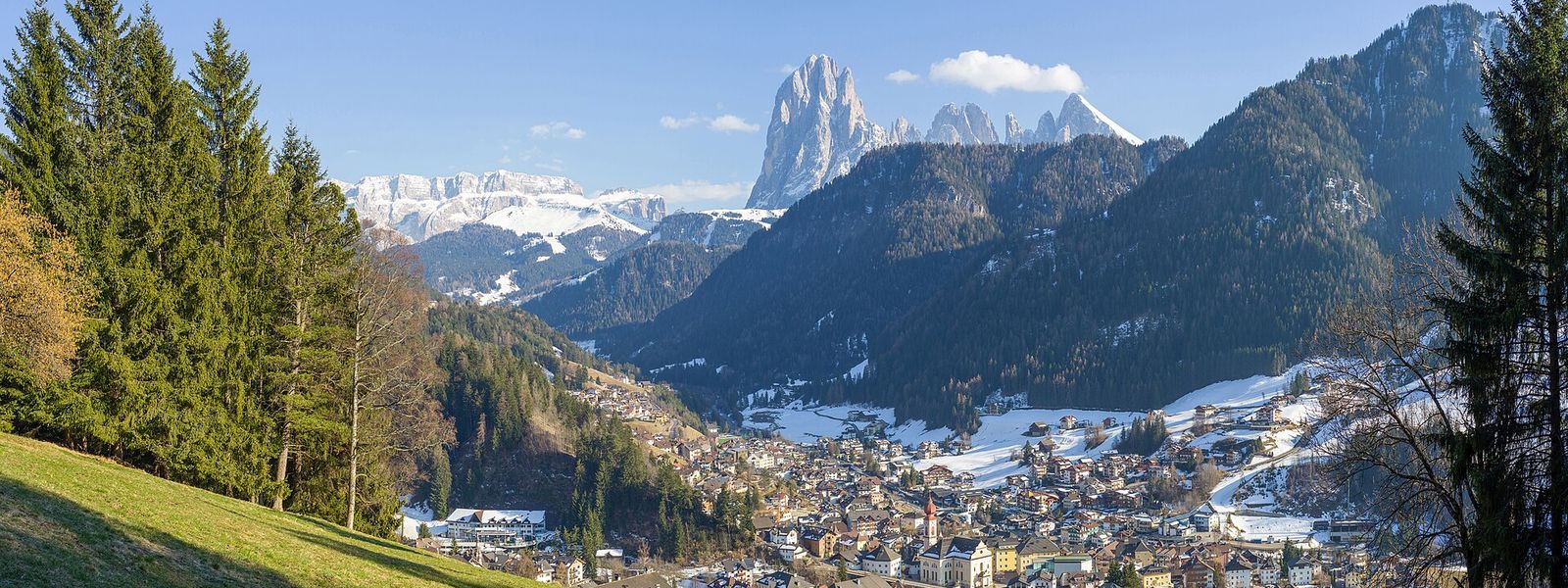
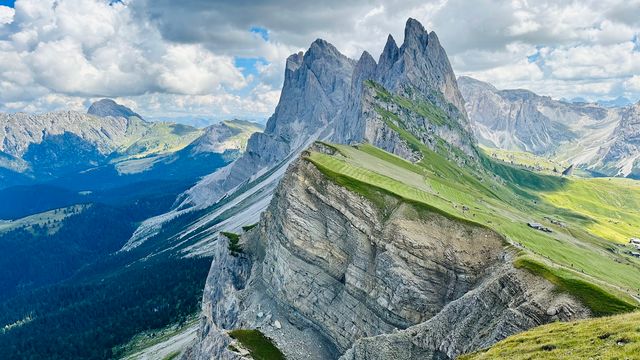
Ortisei is the main town of Val Gardena, a Ladin-speaking valley in South Tyrol that runs east to west through the Dolomites. The centre sits on the valley floor at around 1,230 m, with the Geisler group and Seceda (2,519 m) rising to the north-east and the Seiser Alm pastures across the river to the south. Woodcarving has been the local trade since the 17th century and is still made, sold and exhibited here; the rest of the economy is winter skiing and summer hiking. Fewer than 5,000 people live in the municipality.
Ortisei
- Currency
- Euro (EUR, €). ATMs are widespread in cities and towns and accept major international credit and debit cards. Credit cards are accepted in urban and tourist areas; cash is essential in rural regions and small towns.
- Language
- Ladin, German and Italian. Ortisei is a majority Ladin-speaking municipality, and Val Gardena is one of the few areas in Italy where Ladin holds official status — place names appear in all three languages. English is widely used in hotels, ski schools and shops.
- Power plug
- Europlug (Type C), Schuko (Type F) and Type L (Italian three-round-pin) sockets are in use. Voltage is 230V, 50Hz.
- Visa
- Schengen visa-free for 90 days (non-EU/EEA citizens). EU, EEA and Swiss citizens may stay indefinitely. All non-EU/EEA/Swiss visitors must declare their presence within 8 days of arrival. Stays longer than 90 days require an appropriate visa and residence permit.
- Time zone
- Central European Time (CET): UTC+01:00. Central European Summer Time (CEST): UTC+02:00 (last Sunday in March to last Sunday in October).
- Tap water
- Safe to drink. Tap water is well maintained throughout Italy and perfectly drinkable. In some peninsular areas it may be cloudy with a slight taste; most Italians prefer bottled water. Public fountains marked 'Acqua potabile' are safe to refill from. Avoid fountains marked 'Acqua non potabile'. Southern coastal areas may have an unusual taste due to desalination but water is always safe.
- Tipping
- Not customary. Restaurants include a service charge (coperto); waiters do not expect tips. Leaving loose change in bars and cafés is common. Tips cannot be added to credit card bills—bring cash if you wish to tip.
- Emergency
- 112 (Carabinieri, general emergency); 113 (Polizia di Stato); 115 (Fire Department); 118 (Medical Rescue).
When to go
High season
Dec – Mar
Ski season, and the reason most beds in town are booked. The cable cars out of the centre are the way up to the snow.
Low season
Apr – May
Between skiing and walking the valley empties out and the town goes back to itself.
High season
Jun – Sep
Hiking season: the Seiser Alm pastures and the paths under the Geisler group carry the summer trade, and the valley fills again.
Low season
Oct – Nov
Quiet again. The walking crowds thin out and Ortisei reads as the working South Tyrolean town it is the rest of the year.
How long to stay
Three to four days works as a base: one for the Seiser Alm, one for the Seceda side above the valley, and one held back for weather, which changes fast at this height. Skiers working the Val Gardena slopes want a week. On a fast trip through the Dolomites, a single night is enough to walk the centre and ride one cable car up.
Getting around
The centre lies on the valley floor and is walkable end to end, with marked footpaths running out to the neighbouring villages. Two cable cars do the climbing: one up to Raschötz (Rasciesa), €13 one way and €18 return, and one south to the Seiser Alm (Mont Sëuc), where there is a restaurant, hiking trails in summer and skiing in winter. SAD buses link Bolzano, Brixen, Klausen and Waidbruck. By train, ride to Waidbruck (Ponte Gardena) and pick up bus 350 from outside the station. One catch worth planning around: bus 170 gets you in from Bolzano during the day, but in the evening the route is cut short and ends in Kastelruth. Drivers coming over the Brenner on the A13 and A22 leave the motorway at Klausen and follow the SS 242. The MobilCard, sold as a 3-day or 7-day ticket at South Tyrolean transport outlets and tourist offices, covers all public transport in the association.
What to see
Destinations in Ortisei
Frequently asked questions
Why does the town have three names?
Ladin Urtijëi, German St. Ulrich in Gröden, Italian Ortisei — all three turn up on signs and maps. The Ladin and Italian forms go back to a farmstead called Ortiseyt, documented in the 13th century, from the Latin urtica: place of nettles. The German name comes from St Ulrich, patron saint of the parish.Can you reach Ortisei without a car?
Yes. Take the train to Waidbruck (Ponte Gardena), then bus line 350, which leaves from right outside the station. SAD buses also run from Bolzano, Brixen, Klausen and Waidbruck. Bus 170 comes in from Bolzano during the day, but the evening service is truncated and terminates in Kastelruth.How do you get up to the Seiser Alm?
A cable car runs from town to the Seiser Alm (Mont Sëuc), the largest alpine pasture in the region, with a restaurant at the top, hiking trails in summer and skiing in winter. It follows a long habit: the first cable car in Val Gardena was built here in 1935, to that same pasture. A second line climbs the other way, to Raschötz (Rasciesa), at €13 one way and €18 return.What is the woodcarving about?
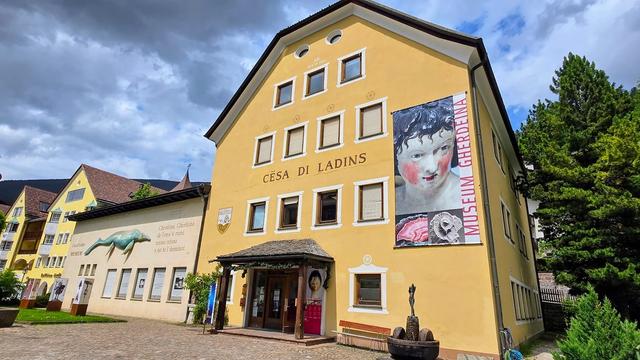
Since the 17th century a large part of the town has worked in woodcarving, sacred sculpture, altar building and wooden toys, and for over two centuries Ortisei counted as an international centre of the craft. It peaked around 1900 at the art school founded by Ferdinand Demetz. Museum Gherdëina, the local heritage museum, holds a collection of wooden sculptures and toys alongside geological, palaeontological and archaeological finds from the valley.