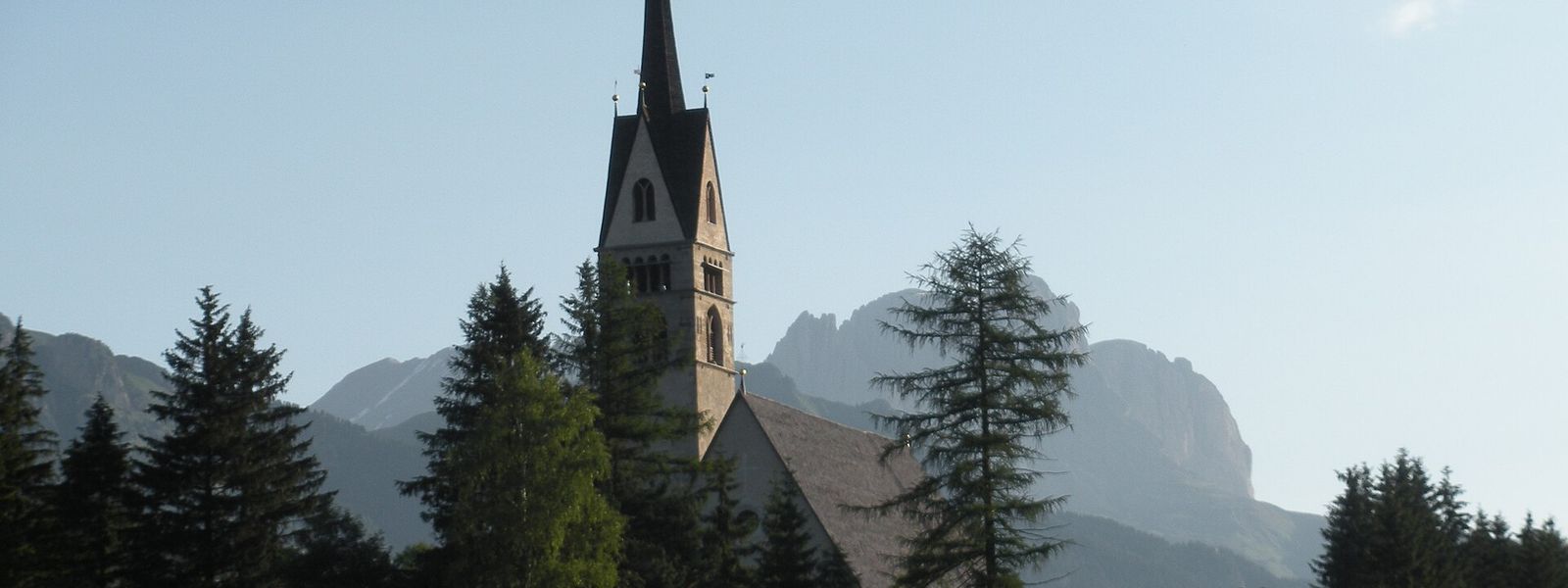
San Giovanni di Fassa is a comune of some 3,573 people in the Val di Fassa, in Trentino, in the Italian region of Trentino-Alto Adige/Südtirol. It was created on 1 January 2018 by merging the former comuni of Pozza di Fassa and Vigo di Fassa, still its two main villages. Its Ladin name is Sèn Jan. The valley floor lies at 1,380 m with Dolomite peaks on either side, and the comune is on the list of I Borghi più belli d'Italia, Italy's most beautiful villages. Visitors use it as a base for walking and skiing in the mountains around it.
San Giovanni di Fassa
- Currency
- Euro (EUR, €). ATMs are widespread in cities and towns and accept major international credit and debit cards. Credit cards are accepted in urban and tourist areas; cash is essential in rural regions and small towns.
- Language
- Italian and Ladin. The comune's own Ladin name is Sèn Jan, and Ladin is the everyday language of the Val di Fassa alongside Italian. English is understood in hotels and ski facilities, less so away from them.
- Power plug
- Europlug (Type C), Schuko (Type F) and Type L (Italian three-round-pin) sockets are in use. Voltage is 230V, 50Hz.
- Visa
- Schengen visa-free for 90 days (non-EU/EEA citizens). EU, EEA and Swiss citizens may stay indefinitely. All non-EU/EEA/Swiss visitors must declare their presence within 8 days of arrival. Stays longer than 90 days require an appropriate visa and residence permit.
- Time zone
- Central European Time (CET): UTC+01:00. Central European Summer Time (CEST): UTC+02:00 (last Sunday in March to last Sunday in October).
- Tap water
- Safe to drink. Tap water is well maintained throughout Italy and perfectly drinkable. In some peninsular areas it may be cloudy with a slight taste; most Italians prefer bottled water. Public fountains marked 'Acqua potabile' are safe to refill from. Avoid fountains marked 'Acqua non potabile'. Southern coastal areas may have an unusual taste due to desalination but water is always safe.
- Tipping
- Not customary. Restaurants include a service charge (coperto); waiters do not expect tips. Leaving loose change in bars and cafés is common. Tips cannot be added to credit card bills—bring cash if you wish to tip.
- Emergency
- 112 (Carabinieri, general emergency); 113 (Polizia di Stato); 115 (Fire Department); 118 (Medical Rescue).
When to go
High season
Dec – Mar
The valley floor sits at 1,380 m, so snow lies in the villages themselves, not only on the peaks. Cold mornings, short daylight, and the fullest beds of the year.
Low season
Apr – May
Between the snow and the summer the valley empties out. Grass returns to the floor while the high ground is still white, and grey, wet days are ordinary.
High season
Jun – Sep
The walking season: warm days on the valley floor, light lasting well into the evening, and the Dolomite walls clear on both sides. August is the busiest stretch.
Low season
Oct – Nov
Quiet weeks with clear air and the larches turning above the villages, then the first snow. The emptiest time to see the place.
How long to stay
Three to four days suits a stay here: one for the valley floor and the two villages, two for the mountains above them, and a spare for weather, which in the Dolomites rearranges plans more often than the calendar does. On a wider Dolomites tour the comune works as a stop of a single day, enough for the villages and the valley view, but the walking and the skiing are the reason to stay longer.
Getting around
No railway reaches the Val di Fassa. San Giovanni di Fassa is a road destination: a single valley road runs the floor, ties its two centres — Vigo di Fassa and Pozza di Fassa — together, and climbs towards the passes at either end of the valley. A car is the practical way to use the comune and the villages further up the valley from it. Buses work the same valley road between the settlements. One honest caveat: everything arrives over that one road, and at 1,380 m the winter driving here is done on snow.
What to see

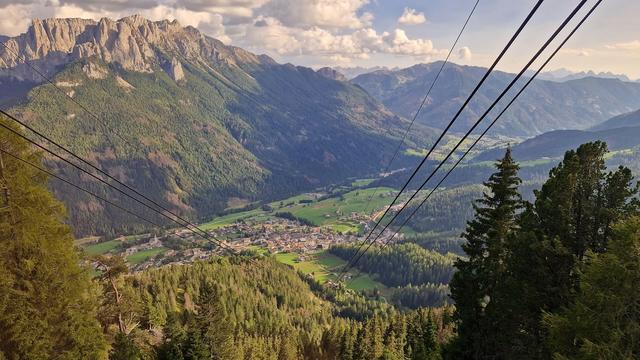
Destinations in San Giovanni di Fassa
Frequently asked questions
What is San Giovanni di Fassa?
A comune in the Val di Fassa, in Trentino, in the Italian region of Trentino-Alto Adige/Südtirol. It was formed on 1 January 2018 by the merger of two former comuni, Pozza di Fassa and Vigo di Fassa, which remain its two main villages. Some 3,573 people live in it, across 99.82 km².Why is it also written Sèn Jan?
Sèn Jan is the Ladin name of the comune. Ladin is the language of the Val di Fassa alongside Italian, and both forms of the name are in official use.Is San Giovanni di Fassa one of the most beautiful villages in Italy?
It is on the list. The comune belongs to I Borghi più belli d'Italia, the national listing of Italy's most beautiful villages.How high is San Giovanni di Fassa?
The valley floor here lies at 1,380 m, with the Dolomite walls rising straight from it on both sides. That altitude is why the seasons run late: green comes to the meadows well after it has reached the plains.