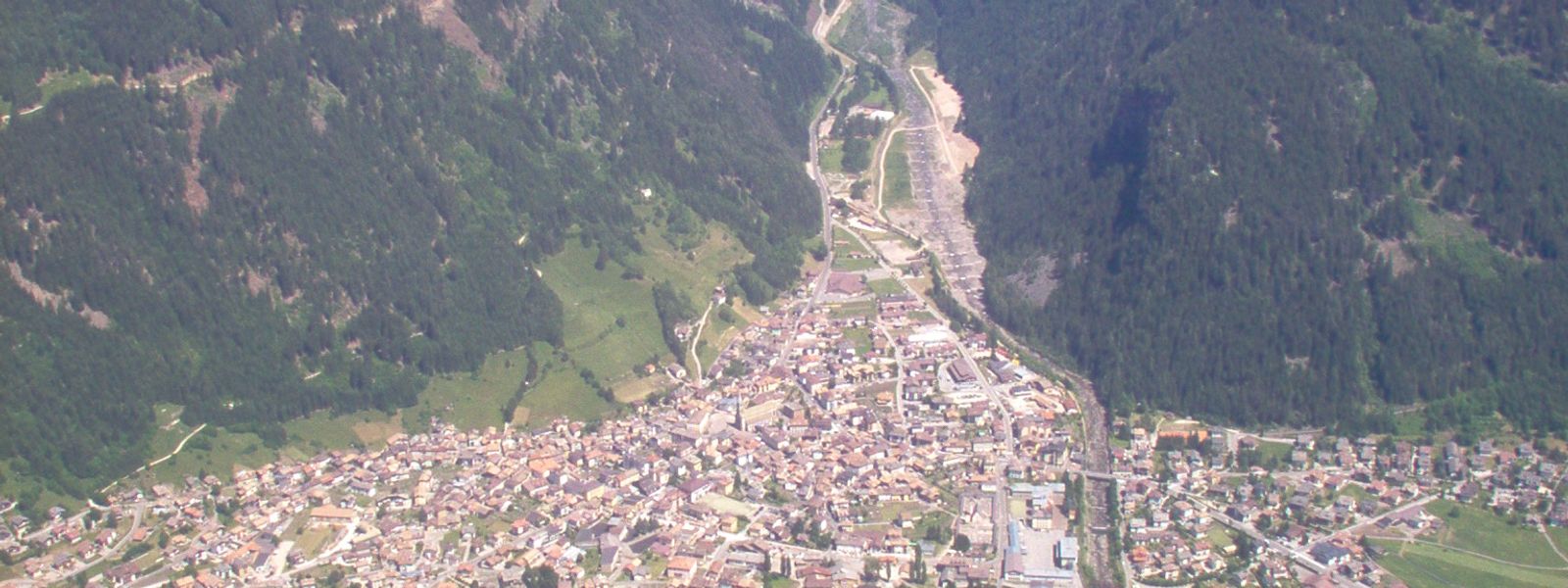
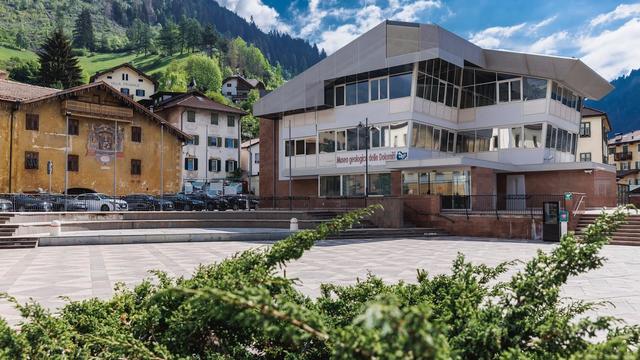
Predazzo stands at 1,018 m where the Travignolo meets the Avisio, the most upstream of the main towns of Val di Fiemme, about 58 km northeast of Trento. A volcano collapsed here around 200 million years ago, leaving granite, lava and marine sediment together in one area — a mix that drew geologists from across Europe from the 18th century onwards. The Geological Museum of the Dolomites and the GeoTrail Dòs Capèl, the oldest geology path in Italy, carry the subject today; the ski jumping hills have held the Nordic World Ski Championships three times.
Predazzo
- Currency
- Euro (EUR, €). ATMs are widespread in cities and towns and accept major international credit and debit cards. Credit cards are accepted in urban and tourist areas; cash is essential in rural regions and small towns.
- Language
- German and Italian are both official; German dominates in villages and mountain areas, Italian in lower towns. Ladin is spoken in some eastern valleys. English is widely understood in tourist zones, ski resorts and hotels, but less common in rural villages.
- Power plug
- Europlug (Type C), Schuko (Type F) and Type L (Italian three-round-pin) sockets are in use. Voltage is 230V, 50Hz.
- Visa
- Schengen visa-free for 90 days (non-EU/EEA citizens). EU, EEA and Swiss citizens may stay indefinitely. All non-EU/EEA/Swiss visitors must declare their presence within 8 days of arrival. Stays longer than 90 days require an appropriate visa and residence permit.
- Time zone
- Central European Time (CET): UTC+01:00. Central European Summer Time (CEST): UTC+02:00 (last Sunday in March to last Sunday in October).
- Tap water
- Safe to drink. Tap water is well maintained throughout Italy and perfectly drinkable. In some peninsular areas it may be cloudy with a slight taste; most Italians prefer bottled water. Public fountains marked 'Acqua potabile' are safe to refill from. Avoid fountains marked 'Acqua non potabile'. Southern coastal areas may have an unusual taste due to desalination but water is always safe.
- Tipping
- Not customary. Restaurants include a service charge (coperto); waiters do not expect tips. Leaving loose change in bars and cafés is common. Tips cannot be added to credit card bills—bring cash if you wish to tip.
- Emergency
- 112 (Carabinieri, general emergency); 113 (Polizia di Stato); 115 (Fire Department); 118 (Medical Rescue).
When to go
High season
Dec – Mar
Full winter in the valley — the year's low here has reached −21 °C. The ski jumping hills are the town's winter stage, and beds go first around competition dates.
Shoulder
Apr – Jun
The quiet stretch between the two seasons. The valley floor at 1,018 m greens up while snow is still lying on the Pale di San Martino and the Latemar.
High season
Jul – Aug
The warmest and busiest weeks; the year's high in this territory has reached +38 °C. Saint James' market falls on 25 July.
Shoulder
Sep – Nov
The Desmontegada de le Vache brings the livestock down from the summer pastures at the beginning of October, and Saint Martin's Day on 11 November is marked with large bonfires and a procession through the town.
How long to stay
Two days are enough for the town itself: the Geological Museum of the Dolomites, the old centre at Pè de Pardac between Sommavilla and Molin, and the GeoTrail Dòs Capèl. Four or five make sense if Predazzo is the base rather than the stop — the Paneveggio–Pale di San Martino Natural Park, the road to Passo Rolle and the neighbouring valleys of Fiemme and Fassa all run from here.
Getting around
Predazzo works as a junction. The roads of Val di Fiemme, Val di Fassa and the Primiero area meet here, so traffic between the three valleys goes through the town, as the trade between them has done for a long time. Trento lies about 58 km to the southwest. The road to Passo Rolle leaves the town and passes Forte Dossaccio, the Austrian fortification from the First World War. Distances inside the comune are real: the hamlets — Bellamonte, Paneveggio, Mezzavalle, Fol, Coste and Zaluna — are spread over nearly 110 km², much of that inside the Paneveggio–Pale di San Martino Natural Park, and reaching them means driving.
What to see
Destinations in Predazzo
Frequently asked questions
What is Predazzo known for?
Geology. A volcano collapsed here around 200 million years ago, and the ground was left with granite, lava and marine sediment all present in the same area. The Italian geologist Giuseppe Marzari Pencati noticed the combination at the beginning of the 18th century, and researchers from across Europe followed — Humboldt, von Richthofen, Dolomieu, Gordon. The Geological Museum of the Dolomites is in the town, and the GeoTrail Dòs Capèl is the oldest geology-focused path in Italy.Has Predazzo hosted major ski competitions?
Ski jumping, and the ski jumping part of Nordic combined, was held here at the FIS Nordic World Ski Championships in 1991, 2003 and 2013. Predazzo was also among the communities selected to host events at the 2026 Winter Olympics in the winning Milan and Cortina d'Ampezzo bid.Is Predazzo in the Dolomites?
Yes. The town sits between the Lagorai, Latemar and Pale di San Martino groups, which belong to the Dolomites recognised by UNESCO as a World Heritage Site. Part of the municipal territory falls inside the Paneveggio–Pale di San Martino Natural Park.What is there to see besides the museum?
Forte Dossaccio, an Austrian fortification from the First World War, stands on the road from the town to Passo Rolle. In Predazzo itself, Pè de Pardac (Piè di Predazzo) is the historic centre, set between the Sommavilla and Molin quarters; Molin takes its name from the mills and canals that used the water there in the early twentieth century.Which local events are worth timing a visit around?
Saint James' market on 25 July, the Desmontegada de le Vache at the beginning of October, when the livestock comes down from the high summer pastures, and Saint Martin's fireworks on 11 November, with bonfires and a cortège. Catanaoc 'n festa combines a gastronomic festival with a historical commemoration.