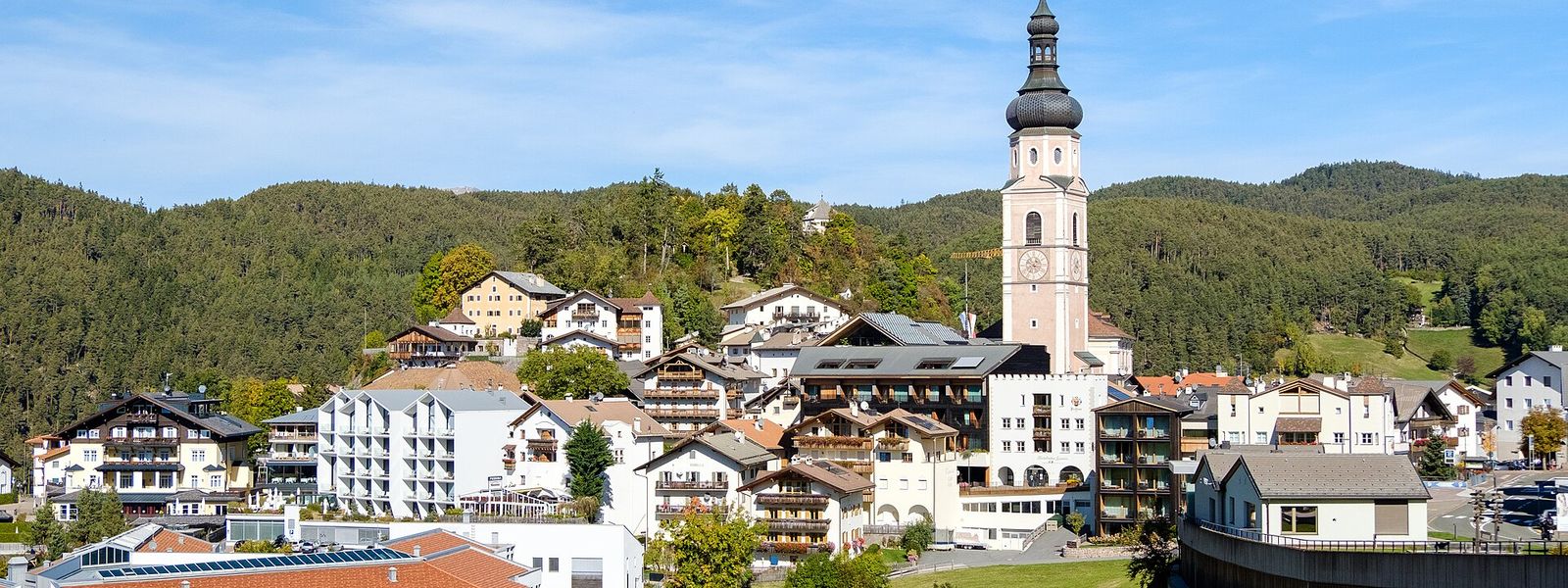
Castelrotto is a comune of about 6,970 people covering 117.9 km² of meadow, farmland and forest in South Tyrol, northern Italy, roughly 20 kilometres northeast of Bolzano. The village stands at around 1,060 metres and is on the list of I Borghi più belli d'Italia. Its subdivisions include Seis am Schlern (Siusi) and the Seiser Alm (Alpe di Siusi), the alpine meadow most visitors come for; of the medieval Castelvecchio castle only the ruins of a square tower, traces of walls and brick huts survive. Tourism and agriculture carry the local economy.
Castelrotto
- Currency
- Euro (EUR, €). ATMs are widespread in cities and towns and accept major international credit and debit cards. Credit cards are accepted in urban and tourist areas; cash is essential in rural regions and small towns.
- Language
- German is the first language of 78.47% of residents, against 15.81% Ladin and 5.72% Italian (2024 census); locals are fluent in both German and Italian. Outside those who deal with visitors directly, spoken English is a rarity.
- Power plug
- Europlug (Type C), Schuko (Type F) and Type L (Italian three-round-pin) sockets are in use. Voltage is 230V, 50Hz.
- Visa
- Schengen visa-free for 90 days (non-EU/EEA citizens). EU, EEA and Swiss citizens may stay indefinitely. All non-EU/EEA/Swiss visitors must declare their presence within 8 days of arrival. Stays longer than 90 days require an appropriate visa and residence permit.
- Time zone
- Central European Time (CET): UTC+01:00. Central European Summer Time (CEST): UTC+02:00 (last Sunday in March to last Sunday in October).
- Tap water
- Safe to drink. Tap water is well maintained throughout Italy and perfectly drinkable. In some peninsular areas it may be cloudy with a slight taste; most Italians prefer bottled water. Public fountains marked 'Acqua potabile' are safe to refill from. Avoid fountains marked 'Acqua non potabile'. Southern coastal areas may have an unusual taste due to desalination but water is always safe.
- Tipping
- Not customary. Restaurants include a service charge (coperto); waiters do not expect tips. Leaving loose change in bars and cafés is common. Tips cannot be added to credit card bills—bring cash if you wish to tip.
- Emergency
- 112 (Carabinieri, general emergency); 113 (Polizia di Stato); 115 (Fire Department); 118 (Medical Rescue).
When to go
High season
Jun – Sep
Summer is one of the two tourist seasons. The hills are green all over, with only the tallest and most distant Dolomite peaks left bare, and route 170 runs through to Ortisei during the day.
Shoulder
Oct – Dec
Autumn sits between the two tourist seasons, and the village lives as much on its farms as on visitors.
Low season
Jan – Mar
Skiing is what brings people to the area in winter, but from January to March there is little to no activity in the town itself.
Shoulder
Apr – May
The gap between the ski season and the summer one, with the meadows turning green again and the town largely given back to its own business.
How long to stay
Two or three nights make a fair base: one day for the village and the older corners around it, the rest for the Seiser Alm and the peaks behind it, which is what most people come for. Walkers and skiers who want more than a taste should add days rather than day-trip in from Bolzano. From January to March there is little activity in the town itself, so a stay then is worth what the snow gives you and not much else.
Getting around
The village itself is small and very walkable, and the main bus stop sits in the centre of town. Everything further out runs on the regional buses. Ask your hotel or guesthouse for the free "Live" / MobileCard — it is not always handed over automatically, and it covers regional buses to and from the Seiser Alm and below. The card cannot be bought in Bolzano, so the ride in has to be paid for at the driver; the run back down is free once you hold it. In summer, route 170 stops at Castelrotto and carries on to Ortisei during the day, while evening services terminate here. Buses are fewer on Sundays and winter schedules differ, so check the timetable online before you fix the day's plan.
What to see

Destinations in Castelrotto
Frequently asked questions
How do you reach Castelrotto without a car?
Bus 170 from Bolzano takes 50 minutes along a winding, scenic road. The stop in Bolzano is right outside the train station, a little to the right as you face away from it, and tickets are bought from the driver. Buses are fewer on Sundays. Brixen (Bressanone) and Klausen (Chiusa) are the other nearby stations served by Intercity and Eurocity trains.Is there a free travel card for guests?
Yes — the "Live" / MobileCard comes free with lodging in the town and the region, but it may not be handed over automatically, so ask for it. It covers regional buses to and from the Seiser Alm and below. It cannot be bought in Bolzano, so pay for the ticket in; the return to Bolzano is free once you have the card.Why do the signs and timetables say Kastelruth?
That is the German name of the same place; Castelrotto is the Italian one and Ciastel the Ladin. In the 2024 census 78.47% of residents gave German as their first language, 15.81% Ladin and 5.72% Italian, so German forms dominate locally.Will English get you by?
Among staff who deal with visitors directly, yes. Beyond them spoken English is a rarity, while locals are fluent in both German and Italian.Is Castelrotto a good base for the Seiser Alm?
That is the main reason to stay here: the town is a convenient base for the Seiser Alm alpine meadow and the surrounding peaks, and the meadow is itself part of the municipality. Seis am Schlern, higher up, comes before Castelrotto on the 170 route.