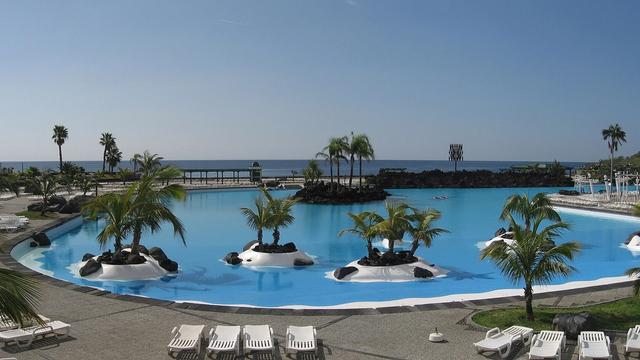
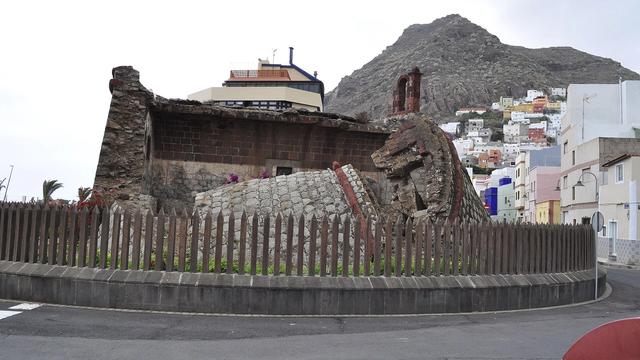
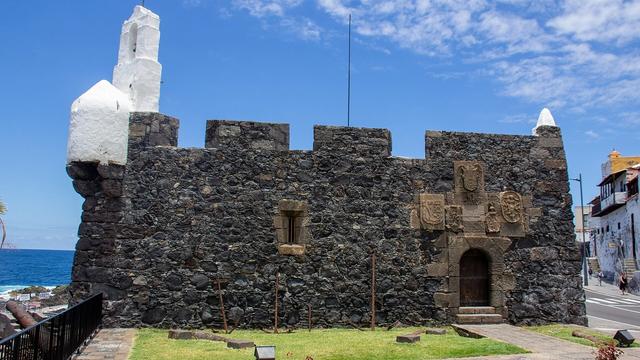
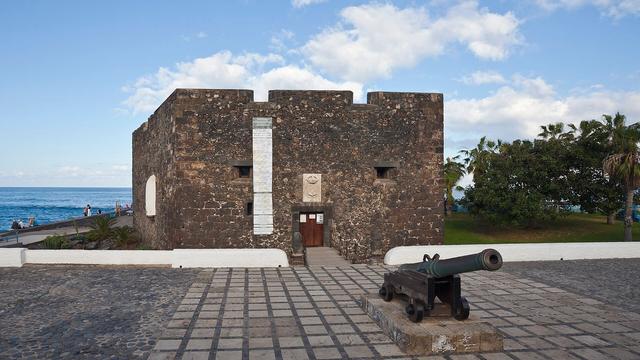
The Castle of San Juan Bautista, also called the Black Castle (Castillo Negro), is a coastal fort in the centre of Santa Cruz de Tenerife, the island's capital. Built between 1641 and 1644 and rebuilt in 1765 with a cylindrical tower facing the sea, it was the second most important fort in the city's defences and served the military until 1924. It stands near the César Manrique Maritime Park (Parque Marítimo César Manrique), behind the Auditorio de Tenerife.
Castle of San Juan Bautista
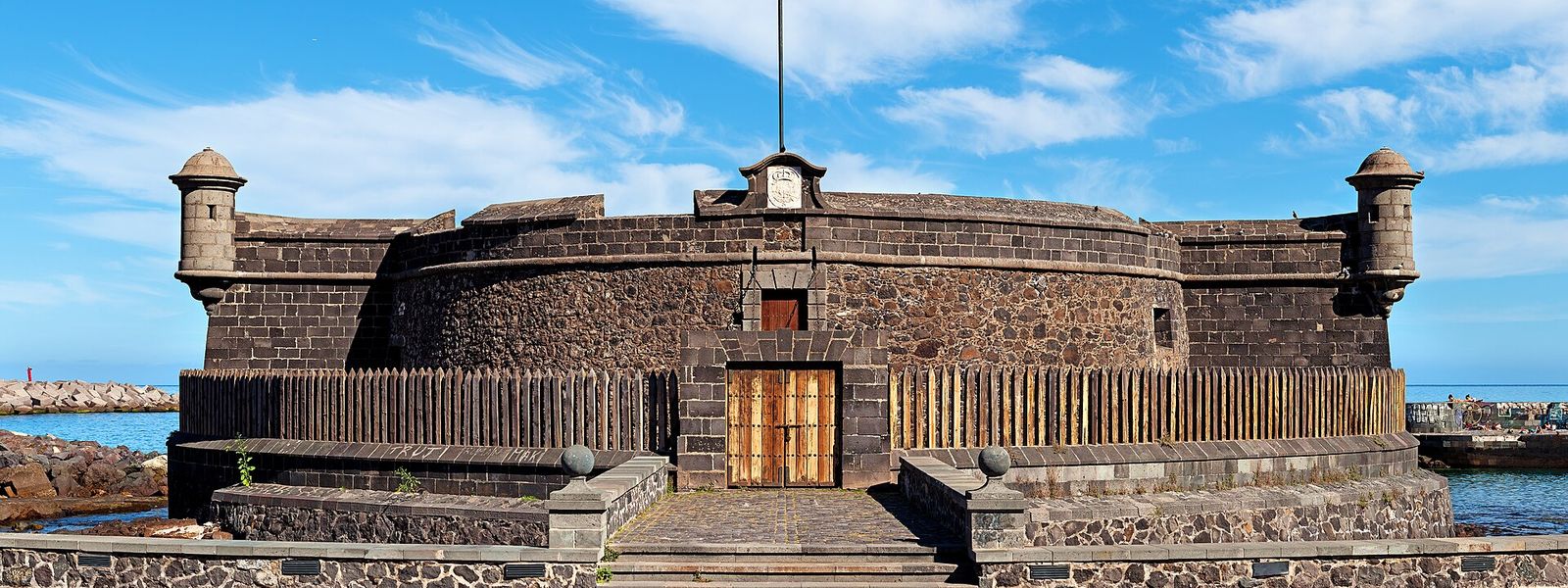
Squat circular fort of dark volcanic stone on the Santa Cruz seafront, begun in 1641
- Entrance
- No ticket to walk around the outside; the interior is usually closed to visitors.
- Accessibility
- The entrance is wheelchair accessible; with the interior usually closed, the visit is around the outside walls.
- Parking
- Free public car park about 300 m away in a straight line.
- Difficulty
- None: a city-seafront monument about 300 m from the nearest public car park and 360 m from the Intercambiador Sta. Cruz stop.
- Transport
- Intercambiador Sta. Cruz stop, about 360 m away.
What makes it special
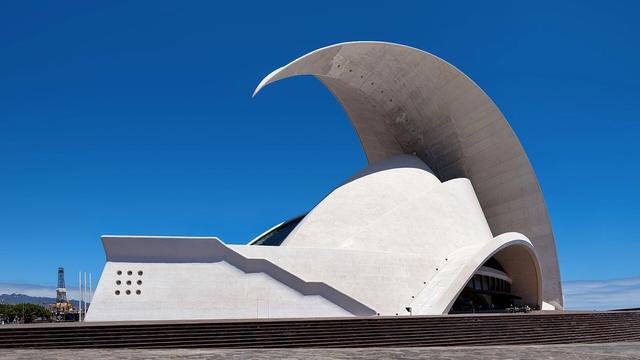
Dark volcanic stone sits right against blue water, with the white sweep of the Auditorio de Tenerife beside it. The castle is squat and round, a stone drum on the shoreline, and the cylindrical tower on the sea side dates from its rebuilding in 1765.
From 1684 the Cabildo de Tenerife appointed its warden, and the island's nobility coveted the post. The warden granted ships leave to enter and depart, charged for the right to fish, settled quarrels between fishermen and townsfolk, and collected the tariffs on salt and flour. Each year the fort hosts a re-enactment of the Battle of Santa Cruz de Tenerife, marking Horatio Nelson's failed attack on the city on 25 July 1797.
The setting holds you longer than the walls do. Waves break on the rocks nearby, and well-known figures are painted along the stones. Turn back towards the city and the walkway underfoot is set with tiles copying the carnival posters from 1962 onwards.
Good to know
- The interior is usually closed. The visit is the outside walls and the seafront around them.
- Free public toilets stand about 100 m away.
- There is no drinking fountain nearby, so bring water.
- Plan it alongside the Auditorio de Tenerife and the César Manrique Maritime Park next door; on its own the castle fills a stop on a seafront walk.
Getting there
The castle stands on the seafront in the centre of Santa Cruz de Tenerife, so the last stretch is on foot through the city. The Intercambiador Sta. Cruz stop is about 360 m away in a straight line, and the nearest public car park about 300 m. The municipal vehicle pound (Depósito Municipal de Vehículos) sits a little closer but is not public parking. Coming from the city side you pass the Auditorio de Tenerife, and a bridge leads across to the castle itself. On the way back, look down at the tiled walkway with its carnival posters.
Best time to visit
Best: morning, or the day of the annual re-enactment of the Battle of Santa Cruz de Tenerife held at the fort.
Avoid: the middle of a hot day.
The sea-facing tower takes the morning sun off the water, while the open seafront around the walls offers little cover once the sun is high.
Sun & daylight
Nearby Places

Similar Places

Your whole travel map in one place
Get inspired by new places around the world and find the ones worth the journey
Frequently asked questions
Can you go inside the Castle of San Juan Bautista?
The castle was converted to a military museum in 1948, but the interior is usually closed today. Plan on seeing it from outside and from the seafront around it.Why is it called the Black Castle?
Its walls are built of dark volcanic stone, which stands out against the sea and the modern buildings around it. The Spanish name is Castillo Negro.What does the castle have to do with Nelson?
It was part of the defences of Santa Cruz de Tenerife when Horatio Nelson's attack on the city failed on 25 July 1797. A re-enactment of the Battle of Santa Cruz de Tenerife takes place at the fort every year.When was the castle built?
Construction began in 1641 and finished in 1644. The fort was rebuilt in 1765, when the cylindrical tower facing the sea was added, and it served as a military fort until 1924.Is it worth a visit on its own?
With the interior usually closed, the castle fits best into a walk along the seafront past the Auditorio de Tenerife and the César Manrique Maritime Park.