Cova des Coloms is a natural cave in the gully of Binigaus (Barranc de Binigaus), about a mile southeast of Es Migjorn Gran on Menorca. The entrance is some 15 m wide, the ceiling stands about 24 m above the floor, and the cave runs 100 to 110 m into the rock: a central chamber roughly 50 m deep, then a long, narrow corridor. Its size earned it the local name "the Cathedral". The cave served as a burial site in the Post-Talayotic period, between 550 and 123 BC, and has been listed as a Bien de Interés Cultural since 1966.
Cova des Coloms
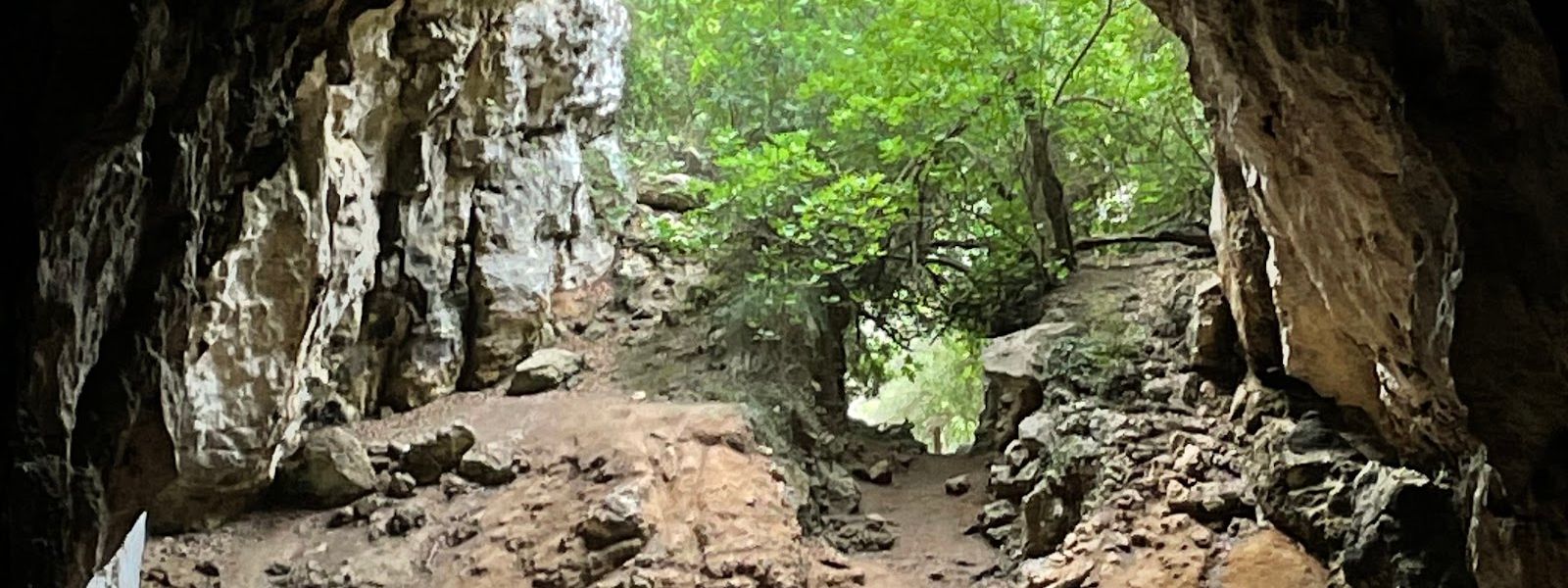
Vast cave in the Binigaus gully, 24 m to the ceiling, once a Post-Talayotic burial site.
- Entrance
- Free.
- Accessibility
- No step-free access: neither the parking nor the entrance is wheelchair-accessible, and the rocky path with drops rules it out for anyone unsteady on their feet.
- Parking
- Free car park by the cemetery in Es Migjorn Gran, the closest one to the cave; the walk in starts there.
- Difficulty
- On foot only — about 15 minutes on the road from the cemetery car park, 10 more on a white path, then a rougher stretch down and back up, with drops of up to 60 cm in places and a steep climb to the entrance.
- Transport
- Bus stops Es Migjorn, about 1.7 km away in a straight line, and Santo Tomas Vistamar, about 1.8 km; everything beyond them is on foot.
- Advance booking
- Not needed — no ticket and no booking.
- Hours
- Open at any time.
- Address
- Barranc de Binigaus Menorca, 07749 Es Migjorn Gran, Illes Balears, Spain
What makes it special
The entrance opens 15 m wide in the side of the gully, and the ceiling inside stands about 24 m above the floor — the reason the cave is known on Menorca as the Cathedral. Sound carries. A word spoken near the mouth comes back off the rock, and the daylight that falls into the central chamber moves round as the sun does. Pigeons have the run of the place, and the floor shows it.
About 50 m in, the chamber narrows into a long corridor. This was a burial ground in the Post-Talayotic period, and the mounds of turned soil either side of the entrance are what illegal digging left behind; on both sides, lines of what may be prehistoric walling can still be picked out.
Good to know
- No facilities: no toilets at the cave and none nearby, and no drinking water on the route — carry what you will drink.
- Footwear: shoes with grip. The paths are rocky and the last pitch up to the entrance is steep.
- Nothing is lit. Daylight fills the central chamber; the corridor running back from it gets none of it.
- Not for limited mobility: rocky ground, drops and a steep final climb make this a poor choice for anyone unsteady on their feet.
- Waymarking: the turn-off is signposted and part of the way is a private gravel road; a board in Catalan, Spanish and English stands at the junction.
Getting there
The last stretch is on foot from Es Migjorn Gran, about a mile to the southeast. Park by the cemetery, the closest car park to the cave, then follow the road for some 15 minutes, past the hotel, to a marked sign for the caves. A white path takes over for about 10 minutes; after the first plant sign, the one marked ficus, keep left onto the rougher path, which drops and then climbs again. Part of the route runs along a private gravel road. At the junction for the cave there is an information board, and from there a steep path leads up on the left to the mouth.
The other way in starts at the far end of Binigaus beach — a fairly level walk of about 30 minutes through forest, bearing right at the T junction. You pass another cave on the way; the big one is further along.
Best time to visit
Best: early morning or the last hours of daylight in summer, and out of season if you want the path to yourself.
Avoid: the middle of a hot day, and wet weather, when the rocky sections are worse underfoot.
The walk is long enough for the heat to matter and there is no water anywhere on the route, while the cave itself holds the same cool air whatever the season — arriving in it is half the point. It is quiet ground, and you may well pass nobody on the way in.
Access & restrictions
The cave has been listed as a Bien de Interés Cultural since 1966, and it is an archaeological site rather than simply a viewpoint: the sediment in the central chamber is what survives of the burials, and it has already been dug into illegally. Leave the ground as you find it and take nothing away. Part of the approach follows a private gravel road, walkable on the marked path — stay on it and keep off the land either side.
Sun & daylight
Nearby Places

Similar Places
Cova des Coloms on the map
The paths in are rocky, with drops of up to 60 cm in places, and the climb to the entrance is steep. Inside, the floor is uneven and nothing is lit, so keep to where the daylight reaches unless you have a torch.
Get directions
Your whole travel map in one place
Get inspired by new places around the world and find the ones worth the journey
Frequently asked questions
Is there a charge to visit Cova des Coloms?
No. Access is free and the cave is open at any time — there is no ticket and nobody to pay on the way in.How long does the walk in take?
From the cemetery car park in Es Migjorn Gran, about 15 minutes along the road and another 10 on a white path, then a rougher stretch down and back up to the cave. From the far end of Binigaus beach it is a fairly level 30 minutes.Do you need a torch?
Daylight reaches the central chamber, which is the part worth coming for. Nothing is lit, so the corridor beyond the chamber needs a light of your own.Can the cave be reached with a wheelchair or a pushchair?
No. The parking and the entrance are not wheelchair-accessible, and the approach is rocky, with drops in places and a steep final climb.What was the cave used for?
It was a burial site in the Post-Talayotic period, between 550 and 123 BC, and may have had a ritual role as well. The excavation of 1914–1915 turned up prehistoric ceramic vessels and two bronze horns, both now in the Museum of Menorca.