Sant Agustí Vell is a settlement of the Talaiotic culture, the Bronze and Iron Age society that raised Menorca's stone towers and walled villages. It stands in the municipality of Es Migjorn Gran, inland from Sant Tomàs on the island's south coast. The remains take in a talaiot, the walls of dwellings and a building that still carries a roof. An information board stands at the site, and the Cova des Coloms cave lies about 540 m away.
Poblat talaiòtic de Sant Agustí Vell
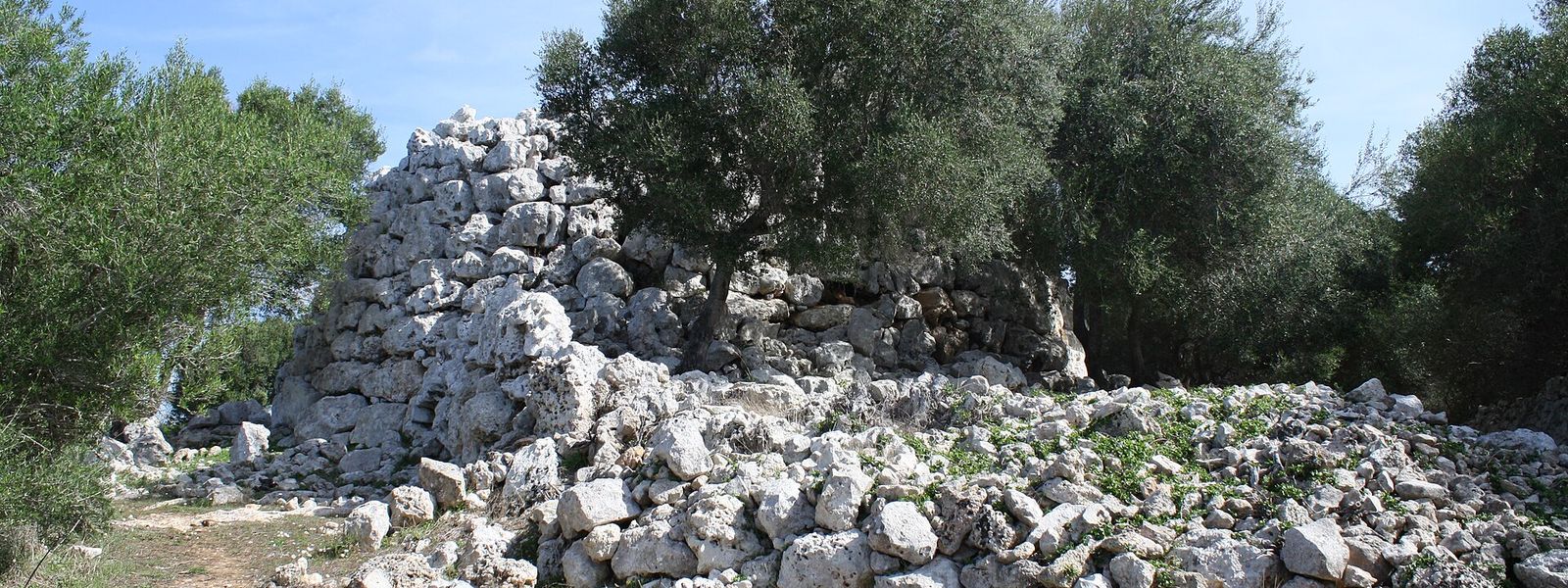
Prehistoric talaiotic village of dry-stone walls and a roofed building, inland from Sant Tomàs
- Parking
- Nearest car park about 950 m away in a straight line; Parking Bar Es Bruc, on grass, about 1.2 km away.
- Transport
- Nearest bus stops: Santo Tomas Vistamar (about 1.4 km in a straight line) and Lord Nelson (about 1.5 km).
What makes it special
Walk into the roofed building and look up. Stone slabs rest on beams of juniper wood, and the room keeps the dim, cool feel of an interior that has been closed over for a very long time. Most prehistoric buildings on the island stand open to the sky, so a ceiling is the detail people remember.
Around it, the walls of the village are built from big, roughly shaped blocks set without mortar, the way every talaiotic site on Menorca was built. The site is quiet and rural, and a board on the spot explains what stands where.
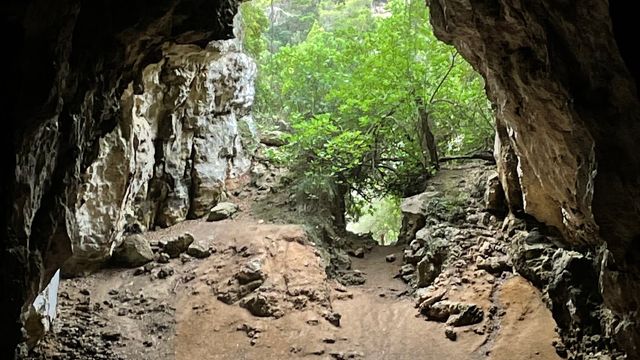
The Cova des Coloms, a large cave with its own information board, lies about 540 m away in a straight line, which makes the two an easy pairing for one outing.
Good to know
- There are no toilets and no drinking water at the site or nearby. Bring water, and more of it in summer.
- An information board stands at the site and explains the remains.
- The nearest car park is about 950 m away in a straight line, so plan on a walk to reach the stones.
- Parking Bar Es Bruc, about 1.2 km away, is on grass.
- The Cova des Coloms lies about 540 m away and makes a natural second stop.
Getting there
The approach comes from the Sant Tomàs side. By car, the nearest car park sits about 950 m from the site in a straight line; a second, Parking Bar Es Bruc, is a grass lot about 1.2 km away.
By bus, the nearest stops are Santo Tomas Vistamar, about 1.4 km away, and Lord Nelson, about 1.5 km away, both measured in a straight line.
From the car park or the bus, the rest is on foot, and the distance walked will be longer than those straight-line figures. There is no water along the way, so fill up before you set off.
Best time to visit
Best: spring and autumn, in the early morning or late afternoon.
Avoid: the middle of the day in July and August.
The ruins stand in the open under the Mediterranean sun, there is no water nearby, and low light brings out the texture of the stone walls far better than the flat glare of noon.
Access & restrictions
Sant Agustí Vell is a protected archaeological site. Keep off the walls and the talaiot, do not move or take any stones, and leave the ground as you found it. The masonry is laid dry, without mortar, and blocks shift under the weight of anyone climbing on them.
Sun & daylight
Nearby Places

Similar Places

Your whole travel map in one place
Get inspired by new places around the world and find the ones worth the journey
Frequently asked questions
What is a talaiotic village?
A settlement of the Talaiotic culture, the prehistoric society of Menorca and Mallorca in the Bronze and Iron Ages. These villages are built of large dry-stone blocks and are named after the talaiot, a stone tower.Where can I park for Sant Agustí Vell?
The nearest car park is about 950 m away in a straight line. Parking Bar Es Bruc, a grass lot, is about 1.2 km away. The rest is on foot.Are there toilets or drinking water at the site?
No. There are no toilets and no drinking water at the site or nearby, so bring what you need.Can I combine the visit with the Cova des Coloms?
Yes. The Cova des Coloms lies about 540 m away in a straight line and has its own information board.