The English Cemetery, also known as the Anglo-American Cemetery, lies on the shore of Maó harbour in Menorca. It dates from around 1800 and grew with the US Navy base moved to the island in 1820. Twenty named American sailors and one Navy wife are buried here, along with others partly identified or unknown. The name reflects religion: it served non-Catholics in a Catholic country. The last recorded burial was in 1890, and the cemetery was restored in 2008.
Cementiri Anglès
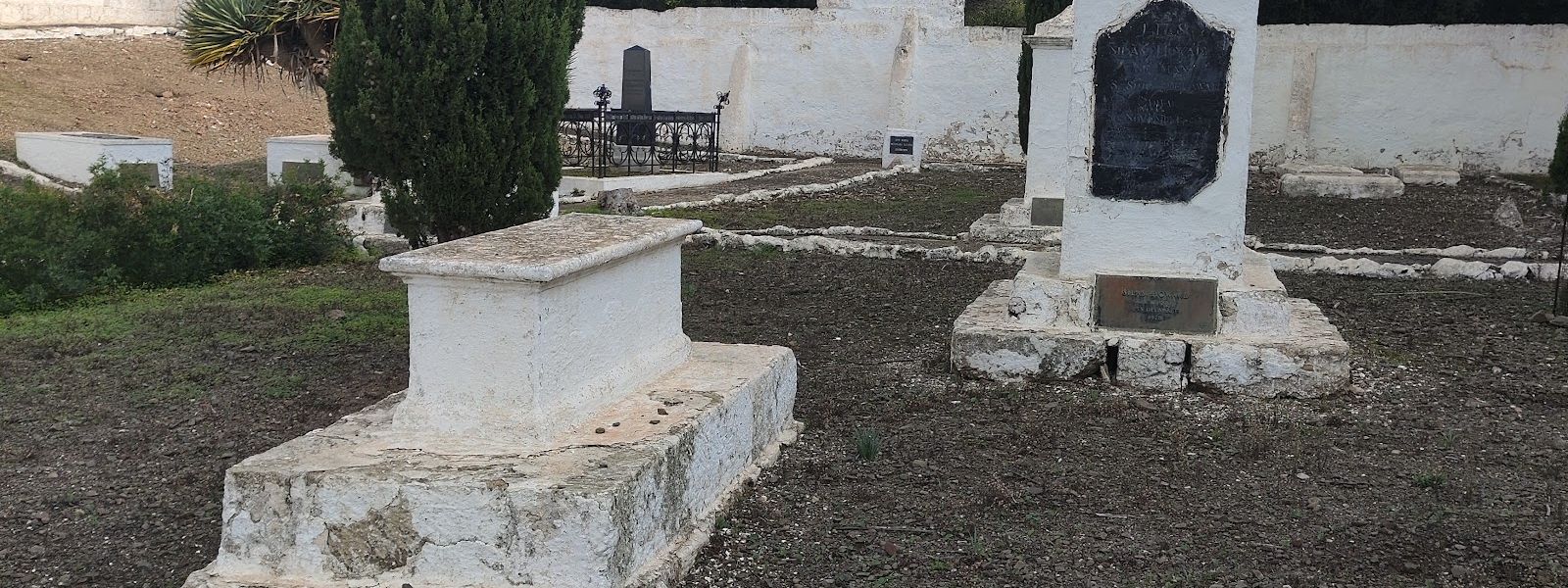
Walled waterside cemetery on Maó harbour, resting place of 19th-century US Navy sailors
- Parking
- Two parking areas nearby, about 460 m and 565 m away in a straight line; the farther one is free.
- Difficulty
- The last stretch is on foot from the nearest parking, about 460 m away in a straight line; the cemetery sits at the water's edge.
- Transport
- Illa del Rei stop, about 436 m away in a straight line; Fontanelles stop about 1.1 km away.
- Address
- Carrer d'en Dragó, 6, 07701 Sant Antoni, Illes Balears, Spain
What makes it special
Twenty US Navy sailors lie here by name, with one Navy wife and a handful of graves nobody can fully identify. The American squadron moved its European base from Gibraltar to Maó in 1820, and men who died of illness or injury at the peacetime station were buried in this walled plot by the water. Record keeping was patchy and many headstones were made informally. "English" in the name marks faith: this was the ground for non-Catholics in a Catholic country.
The last recorded burial came in 1890: Lieutenant Karl von Bunsen, of the German family behind the Bunsen burner. Admiral David Farragut, whose father was born in Ciutadella, visited in 1868. After that the cemetery slid into neglect, tended now and then by sailors of whatever navy put in. The Spanish government restored it in 2008, reinforcing the walls and shoring them against the sea, and the ground is well kept today.
Good to know
- The name refers to faith: "English" meant non-Catholic, and most of the dead are American sailors.
- Free public toilets stand about 370 m away in a straight line.
- There is no drinking water nearby, so bring your own.
- There is no information point nearby; read up on the history before you go, as some graves carry no full name.
- This is a burial ground: keep your voice down and stay off the graves.
Getting there
The cemetery sits right on the water on the northern shore of Maó harbour. Coming by car, you leave it at one of two parking areas, about 460 m and 565 m away in a straight line, and walk the rest. The Illa del Rei stop is about 436 m away, with the Fontanelles stop about 1.1 km off. The water side works too: the cemetery can be reached by kayak.
Best time to visit
Best: a calm day, especially if you plan to paddle in by kayak; or around the American Memorial Day, the last Monday in May, when the Madrid Council of the Navy League of the United States visits the graves.
Avoid: windy days if you are coming by water.
Wind puts chop on the harbour, which matters to anyone in a kayak, and Memorial Day is the one date in the year tied to the men buried here.
Sun & daylight
Nearby Places

Similar Places

Your whole travel map in one place
Get inspired by new places around the world and find the ones worth the journey
Frequently asked questions
Why is it called the English Cemetery if most of the dead are American?
The name refers to religion. "English" stood for non-Catholic, and this was where Protestants and other non-Catholics could be buried in a Catholic country.Who is buried in the English Cemetery?
Twenty named US Navy sailors, one Navy wife, some partly identified people and a few of other nationalities. The last recorded burial was Lieutenant Karl von Bunsen in 1890.How do I get to the English Cemetery?
It is on the northern shore of Maó harbour. Parking lies about 460 m and 565 m away in a straight line, the Illa del Rei stop about 436 m away, and it can also be reached by kayak.Are there toilets or water near the English Cemetery?
Free public toilets stand about 370 m away in a straight line. There is no drinking water nearby, so bring your own.Who looks after the English Cemetery?
It is in the unofficial care of the Madrid Council of the Navy League of the United States. The Spanish government restored it in 2008, reinforcing the walls and protecting them from the sea.