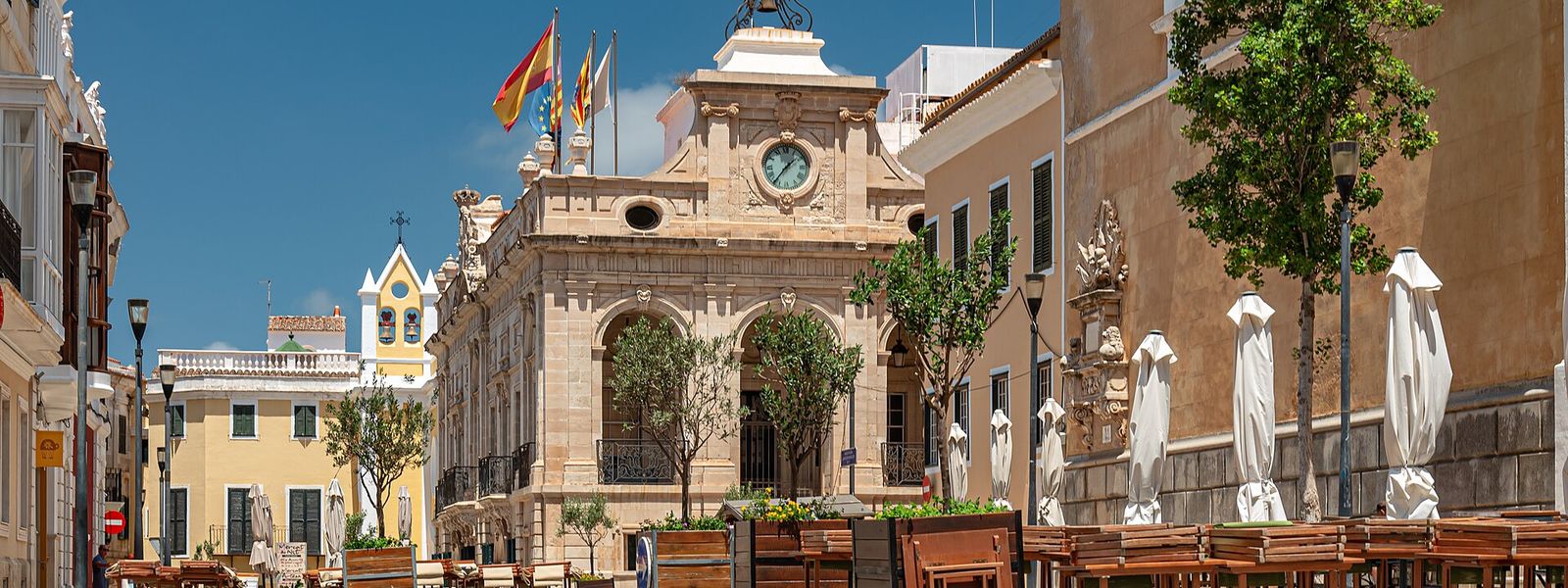
The harbour does the work here: a sea inlet five kilometres long and up to 900 metres wide, deep enough for warships and clear because so little open sea reaches it, with the town standing above its southern bank. The British moved the island's capital here from Ciutadella after 1713 and fortified the inlet; the dockyard the Royal Navy began in 1715 on the far side is a Spanish naval station to this day. Two names travelled out from the town: Mahón cheese, from the island's dairy farms, and mayonnaise. Most of a visit happens in the old centre and on the quay below it.
Maó
- Currency
- Euro (EUR, €). Credit and debit cards are widely accepted in cities and tourist areas. ATMs are abundant; most charge €2–7 per foreign card withdrawal. Some shops request ID before accepting a credit card. €500 banknotes are not accepted in most shops.
- Language
- The local language is Menorquí, a Catalan sub-dialect not easily understood by Spanish speakers. Most inhabitants speak Spanish and English to a reasonable standard, especially in tourist areas.
- Power plug
- Europlug (Type C) and Schuko (Type F) sockets; 230 V, 50 Hz
- Visa
- Schengen area: EU, EEA and Swiss nationals enter on national ID card or passport. Many non-EU nationalities have 90-day visa-free access. Non-EEA citizens staying longer than 90 days require an advance visa.
- Time zone
- Europe/Madrid (UTC+01:00 winter time, UTC+02:00 summer time from last Sunday in March to last Sunday in October). Canary Islands are one hour behind mainland Spain.
- Tap water
- Safe to drink throughout Spain. In some southern regions it has high mineral content and may taste unfamiliar; locals often drink bottled water instead. Bottled water is inexpensive and widely available.
- Tipping
- Not mandatory or customary. In restaurants: not expected for simple meals or basic establishments; 5–10% in mid-range or upscale venues if service was exceptional. Always pay cash to the server, not on card. Taxi drivers and hotel staff may appreciate small tips in upscale settings but it is not expected.
- Emergency
- 112
When to go
Low season
Dec – Apr
Winters are mild and a little humid, and the town works through them as the island's capital and the seat of its council, with close to a third of Menorca's population living here.
Shoulder
May – Jun
Warm and dry before the summer crowd arrives, with the waterfront comfortable to sit out on in the evening.
High season
Jul – Aug
Hot, dry and at its fullest, with cruise ships in the harbour; the narrow streets of the old centre hold shade while the open quay bakes through the middle of the day.
Shoulder
Sep – Nov
Autumn is the wettest season on this side of the island and heavy rain is not rare through October and November, so bring a jacket and keep an indoor afternoon in reserve.
How long to stay
Half a day walks the old centre and the quay below it; a full day if the market halls and the length of the waterfront go in too. As a base the town earns more. Bus 1 crosses to Ciutadella at the far end of the island in an hour, and the same spine route stops at Alaior and Ferreries on the way, so three or four nights here cover a good part of Menorca without changing hotels. A day trip from a resort works as well, though the evening belongs to the harbour front, and that is the part a day tripper misses.
Getting around
The old centre is best seen on foot. Its streets are traffic-restricted and the restriction runs on cameras, so do not drive in looking for a space. Island buses are run by TMSA on a spine route from Ciutadella through Ferreries and Alaior to Maó and on to Sant Lluís; the bus station is on the southeast flank of Plaça Esplanada, and taxis wait there and along the waterfront. Bus 1 takes an hour to Ciutadella, every half hour Monday to Friday, and Bus 14 runs the same road as an express in 45 minutes on weekdays. Bus 2 is a quarter of an hour to Es Castell. Weekends are the catch: Bus 1 thins to one every couple of hours, Bus 2 to roughly every 90 minutes. Bus 91 to Sant Lluís, Alcalfar and S'Algar goes every two to three hours, Bus 94 to Sant Lluís and Punta Prima hourly.
Local rules
Do not drive into the old centre. The streets inside are traffic-restricted and the restriction is enforced by camera, so a wrong turn costs money. Park outside and walk in.
The north side of the harbour is military ground. The dockyard the British built there in 1715 is still a working Spanish naval station, not a quayside to wander along.
Catalan is the official language, and the town signs itself Maó. Street names, timetables and menus follow that form; the Spanish Mahón is what turns up on older maps and in English writing about the place, and the two are the same town.
What to see


Destinations in Maó
Frequently asked questions
Is it Maó or Mahón?
Both name the same town. Maó is the Catalan and official form, and the one used on signs and bus timetables; Mahón is the Spanish form, and English writing has long used Mahon or Port Mahon. The cheese and the sauce kept the Spanish spelling.Did mayonnaise really come from here?
The sauce is taken to be named after the town. One story ties it to the French capture of the island in 1756, although the sauce is probably older than that.How do you get from the airport into the centre?
The airport lies 5 km southwest of town, in Sant Lluís. Buses run into the centre every 30 minutes and take about 10 minutes, and the usual car hire desks are at the terminal.How do you reach the rest of Menorca?
By road it is 45 km to Ciutadella on the Me-1, the island's main road. Bus 1 covers it in an hour, every half hour Monday to Friday and every couple of hours at weekends; Bus 14 is the weekday express and takes 45 minutes. The same spine route serves Alaior and Ferreries, and other buses run south and east to Es Castell, Sant Lluís and Punta Prima.What is there to see around the harbour?
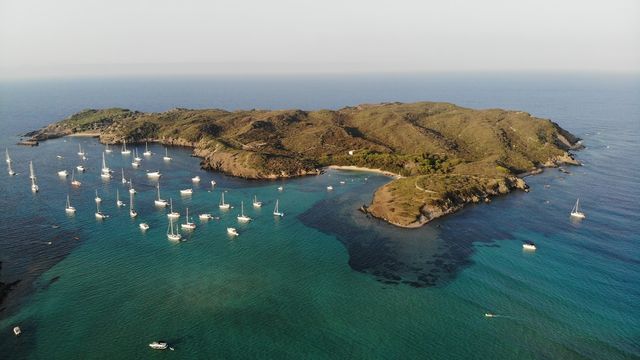
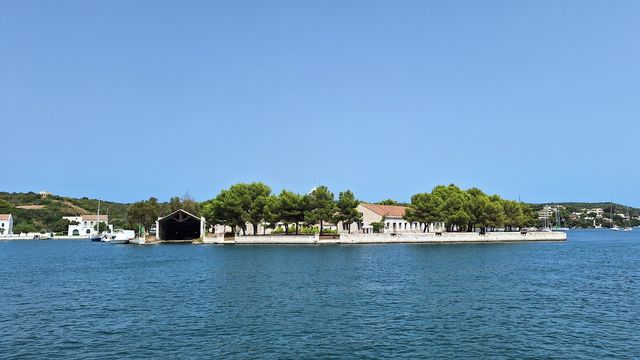
The water itself: an inlet five kilometres long and up to 900 metres wide, enclosed enough that it stays clear. On Illa del Rei stand the restored ruins of a Royal Naval Hospital founded in 1711. On Illa Pinto there are dockyard buildings from the 1760s, among them a naval storehouse with a clock tower; that island took its octagonal shape from the wharves built round it so several warships could be careened at once, and it sits inside the working naval station.