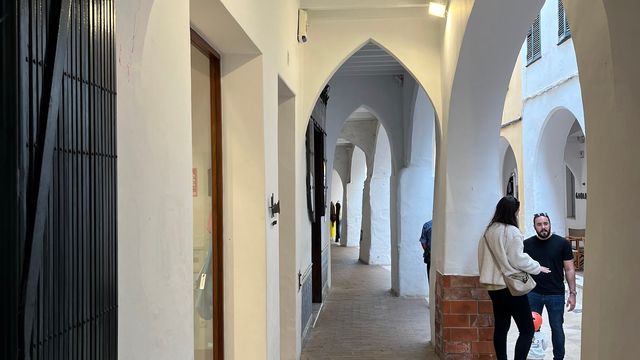
The old town sits at the western end of Menorca, above a harbour cut back into the rock; behind the cathedral the lanes run tight and arcaded, lined with restaurants. Ciutadella ruled the island until 1708, when Britain moved the capital to the deeper harbour at Maó — the cathedral stayed, and with it the town's standing as the religious capital. On Plaça des Born, by the Town Hall, an obelisk marks the Ottoman raid of 1558, commemorated every 9 July. Most hotels lie a few kilometres out in the coastal resorts, which is why the centre was never built over.
Ciutadella

- Currency
- Euro (EUR, €). Credit and debit cards are widely accepted in cities and tourist areas. ATMs are abundant; most charge €2–7 per foreign card withdrawal. Some shops request ID before accepting a credit card. €500 banknotes are not accepted in most shops.
- Language
- The local language is Menorquí, a Catalan sub-dialect not easily understood by Spanish speakers. Most inhabitants speak Spanish and English to a reasonable standard, especially in tourist areas.
- Power plug
- Europlug (Type C) and Schuko (Type F) sockets; 230 V, 50 Hz
- Visa
- Schengen area: EU, EEA and Swiss nationals enter on national ID card or passport. Many non-EU nationalities have 90-day visa-free access. Non-EEA citizens staying longer than 90 days require an advance visa.
- Time zone
- Europe/Madrid (UTC+01:00 winter time, UTC+02:00 summer time from last Sunday in March to last Sunday in October). Canary Islands are one hour behind mainland Spain.
- Tap water
- Safe to drink throughout Spain. In some southern regions it has high mineral content and may taste unfamiliar; locals often drink bottled water instead. Bottled water is inexpensive and widely available.
- Tipping
- Not mandatory or customary. In restaurants: not expected for simple meals or basic establishments; 5–10% in mid-range or upscale venues if service was exceptional. Always pay cash to the server, not on card. Taxi drivers and hotel staff may appreciate small tips in upscale settings but it is not expected.
- Emergency
- 112
When to go
Shoulder
Apr – May
Warm and dry before the resorts fill, and the old town is comfortable walking at any hour of the day.
High season
Jun – Sep
Hot, dry and at its busiest, with the trade coming in from the coastal resorts; the car park on Plaça des Born fills up early, and the open squares give no shade at midday.
Shoulder
Oct – Nov
Autumn is the wettest season here and heavy rain is no surprise, which is when the arcaded streets around the cathedral earn their keep; the coast empties out.
Low season
Dec – Mar
Mild, damp winters and a town back on its own business — the market and the bars in the centre serve locals, and the coves are cold and empty.
How long to stay
Two days is enough for the centre without hurrying it: the cathedral quarter, the harbour, Plaça des Born and the market. Walking covers all of it, so there is no driving time to build in for the town itself. Three or four days if the coves are the reason you came — each one is a bus ride out and back from Plaça des Pins, and the western beaches are worth a slow morning. A week works if Ciutadella is the base for the whole island, though the cross-island bus to Maó is an hour each way, which makes a trip to the east end a long day.
Getting around
Walking gets you most places in the centre, and bikes can be hired in the town for anything further out.
Two bus operators use two different squares, and mixing them up costs you a walk. TMSA island buses leave from the station on Plaça de la Pau, an open square with nothing to it: buses 1 and 14 run to Maó every 30 minutes, taking an hour via Alaior, Es Mercadal and Ferreries. The Torres buses to the resorts and coves go from Plaça des Pins — 61 every 30 minutes to Calas Picas, Cala en Forcat, Los Delfines and Cala en Blanes, 64 and 65 hourly to Cala Blanca, Cala en Bosch and Son Xoriguer, 69 every 20 minutes to Macarella, 62 and 66 four times a day to Cala Morell and Son Saura. Bus 68 to Cala en Turqueta runs Monday to Saturday, with no Sunday service.
Arriving by car, Plaça de la Pau just north of the bus station is the better car park. The one on Plaça des Born by the Town Hall, 100 m west of the cathedral, is larger and fills up early.
What to see


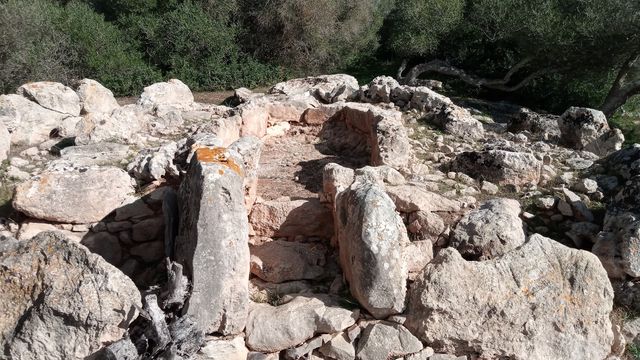

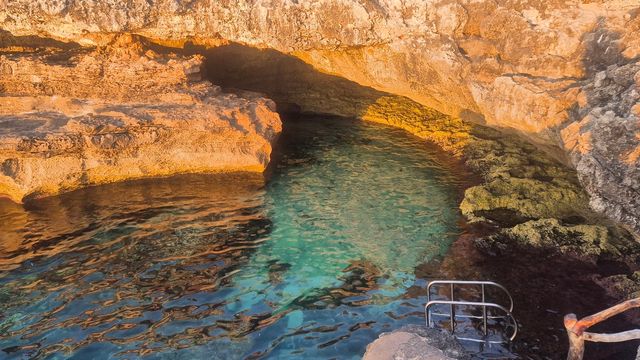
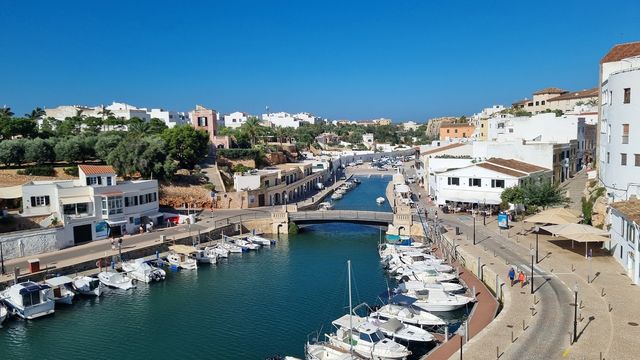

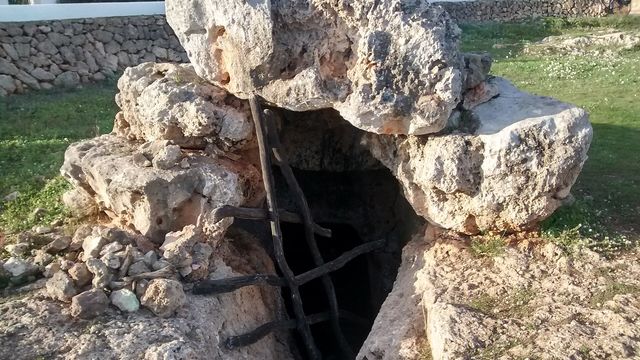

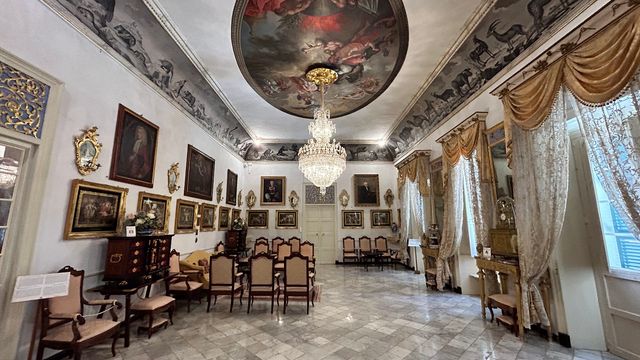
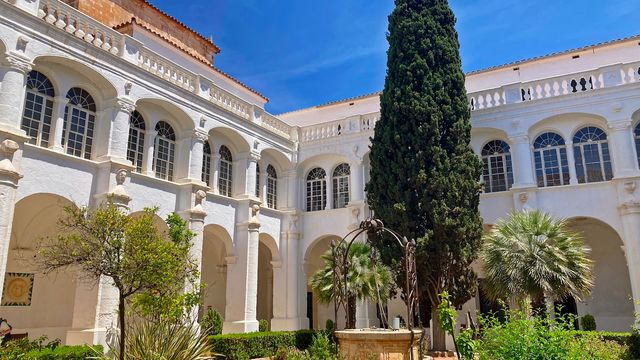
Destinations in Ciutadella
Frequently asked questions
How do you get to Ciutadella?
Menorca Airport is at the other end of the island, 7 km southeast of Maó, and has car hire on site; from Maó, buses 1 and 14 cross to Ciutadella every 30 minutes and take an hour, and the ME-1 is the road that does the same. Ferries come into the harbour: Balearia from Alcúdia on Mallorca three times a day, 90 minutes, and one crossing a day from Barcelona that calls at Alcúdia for 45 minutes and takes 5 hours 30 minutes in all. Corsica Ferries sail from Toulon in summer, 12 hours 30 minutes. Foot passengers pay more on the short Alcúdia crossing than on the long one from Barcelona, and there is a single operator on the route.Is Ciutadella the capital of Menorca?
Maó has held that since 1708, when Britain and Holland took the island during the War of the Spanish Succession and moved the capital to the better natural harbour there. Ciutadella had been the island's only town of any size since Muslim rule began in 903, and it kept the cathedral and the role of religious capital.Can you reach the beaches without a car?
Yes. The Torres buses run from Plaça des Pins, the main plaza, out to the resorts and coves around the town — Calas Picas, Cala en Forcat, Los Delfines and Cala en Blanes to the west, Cala Morell and La Vall to the north, Cala Blanca, Cala en Bosch and Son Xoriguer to the south, and Macarella every 20 minutes. The bus to Cala en Turqueta does not run on Sundays.Where do you eat and buy food in the old town?
Restaurants fill the streets around the cathedral, and the cafe-bars in the centre may serve tapas. The Mercat Municipal on Plaça de la Llibertat, on the east side of the Diocesan Museum, is an indoor food market open Tuesday to Saturday, with a long afternoon break on weekdays. Some twenty supermarkets are dotted about the city, most of them shutting at midday and opening again in the evening. Menorca makes red and white wine, and the nearest vineyard is 5 km south of town.Is it better to stay in the centre or at the coast?
Most hotels are a few kilometres out in the smaller resorts, with the Torres buses linking them to Plaça des Pins. The centre has hotels of its own, and because the beds went to the coast the old town was spared the modern building that went up there.